

GUM HEALTH AND CARE
Tartar Removal
Personal care for gum health.
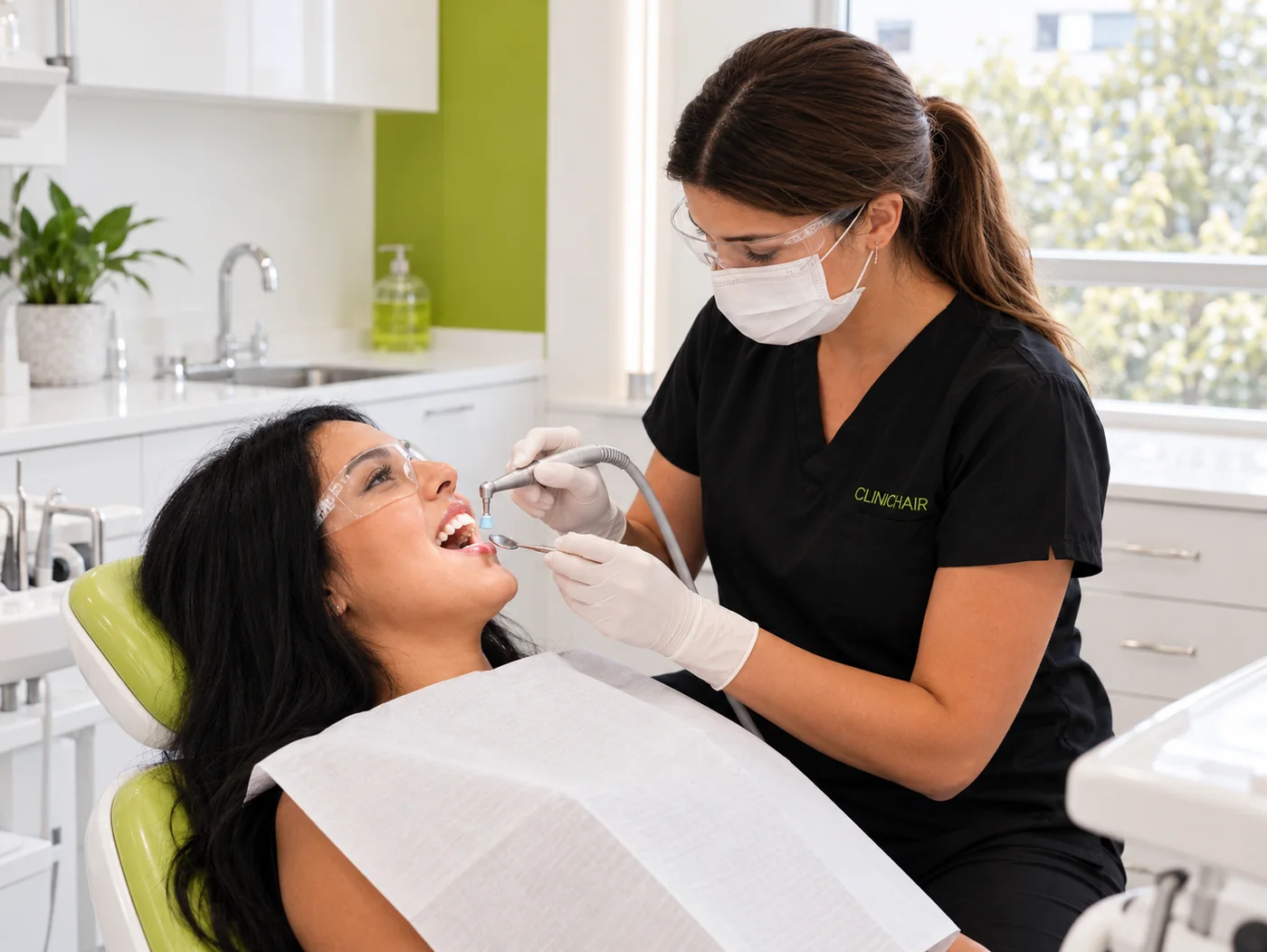
We remove tartar that builds up on the tooth surface and along the gum line. We set the extent of treatment and how often you need check-ups according to your gum findings.
The final treatment plan is determined by a dental examination. Clinical images are representative.
01ASSESSMENT AND PLANNING
First, let's determine what cleaning you need.
- Plaque and tartar
- The location and extent of the deposits and oral hygiene are assessed.
- Gum health
- Bleeding, recession and gum pocket measurements are examined.
- Health history
- Sensitivity, previous treatments, illnesses, medication and allergies are assessed.
- Extent of treatment
- The need for cleaning and any additional periodontal treatment is decided.
02TREATMENT OPTIONS
How does tartar removal work?
- 1
Removing the deposits
Tartar is removed with suitable ultrasonic devices and hand instruments.
- 2
Assessing the surfaces
The cleaned surfaces are checked; where needed, polishing is applied for surface stains.
- 3
Gum check
Further treatment or a check-up plan is created according to the gum findings.
Information on the instruments and materials used.
You can ask your dentist for the relevant ÜTS records of the medical devices used, and for the intended use, lot number and expiry date of the consumables.
ÜTS registration does not mean Ministry approval. The products and consumables to be used are chosen according to your personal treatment plan.
03CARE AND FOLLOW-UP
Care continues after the clean.
Home oral care
Follow your dentist's advice on regular brushing and cleaning between the teeth.
Personal check-up plan
The check-up interval is set by assessing new build-up and gum findings.
Ongoing complaints
If bleeding, sensitivity or pain persists, contact your clinic.
04FREQUENTLY ASKED QUESTIONS
About tartar removal.
What is the difference between plaque and tartar?
Plaque is a soft layer of bacteria that forms on the teeth. If it is not removed with daily cleaning, it can harden into tartar. Tartar makes it easier for new plaque to build up; it can be found along the gum line and below it.
Does tartar go away with brushing?
Hardened tartar cannot be removed by brushing; a professional clean is needed. Daily brushing and cleaning between the teeth help reduce new plaque build-up.
How is tartar removed?
The deposits are removed with ultrasonic devices and hand instruments suited to the tooth surface. Which areas are cleaned depends on the gum examination. If needed, polishing is added for surface stains; if more thorough cleaning below the gum is needed, this is explained separately.
Is it the same as root surface cleaning?
Tartar removal removes deposits. If there are deep gum pockets and periodontitis, more thorough cleaning of the root surfaces may be needed. This treatment can be done under local anaesthesia and over more than one appointment. The need becomes clear from the gum measurements.
Does tartar removal damage the teeth?
A professional clean done with suitable instruments and technique aims to remove tartar while protecting the tooth surfaces. Poor technique or excessive force can damage surfaces. That is why sensitivity, fillings and prostheses are taken into account. Temporary sensitivity or gaps becoming more noticeable after a clean does not on its own mean damage.
Will I feel pain during the procedure?
Sensitivity varies from person to person. If you feel discomfort, tell the team; breaks are taken when needed and suitable pain control options are discussed.
How long does the procedure take; is one session enough?
The duration and number of sessions depend on the amount of build-up, the areas to be cleaned and the gum findings. A limited clean and deep root surface treatment do not have the same scope. At the examination, the appointment length that suits you and any need for further sessions are explained.
What information should I share before my appointment?
Tell us about the medication you take, your allergies, existing illnesses and any problems you had during previous dental procedures. Mention sensitive teeth, implants and prostheses too. Do not stop your medication on your own; if special preparation is needed, the treatment team will explain it.
Can there be sensitivity after cleaning?
Yes, sensitivity can occur, especially in areas where root surfaces are exposed. Follow your care advice; if complaints do not go away or increase, contact your clinic.
When can I eat after cleaning?
This depends on the procedure and the products used. If local anaesthesia was given, do not eat until the numbness wears off and avoid hot drinks. If fluoride or another product was applied, ask your team how long to wait before eating and drinking.
Why do gaps become more noticeable after cleaning?
When areas that were covered by tartar are cleaned, gaps can become more visible. As inflammation and swelling ease, the gum level can also change. This appearance does not on its own show that the tooth has been damaged. If a tooth newly becomes loose or a change worries you, ask for a check-up.
Are polishing and whitening the same procedure?
No. Polishing aims to reduce stains on the tooth surface. Whitening is a different treatment aimed at lightening natural tooth colour, and it requires a separate suitability assessment.
Does bleeding always stop after cleaning?
Not always. The cause of ongoing bleeding should be re-examined; further periodontal treatment or changes to daily care may be needed. Report ongoing complaints to the clinic.
How can I reduce tartar coming back?
Brush twice a day with fluoride toothpaste and clean between the teeth every day with a suitable aid. Learn the right technique, especially for areas where build-up keeps returning. Daily care reduces new plaque; it does not completely remove the need for professional cleaning and check-ups.
How often should tartar removal be done?
The same interval does not suit everyone. A personal check-up and cleaning plan is created by considering how quickly new build-up forms, daily care and gum findings together.
How are the fee and the follow-up scope agreed?
We set out the scope of the procedure and the follow-up from the start. Within the plan you approve, there are no surprise extra charges.
Question not answered here?Message our patient adviser
This page is for general information. A personal assessment is made at a dental examination.
Updated: 4 October 2026