
HAIR TREATMENTS
Stem Cell / Tissue Micrograft
A personalised treatment using your own tissue.
A mixture prepared from small tissue samples taken from your scalp is applied to the planned areas. We look together at whether this method, known as a tissue micrograft, suits you, at the cause of your hair loss and at your existing hair.
The final plan is determined by the physician's examination.
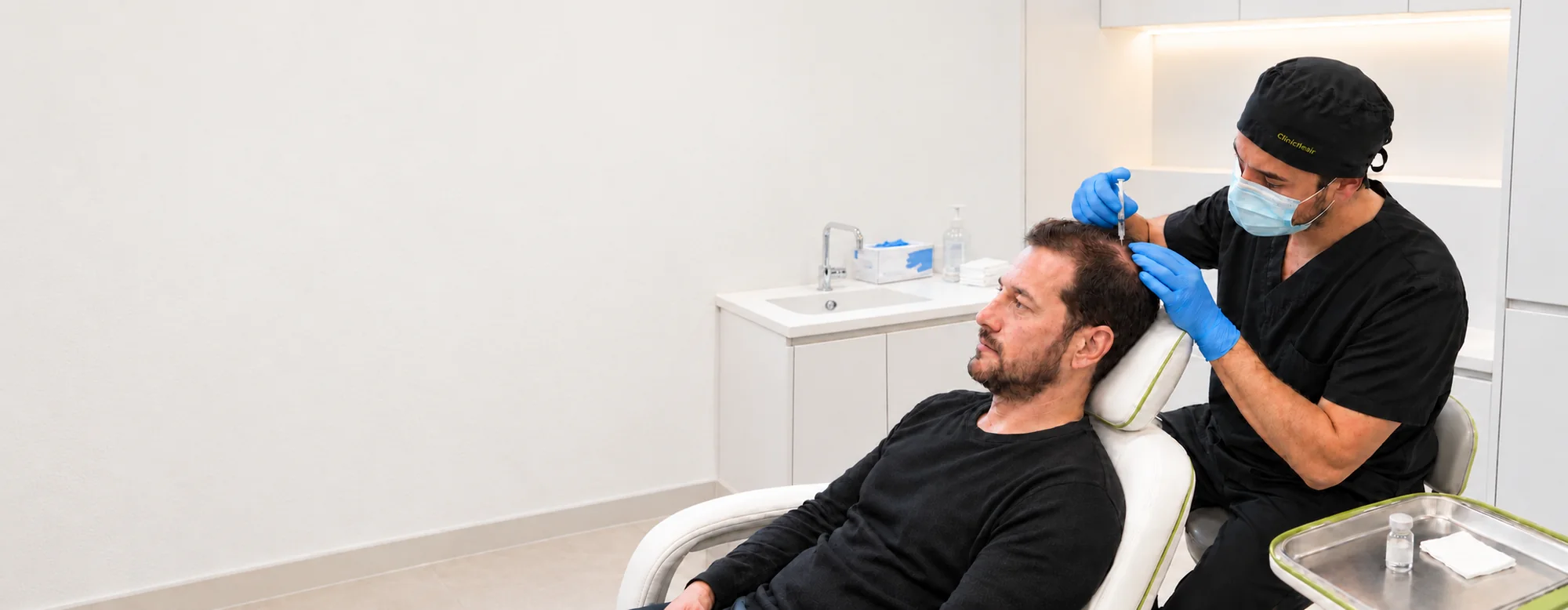
Representative clinical image.
01ASSESSMENT AND PLANNING
First, let's understand the cause of the hair loss.
We listen to your hair loss history and examine your scalp and the area from which tissue can be taken.
- Hair loss history
- We discuss when the hair loss started, how it has progressed, your stress levels and previous treatments.
- Hair and scalp
- We examine your existing hair and the area from which tissue can be taken, and request a blood test if needed.
- Medical history
- We review your illnesses, allergies, medication and conditions that affect healing.
- Personal plan
- We clarify with you the method, the options, the possible benefits and risks, and the scope of follow-up.
02METHOD AND EXPECTATIONS
What can you expect from a tissue micrograft?
The aim is to support existing hair with a mixture prepared from your own tissue.
Support for existing hair
In suitable people, the aim is to support the appearance and density of existing hair. We monitor its contribution during follow-up.
From your own tissue
Small tissue samples taken from your scalp are used. The prepared mixture contains cellular and tissue components.
Which method is used?
A tissue micrograft differs from treatment with cells multiplied in a laboratory. We explain the system used in advance.
Personalised follow-up
We take your hair type, the course of hair loss and your expectations into account and compare changes at check-ups.
03TREATMENT PROCESS
How is a tissue micrograft applied?
Including preparation, taking the tissue sample, processing it and applying it to the scalp, the procedure takes about 1 hour.
- 1
Defining the areas
We mark the treatment areas and the area from which tissue will be taken, and share the steps of the procedure with you.
- 2
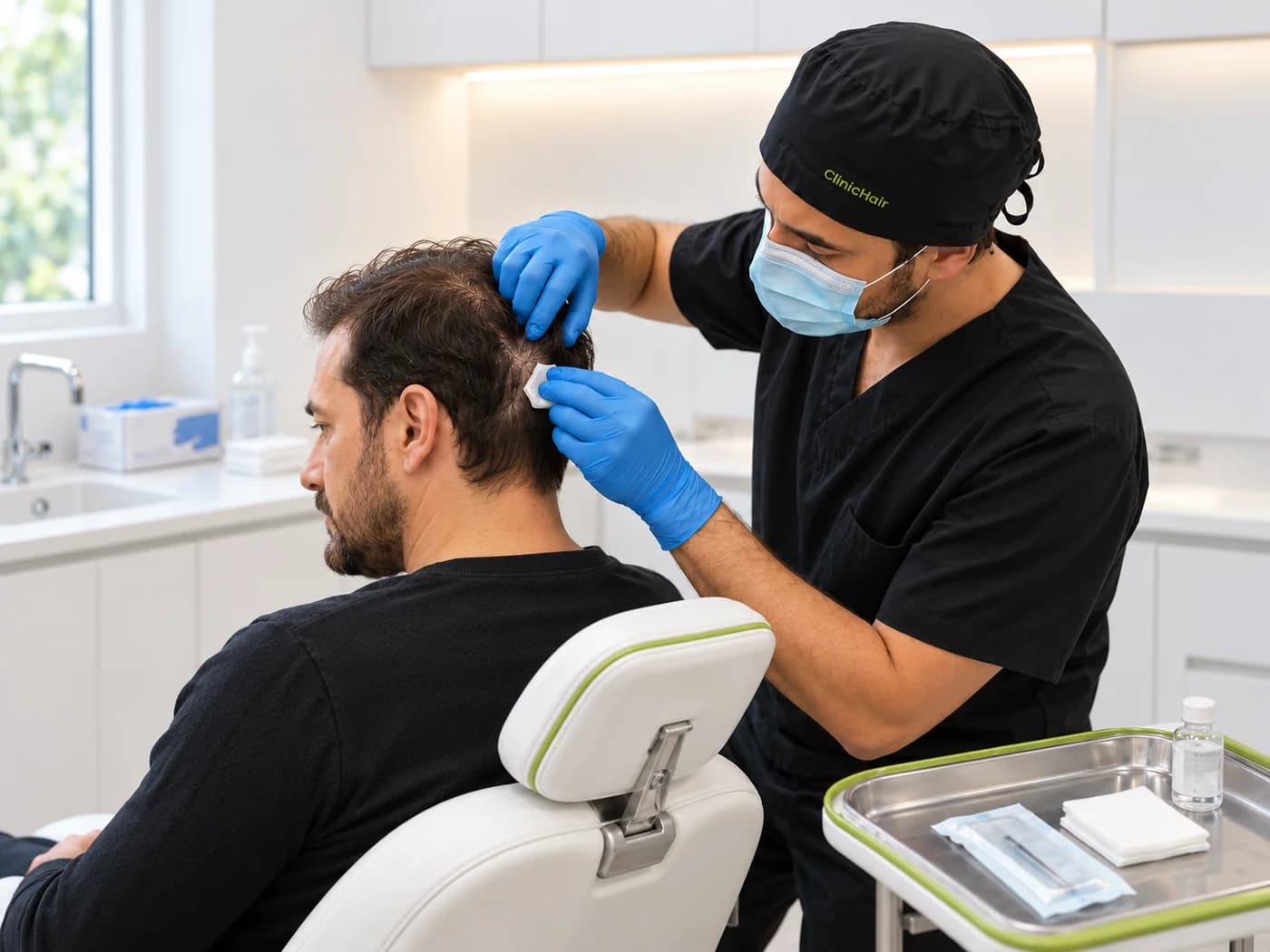
Taking the tissue sample
The area from which tissue will be taken is numbed with local anaesthesia. Small samples are taken from an area the physician considers suitable.
- 3
Preparing the tissue
The tissue samples are processed with the system used; a mixture containing cellular and tissue components is prepared.
- 4
Application to the scalp
The prepared mixture is applied to the planned areas with fine-needle injections. We share care and check-up advice.
04CARE AND FOLLOW-UP
Let's follow your care and progress together.
The first day
Do not scratch or rub the scalp. Do not use spray, gel or dry shampoo; protect the area where tissue was taken.
First wash
We explain when you can first wash your hair, taking into account the area where tissue was taken. When allowed, wash gently with lukewarm water.
Treatment plan
We decide the need for and timing of repeat treatment according to the method used, the course of hair loss and the response at check-ups.
Progress check-up
To assess changes more reliably, we usually carry out the progress check-up about 2 months after the procedure.
05FREQUENTLY ASKED QUESTIONS
Common questions about Stem Cell / Tissue Micrograft
What is stem cell / tissue micrograft treatment?
The method described on this page is a tissue micrograft treatment prepared from small tissue samples taken from the person's own scalp. The prepared liquid mixture containing cellular and tissue components is injected into target areas of the scalp.
The aim is to support existing hair in suitable people. Hair follicles are not moved one by one as in a hair transplant; the method used and the expected contribution are explained before the procedure.
Who is it suitable for; is it also done for women?
It can be an option for some cases of hair thinning in women and men. First, we examine the cause of the hair loss, the existing hair, the scalp and the area from which tissue can be taken. Much of the research focuses on genetic-type hair loss.
We discuss your hair loss history, stress levels and previous treatments, and request a blood test if needed. If a deficiency or scalp condition is found, treating it may take priority.
Is a tissue micrograft the same as multiplied stem cells?
It is not the same treatment. Here, it is a mixture containing cellular and tissue components prepared from the person's own tissue with the system used; it should not be thought of as a product made of pure stem cells.
Treatments in which cells are multiplied in a laboratory involve different processes. You can find out the name of the system to be used, the tissue processing steps and the scope of the treatment before the procedure.
How does it differ from PRP, mesotherapy and exosomes?
PRP is prepared from the person's blood, while the tissue micrograft described on this page is prepared from the person's own scalp. Hair mesotherapy uses a product chosen by the physician. Exosome products are also a separate group in terms of their contents and how they are prepared.
These names should not be used interchangeably. In choosing a method, we go by the cause of hair loss, the product or system to be used and your personal needs.
How long does the treatment take?
At Clinichair, stem cell treatment takes about 1 hour. Preparation, taking the small tissue samples, processing them and applying them to the scalp are included in this time.
The treatment area and personal needs can affect the duration. If another procedure is planned for the same day, we share the total appointment time with you in advance.
Where and how is the tissue sample taken?
Tissue samples are taken from an area of the scalp the physician considers suitable, usually the back of the head. The area is cleaned and local anaesthesia is given; small tissue samples are then taken and prepared with the system used.
The number, size and collection site of the samples can vary with the method. You are given care advice tailored to you for closing, dressing and checking the area where tissue was taken.
Will there be a scar where tissue is taken; is shaving needed?
Scars may remain at the points where small tissue samples were taken. How visible they are depends on the sample size, the collection method, hair length and personal healing. We discuss the location of this area before the procedure.
Shaving all the hair is not necessary for every treatment. The physician decides whether the small area where tissue will be taken needs trimming; we explain the preparation to you in advance.
How many treatments are needed; when is a repeat considered?
There is no single schedule for the number of treatments and repeat intervals that suits everyone. The method used, the course of hair loss, existing treatments and personal goals are considered together; the initial plan is shared before the procedure.
The findings at check-ups help us continue the current plan, consider a repeat treatment or turn to other options.
When might I notice a change; when is the check-up?
To assess changes in the appearance of the hair more reliably, we usually carry out the progress check-up about 2 months after the procedure. We compare with baseline photographs and examine the course of hair loss and the scalp.
This check-up is to see how the process is going; the timing and degree of change differ from person to person. Check-ups related to healing of the area where tissue was taken, and any earlier consultations needed, are arranged separately.
Does it replace a hair transplant; is it done with other treatments?
The aim is to support existing hair. Covering bald areas with a hair transplant is a different goal; in areas where hair follicles have been lost, a tissue micrograft does not replace a hair transplant.
In suitable people, medication or other hair treatments can be part of the same treatment plan. We consider timing before or after a hair transplant, healing and the methods used together. Do not change your current treatment yourself.
Is pain felt during the procedure?
Local anaesthesia is used where tissue is taken. You may feel stinging, burning or tenderness while the anaesthetic is given and during the scalp injections. The level of discomfort you feel varies with your personal sensitivity.
We discuss comfort options before the procedure. Tell the team when you feel discomfort; a short break can be taken if needed. It is important to keep your head in the position the team guides you to during the procedure.
What should I pay attention to before the procedure?
Share your illnesses, allergies, and the medication and supplements you take. Tell your physician about conditions such as use of blood thinners, bleeding or healing problems, scalp infection, pregnancy and breastfeeding.
Do not stop your medication or change the dose on your own. Get advice from our team on cleaning your hair, eating and preparing the area where tissue will be taken. Also tell us about any reactions you have had to previous procedures.
When can I wash my hair; how is the tissue collection area protected?
Because the small area where tissue was taken also needs to heal, your physician will tell you when you can first wash your hair. Advice can vary with the system used, the dressing and the condition of the scalp; follow the care plan you are given.
When washing is allowed, wash gently with lukewarm water. Do not scratch or rub the areas where tissue was taken or injections were given; change the dressing only as instructed. Ask your team when you can return to cosmetic products and medicines applied to the scalp.
When can I return to work, sport, saunas and hair colouring?
How you feel and the condition of the area where tissue was taken matter for returning to daily life. Bear in mind in your plans for the day that there may be a small dressing, temporary tenderness or redness.
Take a break from very hot showers, saunas, steam rooms and activities that cause heavy sweating. Avoid swimming pools until the area where tissue was taken has healed and your physician allows it. The recommended times for returning to hair dye, bleach and sport may differ from each other.
What are the possible side effects and warning signs?
There may be temporary tenderness, redness, swelling, small bruises or bleeding in the areas where tissue was taken or injections were given. Infection, scarring and reactions to the anaesthetic or other materials used are also possible risks.
If you have increasing pain, spreading redness, discharge, fever or bleeding that will not stop, contact the clinic without waiting for your check-up date. If you have symptoms such as shortness of breath or swelling of the lips or tongue, call for emergency help.
How are the fee and the follow-up scope agreed?
We explain the price before the procedure, together with the system and kit to be used, the treatment plan and the scope of follow-up. Within the plan you approve, you will not face surprise extra charges.
We tell you from the outset whether the check of the tissue collection area, later follow-ups and any repeat treatment are included. That way you can decide knowing both your appointment schedule and your overall plan.
Question not answered here?Message our patient adviser
This page is for general information. Your personal treatment and care plan is determined by the physician's examination.
Updated: 4 October 2026