

PLASTIC SURGERY
Eyelid Surgery
A holistic, personalised assessment of the eye area.
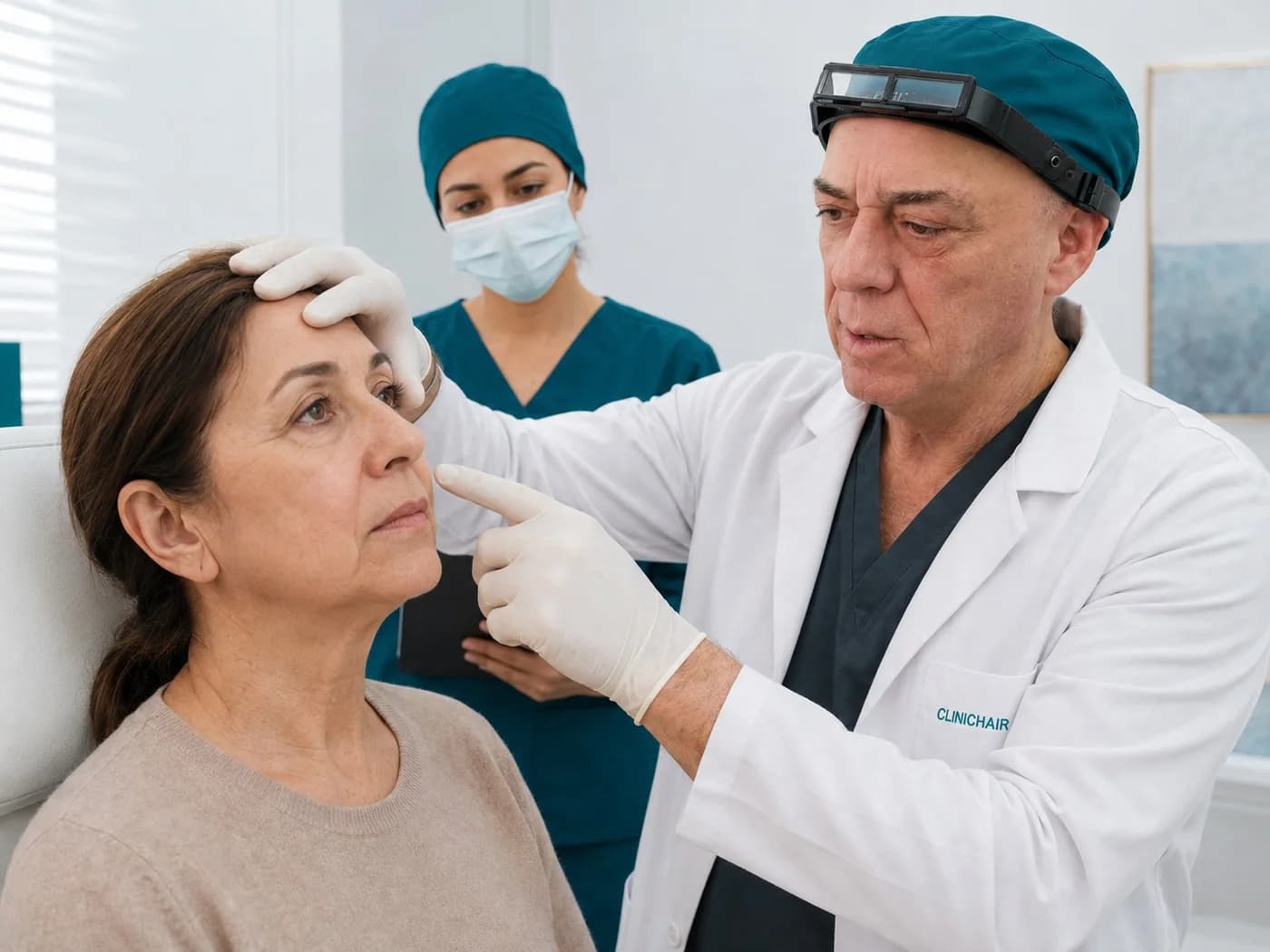
We assess the upper and lower eyelids together with the skin, fat tissue, eyelid support and your eye health. The targeted appearance, functional needs and surgical options are discussed at the examination.
The final plan is determined by the physician's examination and the necessary assessments.
Clinical images are representative.
01ASSESSMENT AND PLANNING
Let's assess the eyelid structure and eye health together.
- Upper and lower eyelids
- Excess skin, bags, eyelid position and supporting tissues are examined.
- Eye health
- Dryness, vision complaints, previous eye procedures and medication are assessed.
- Health history
- Illnesses, allergies, smoking and previous surgery are discussed.
- Personal goals
- Expectations, possible benefits, the limits of the procedure and suitability are assessed.
02METHOD AND PROCEDURE
A surgical plan suited to eyelid anatomy.
The structure of the upper and lower eyelids, the surface of the eye and personal needs are considered together.
Upper eyelid
Options for excess skin and fat tissue are assessed while preserving eyelid function.
Lower eyelid
The suitable approach is decided according to bags, skin structure and eyelid support.
Assessing together
Brow position and a drooping eyelid can be separate problems. If needed, an additional specialist assessment is planned.
Your comfort during the procedure
Eyelid surgery can be done under local or general anaesthesia; the choice depends on the extent of the procedure and your health. If you feel pain or discomfort during procedures where you are awake, tell the team straight away. In the first hours, tenderness around the eyes and advice on eye care are explained to you.
03CARE AND FOLLOW-UP
Let's monitor healing around the eyes closely.
The first days
Swelling, bruising and temporary sensitivity may occur. Personal advice on eye and wound care is shared.
Check-up consultations
Eyelid closure, the surface of the eye, incision healing and how the tissues settle are assessed.
Personal follow-up
Advice on contact lenses, make-up, screen use and returning to daily life is adjusted according to healing.
04FREQUENTLY ASKED QUESTIONS
Common questions about eyelid surgery.
Who might eyelid surgery be suitable for?
If excess skin on the upper eyelid or bags under the lower eyelid bother you, surgery can be an option. The decision is not based on age alone; eye health, eyelid support, brow position and general health matter. Sometimes the source of the complaint is a different eyelid or brow problem. The examination helps understand which change this procedure can achieve.
Are the upper and lower eyelids done together?
Each area is assessed separately. The decision to treat one area or both together is made according to eyelid structure, eye health and surgical suitability.
Are a drooping eyelid and excess skin the same thing?
No. Excess skin and drooping related to the eyelid's position can be separate problems. Brow position also affects the appearance of the eye area. These structures are examined together at the examination; when needed, the suitable approach is decided with an additional specialist assessment.
Will it widen my field of vision or correct my glasses prescription?
If excess skin on the upper eyelid is blocking your field of vision, reducing this obstruction may be possible in a suitable person. This requires an eye and eyelid examination and, when needed, a visual field test. Eyelid surgery does not correct a glasses prescription and does not replace the treatment of cataracts, retinal or other eye diseases. Tell us about any vision complaints at the first consultation.
Can I have the procedure if I have dry eyes?
Be sure to share any dry eye and the drops and medication you use at the consultation. As well as eyelid structure, the surface of the eye, eyelid closure and previous eye procedures are considered. If needed, an additional eye assessment is requested; suitability and the scope of the procedure become clear after that.
Will dark circles under the eyes also be corrected?
Eyelid surgery does not remove every dark circle or fine line under the eyes. Bags, excess skin and eyelid support are considered separately. Show us the appearance that bothers you at the consultation; let's discuss in which areas surgery can make a change.
Where are the incisions made, and how are stitches removed?
On the upper eyelid, the incision is usually placed in the natural eyelid crease. On the lower eyelid, depending on the need and method, an approach just below the lash line or from the inner surface of the eyelid can be used. Excess skin and eyelid support affect this choice. Your team explains whether the stitches dissolve on their own and, if needed, at which check-up they will be removed.
Which anaesthesia is used during the procedure?
Limited procedures such as upper eyelid surgery can be done under local anaesthesia; sedation or general anaesthesia are also options. The lower eyelid, procedures to be done together and your health affect the decision. How the eye area is protected and your comfort during the procedure are explained at the consultation. Even if you go home on the same day, arrange for someone to accompany you and for support on the first night.
What information should I share when I come to the consultation?
Tell us about conditions such as dry eye, glaucoma, thyroid disease, previous eye surgery and eyelids that do not close fully. List the drops, medication and supplements you use. Do not stop blood thinners on your own. If you have an eye infection or a new vision complaint, report it before surgery; if needed, an eye examination is done first.
How should I care for the eye area in the first days?
Rest with your head raised; do not rub your eyes. If cold compresses were recommended, apply them over a clean protective layer at the intervals described; do not put ice directly on the skin. Use the drops or ointment given only as prescribed. Do not add your own products to clean the incisions; protect the eye area from the sun outdoors.
When can I return to contact lenses and make-up?
Returning to contact lenses and make-up is decided according to the healing of the eyelids and the surface of the eye. We also confirm advice on screen use and daily life at the check-up consultation. Follow the eye and wound care plan you are given; do not start early on your own.
When can I start working and driving?
Because of bruising and swelling, most people take about one to two weeks off before returning to work; the visual attention your job requires and the speed of healing matter. Ointment, dryness or swelling can cause temporary blurring. Do not drive until your vision is clear, you can use your eyes comfortably and the effect of any sleep-inducing medicine has worn off; ask about the right time at your check-up.
When does the final appearance become clear, and how long does it last?
The initial swelling and bruising ease within weeks; scars softening and the eye area feeling comfortable can take longer. The appearance in the early period is not the final result. Surgery corrects excess skin and suitable tissue problems, but natural ageing continues. How long it lasts varies with skin characteristics, sun exposure and personal changes.
What are the main risks of eyelid surgery?
Dryness, irritation, asymmetry, noticeable scarring or eyelids that do not close fully can occur. Position problems such as the lower eyelid turning outwards may need further treatment; serious bleeding affecting vision is rare. It is important to share existing eye problems in advance. At check-ups, we monitor not only the appearance but also eyelid movement and the surface of the eye.
How are scars and swelling monitored; which symptoms are urgent?
At check-ups, incision healing, swelling, eyelid closure and the surface of the eye are monitored together. Follow the eye and wound care advice you are given. If you have a sudden change in vision or severe eye pain, get urgent medical assessment without waiting for your check-up appointment.
How are the fee and the follow-up scope agreed?
We confirm together the surgical method, anaesthesia, place of surgery and scope of follow-up before the procedure. You can decide knowing which services are included in the price. If the scope of the plan changes, we share the reason and cost of the additional procedure in advance and proceed with your approval.
Question not answered here?Message our patient adviser
Explore plastic surgery servicesThis page is for general information. Personal assessment is made through a physician’s examination.