
HAIR TREATMENTS
PRP Hair Treatment
A personal approach to your hair health.
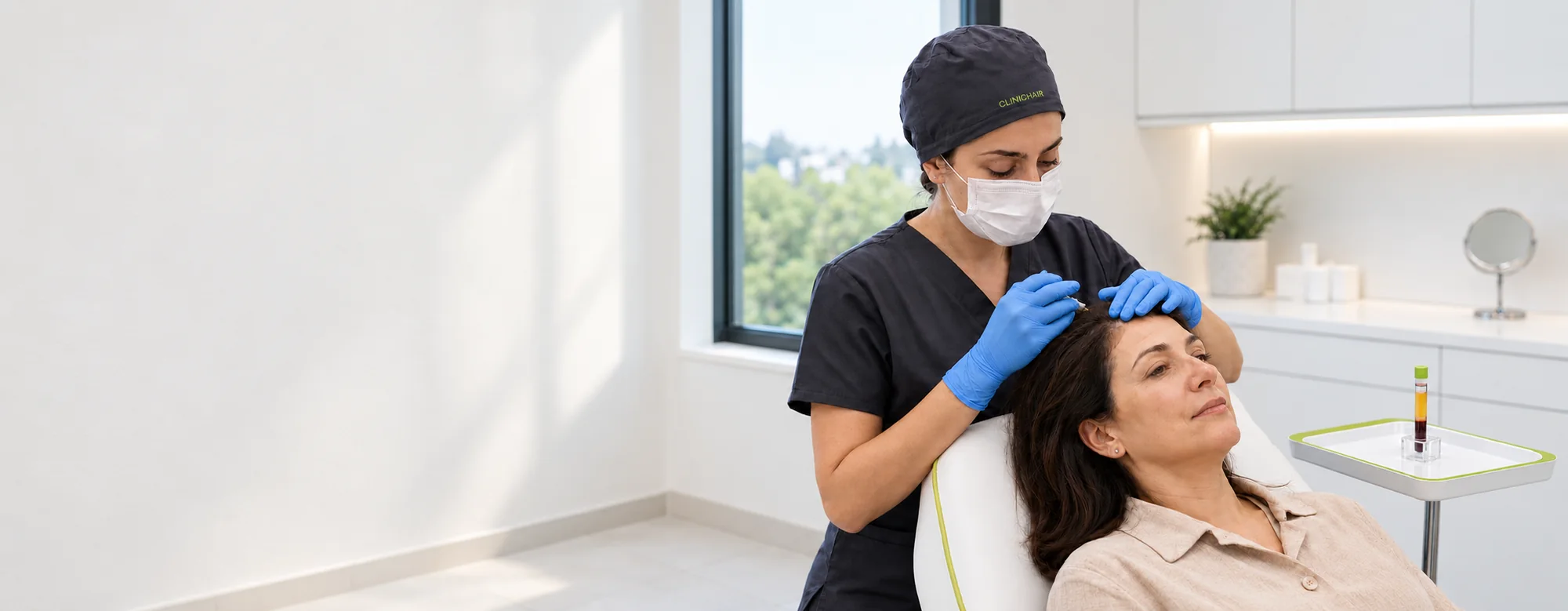
PRP is the application to the scalp of platelet-rich plasma prepared from your own blood. We examine the cause of your hair loss and your existing hair, and decide together on the approach that suits you.
The final plan is determined by the physician's examination.
Representative clinical image.
01ASSESSMENT AND PLANNING
First, let's understand the cause of the hair loss.
We listen to how your hair loss has progressed and examine your scalp and medical history together.
- Hair loss history
- We discuss when the hair loss started, how it has progressed, your stress levels and previous treatments.
- Hair and scalp
- We examine your existing hair and scalp and request further tests if needed.
- Medical history
- We review your blood values, illnesses, allergies, medication and supplements.
- Personal plan
- We explain the expected benefit, the limits and the options, and set the session schedule together.
02AIMS AND EXPECTATIONS
What can you expect from PRP?
The aim is to support existing hair; the response depends on the cause of hair loss and personal characteristics.
Support in reducing hair loss
In suitable people, it can help reduce hair loss.
Supporting hair growth
It can support the thickness and appearance of existing hair. The personal response becomes clear over time.
Planning alongside other treatments
Where needed, it can be included in the same treatment plan as medication or other hair treatments.
Monitoring the response
We track the contribution of the treatment by comparing your initial condition with later changes.
03TREATMENT PROCESS
How is PRP treatment done?
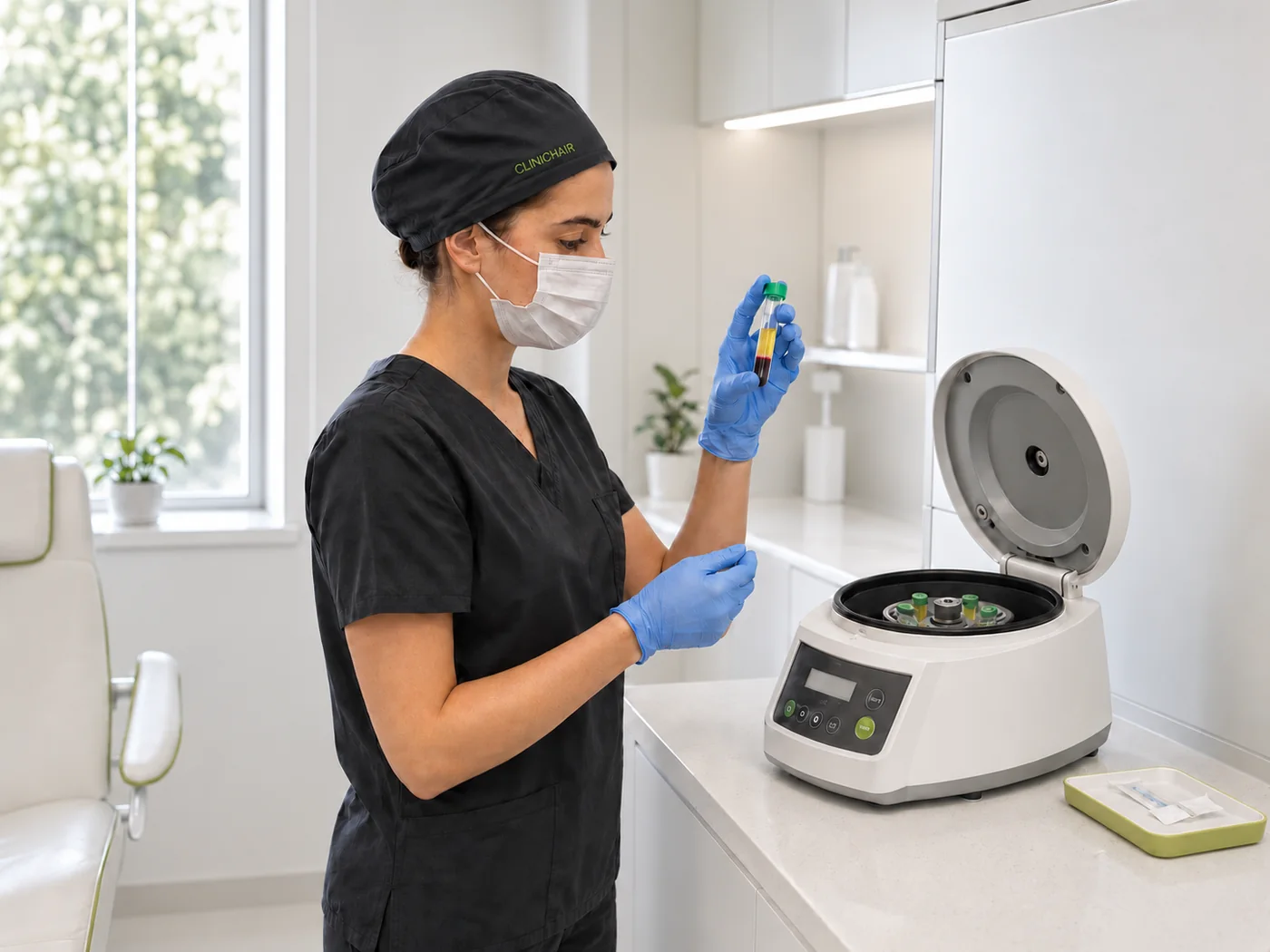
Including blood collection, preparation and application to the scalp, the PRP procedure takes about 40 minutes.
- 1
Blood sample
We take a blood sample from your arm to prepare the PRP.
- 2
Preparing the PRP
We separate the blood with a suitable kit and centrifuge system to prepare the platelet-rich plasma.
- 3
Application to the scalp
The prepared PRP is applied to the areas set by the physician with fine-needle injections.
- 4
After the procedure
We explain the care advice and share the dates of your check-up and next session with you.
04CARE AND FOLLOW-UP
Let's follow your care and progress together.
The first 12 hours
Do not touch the scalp; do not scratch or rub it. Do not use hairspray, gel or dry shampoo.
First wash
If your physician considers it suitable, you can gently wash your hair with lukewarm water after 12 hours.
Session plan
We monitor the response after the initial sessions. If needed, support sessions at longer intervals can be added.
Regular follow-up
We compare the course of hair loss and the appearance of the hair at check-ups spread over months.
05FREQUENTLY ASKED QUESTIONS
Common questions about PRP
What is PRP, and how is it used for hair?
PRP is platelet-rich plasma prepared from your own blood. The blood taken is separated in a centrifuge; the prepared portion is applied to target areas of the scalp with fine-needle injections.
Platelets contain growth factors. In hair treatment, the aim is to support the growth of existing hair in suitable people. PRP is not a hair transplant or a stem cell transplant.
Who is PRP suitable for; is it also done for women?
PRP can be an option for some types of hair loss in women and men, especially early-stage genetic thinning. The cause of hair loss, the condition of existing hair and medical history matter more than sex.
To assess suitability, we look at your blood values and discuss your hair loss history and stress levels. We also examine the scalp. If a deficiency or another cause is found, treating it may take priority.
What is the difference between PRP and hair mesotherapy?
The plasma used in PRP is prepared from the person's own blood. In hair mesotherapy, a product chosen by the physician is applied to the scalp in small amounts; the contents vary with the product used.
That both can be given by injection does not mean they are the same procedure. We make the choice based on the cause of hair loss and the benefit expected from each treatment.
Why do the PRP kit and preparation method matter?
The contents of PRP can vary depending on how the blood is processed and the system used. At Clinichair, PRP is prepared with a suitable kit and centrifuge system; sterile working conditions matter throughout preparation and application.
You can ask about the kit used, the preparation steps and the consumables.
How long does PRP treatment take?
At Clinichair, the PRP procedure takes about 40 minutes. Blood collection, preparing the PRP and applying it to the scalp are included in this time.
The treatment area and preparation needs can affect the duration. If another treatment is planned for the same day, we tell you the total appointment time in advance.
How many sessions are needed, and how are intervals set?
One common protocol is monthly treatment for the first three months, followed by support sessions at longer intervals if needed. However, this is not a fixed schedule that applies to everyone.
We create the initial plan together with the type of hair loss, your health and your treatment goal. Depending on the response at check-ups, sessions may need to continue, be spaced further apart or the plan may need to change.
When might I notice a change?
With PRP, change appears over time. A reduction in hair loss may be noticed within the first few months; changes in hair thickness and appearance may need to be monitored for longer.
We track the speed and degree of change together at check-ups.
Does it stop hair loss completely; is the effect permanent?
The effect of PRP can lessen over time. Because the cause of hair loss can also continue, further treatment or support sessions may be needed to maintain the benefit gained.
In areas where hair follicles have been lost, PRP is not expected to create new follicles. In that case, PRP does not replace a hair transplant; we discuss suitable options together at the examination.
Can it be used with medication or other hair treatments?
In suitable people, PRP can be part of the same treatment plan as hair loss medication or other treatments. We choose the options to combine according to your needs.
Tell your physician about the medication, hair products and supplements you use. The physician should decide whether combined use is needed and its timing; do not stop your current treatment on your own.
Can PRP be done before or after a hair transplant?
In suitable people, PRP can be added to the hair transplant process. Whether it is needed and when are considered together with the transplant plan, scalp healing and your health.
Aftercare advice and regular check-ups after the transplant are core parts of the process.
Is pain felt during treatment?
You may feel stinging, burning or tenderness during blood collection and the scalp injections. The discomfort you feel varies with your personal sensitivity and the treatment area.
You can discuss comfort options with your physician before the procedure. Tell the team when you feel discomfort; if needed, a short break is taken and a suitable approach is decided together.
What should I pay attention to before the procedure?
Share your illnesses, allergies and all the medication you take. In particular, blood thinners, platelet or clotting problems, scalp infections and pregnancy can affect the treatment decision.
Do not stop your medication or change the dose yourself. Get advice from our team on cleaning your hair, eating and preparation before the appointment; unless the physician advises otherwise, come with clean hair and without heavy styling products.
When can I wash my hair after the procedure?
If your physician considers it suitable, you can gently wash your hair with lukewarm water 12 hours after the procedure. If a different time is recommended because of your scalp's condition or additional treatments, follow that.
For the first 12 hours, avoid touching, scratching and rubbing the scalp. Do not use hairspray, gel or dry shampoo. Ask your physician when you can return to cosmetic products and medicines applied to the scalp.
When can I return to work, sport and hair colouring?
Most people can return to daily life quickly. Because there may be tenderness, redness or bruising at the injection points, take this into account in your plans for the day.
Avoid very hot showers, saunas, steam rooms and intense sport. A break of 24–48 hours is generally recommended for saunas, steam rooms and intense exercise; your physician's personal care advice takes priority.
Longer waiting times may be needed for swimming pools, hair dye and bleach. Ask your physician when you can return to these; if tenderness persists, consult the team.
What are the possible side effects, risks and limitations?
Temporary pain, tenderness, redness, swelling or bruising may occur. Less often, infection, bleeding or damage to surrounding tissues can occur.
Platelet problems, some illnesses and the medication you take can affect suitability. If pain worsens, redness increases, or there is discharge or fever, contact the clinic without waiting for your check-up date.
How are the fee and the follow-up scope agreed?
We explain the price before the procedure, together with the recommended session plan, the treatment system used and the scope of follow-up. Within the plan you approve, you will not face surprise extra charges.
We explain from the outset whether check-ups, later support sessions and any additional treatments are included. That way you can decide knowing both your appointment schedule and your overall plan.
Question not answered here?Message our patient adviser
This page is for general information. Your personal treatment and care plan is determined by the physician's examination.
Updated: 4 October 2026