
PLASTIC SURGERY
Liposuction
A personal contouring plan for localised fat.
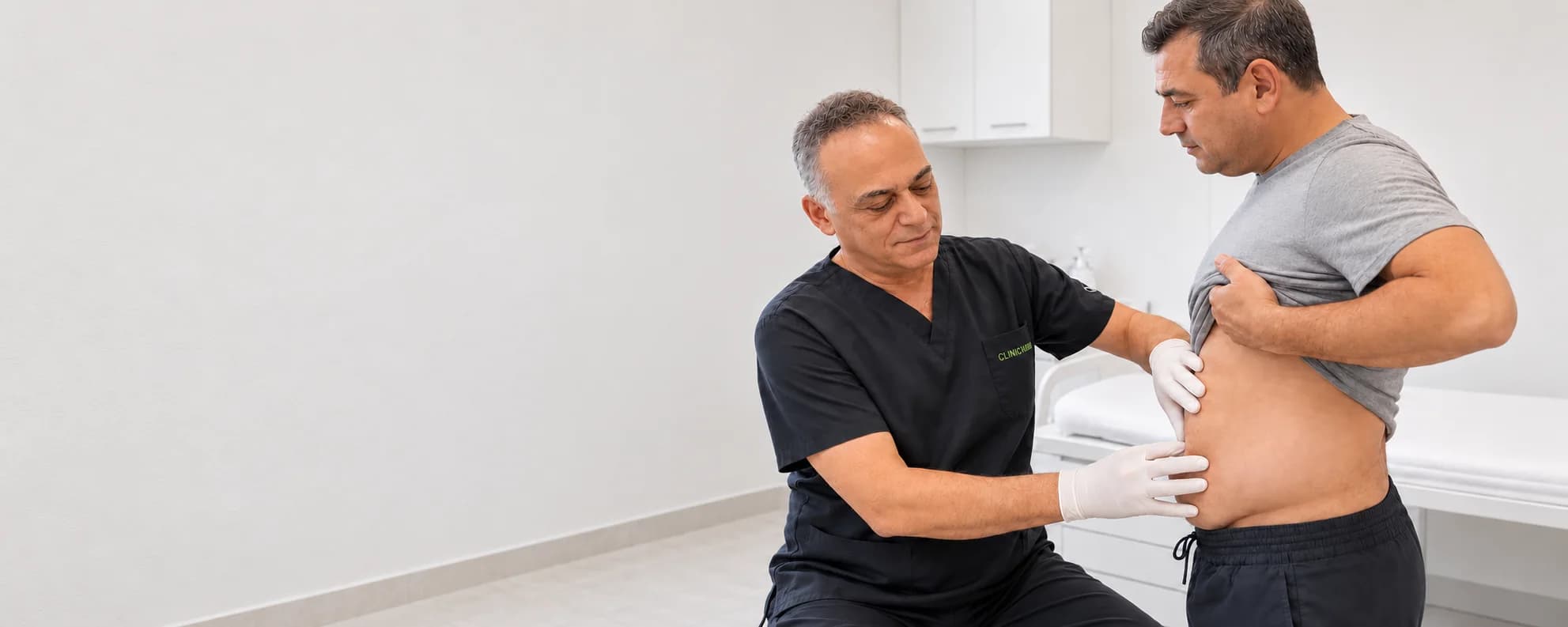
We assess localised fat deposits, skin elasticity, body proportions and your health together. The treatment areas and surgical scope are decided in line with realistic goals and personal suitability.
The final plan is determined by the physician's examination and the necessary assessments.
Clinical images are representative.
01ASSESSMENT AND PLANNING
Let's assess fat tissue together with skin structure.
- Treatment areas
- Fat distribution and body proportions in the abdomen, waist and other areas being considered are examined.
- Skin and tissue
- Skin elasticity, laxity, surface irregularities and previous procedures are assessed.
- Health and weight
- Weight stability, illnesses, medication, smoking and surgical risks are discussed.
- Personal goals
- The expected change in shape, the limits of the procedure and the need for follow-up are considered.
02METHOD AND PROCEDURE
Treatment suited to the area and the tissue.
The treatment area, method and how the skin adapts are assessed together.
Area and scope
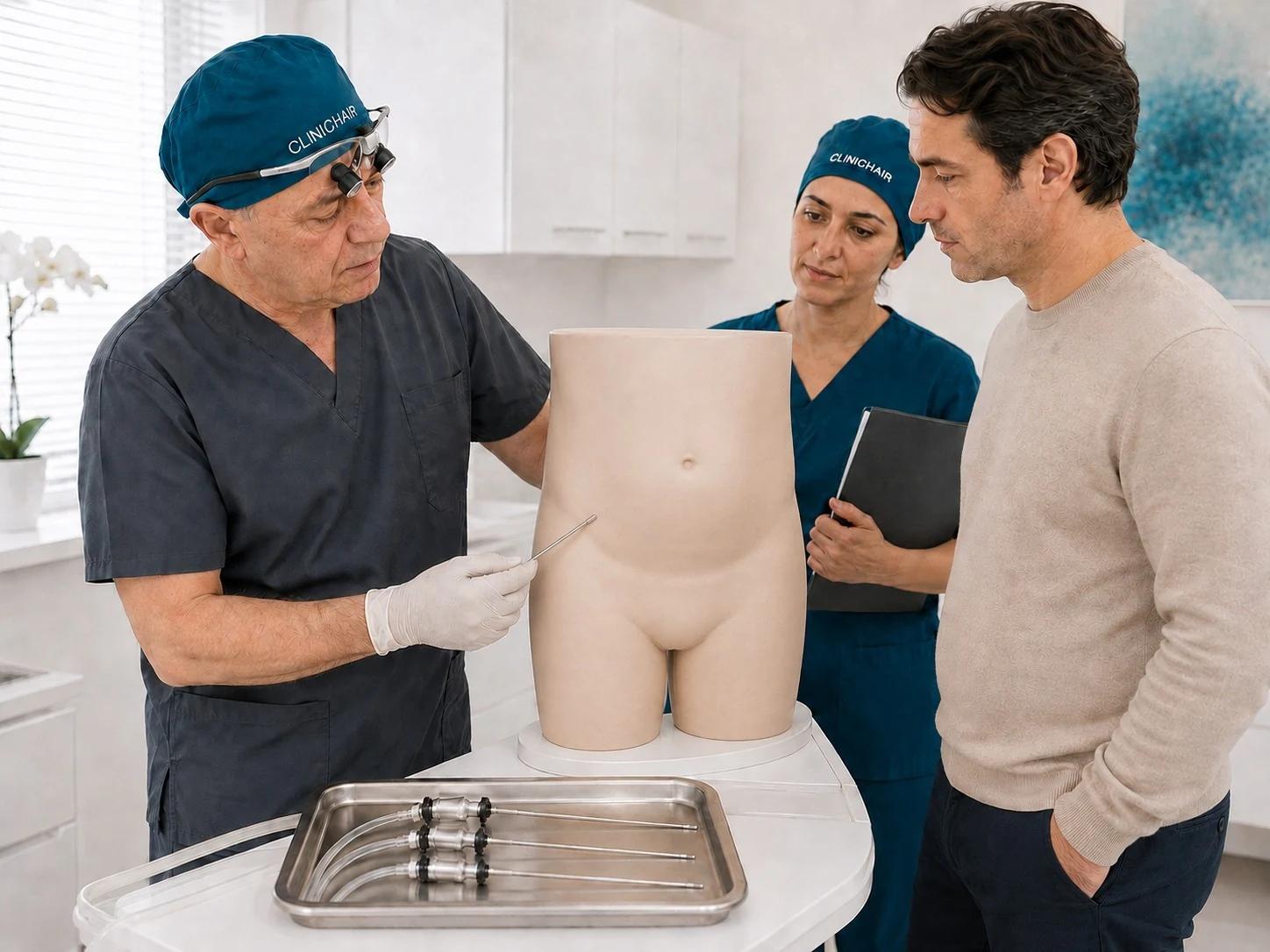
The areas to be treated and the surgical scope are decided by the examination and an overall risk assessment.
Choosing the method
The technique and device are chosen according to tissue characteristics and surgical needs. No single method suits everyone.
Skin adaptation
With loose skin, liposuction alone may not be enough. Any additional options needed are assessed separately.
Your comfort during the procedure
The choice of anaesthesia depends on the size of the treatment area and your health. The necessary monitoring continues during the procedure; if you feel pain, nausea or dizziness in the first hours, tell the team. Advice on wearing a compression garment and moving comfortably is explained according to the treated areas.
03CARE AND FOLLOW-UP
Let's monitor how the tissues settle and your recovery together.
The first days
Swelling, bruising and tenderness may occur. Advice on the compression garment, wound care and movement is shared individually.
Check-up consultations
Fluid collection, surface smoothness and tissue healing are assessed. Check-ups are planned by the surgeon.
Personal follow-up
The final appearance is assessed as swelling eases. Returning to work and sport is arranged according to recovery.
04FREQUENTLY ASKED QUESTIONS
Common questions about liposuction.
Can I lose weight with liposuction?
Liposuction is a contouring procedure aimed at localised fat; it does not replace obesity treatment or a weight-loss method.
Who is a suitable candidate for liposuction?
It can be considered for people whose weight is relatively stable, whose general health is suitable and who have fat deposits in specific areas. Skin elasticity affects how the area adapts to its new shape after fat is removed. Smoking, chronic illnesses and previous procedures also matter. At the consultation, we consider not only the amount of fat but also body proportions and the change you are aiming for.
Which areas can it be considered for?
Fat distribution, body proportions and skin elasticity in the abdomen, waist and other areas being considered are examined together. Which areas are suitable becomes clear at the examination. When choosing the treatment area, the overall surgical scope is considered as well as the targeted change.
Will loose skin also be corrected?
If there is loose skin, liposuction alone may not be enough. Skin elasticity and supporting tissues are examined at the examination. We discuss together whether an additional option is needed for your contouring goal and the limits of the procedure.
Does liposuction remove cellulite and stretch marks?
Liposuction is not a treatment for cellulite or stretch marks. Even if fat volume is reduced, these features on the skin surface can remain; if skin elasticity is insufficient, rippling can become more visible. Distinguishing at the examination whether your main complaint is fat deposits, laxity or the skin surface makes it easier to discuss the right option.
How are the technique and device chosen?
The technique and device are chosen according to the treatment area, tissue characteristics and surgical needs. No single method suits everyone. You can ask your surgeon for the name, intended use and relevant registration details of the device and consumables.
Can more than one area be treated together?
More than one area can be addressed within the same plan; however, the decision is not based only on the number of areas requested. Your health, the scope of the procedure and the overall surgical risk are discussed together. When needed, a more limited or staged plan is chosen.
How much fat can be removed in one session?
There is no single number of litres that is safe for everyone. Body structure, health, the number of treatment areas, total operating time and fluid balance all matter. The aim is not to remove as much fat as possible but to contour within a suitable scope. With larger treatments, extra monitoring or splitting the procedure into separate sessions may be needed.
What anaesthesia is used for liposuction?
For small, limited areas, local anaesthesia options may be available; for larger treatments, general anaesthesia or other anaesthetic support may be needed. The anaesthesia team considers your health and the scope of the procedure together. The discharge time and any overnight stay depend on this. If you will go home on the same day, arrange someone to accompany you and help for the first night in advance.
What should I pay attention to in preparing for the procedure?
Share your chronic illnesses, any history of clots, allergies, and the medication and supplements you take. Tell the anaesthesia team about all treatments, including weight-loss or diabetes medicines; do not stop them on your own. Discuss smoking and nicotine use and follow the fasting instructions given. Prepare in advance for wearing a compression garment after the procedure and for help at home.
What are pain, bruising and care like in the first days?
There may be tenderness, bruising, swelling and temporary numbness in the treatment area. Dress the small incisions as described; ask the team when you can shower and how to monitor any leakage. Start the recommended short walks and do not rush into heavy exercise. Do not start treatments such as massage or lymphatic drainage on your own.
How are the compression garment and return to daily life planned?
Advice on the compression garment, wound care and movement is shared individually. At check-ups, fluid collection, surface smoothness and tissue healing are monitored. When you can return to work and sport is discussed according to these findings; the final appearance is considered as swelling eases.
Are firmness, rippling or asymmetry normal?
In the early period, firmness or temporary irregularities can be felt because of swelling and tissue healing. These can take weeks or months to ease; permanent contour irregularity is also a possible risk. Bring any new, increasing or localised changes to your check-up. It is not possible to distinguish fluid collection and other problems from normal healing without an examination.
When does the result become clear; does the fat come back?
As swelling eases, the body contour emerges; it can take several months, sometimes up to six months, for the final appearance to become clearer. The fat cells removed are gone, but the remaining cells can grow with weight gain. That is why weight gain can change the appearance in the same or other areas. A stable weight and sustainable activity habits help preserve the result.
Which symptoms mean I should get help without waiting?
If you have increasing pain, rapidly growing swelling, fever, spreading redness or foul-smelling discharge, contact the team the same day. New pain and swelling in one leg also needs urgent assessment. For sudden shortness of breath, chest pain, fainting or a marked change in consciousness, call 112; do not wait for a check-up appointment.
How are the fee and the follow-up scope agreed?
We confirm together the surgical method, anaesthesia, place of surgery and scope of follow-up before the procedure. You can decide knowing which services are included in the price. If the scope of the plan changes, we share the reason and cost of the additional procedure in advance and proceed with your approval.
Question not answered here?Message our patient adviser
Explore plastic surgery servicesThis page is for general information. Personal assessment is made through a physician’s examination.