
Complementary Medicine
Prolotherapy
Planning tailored to pain and movement.
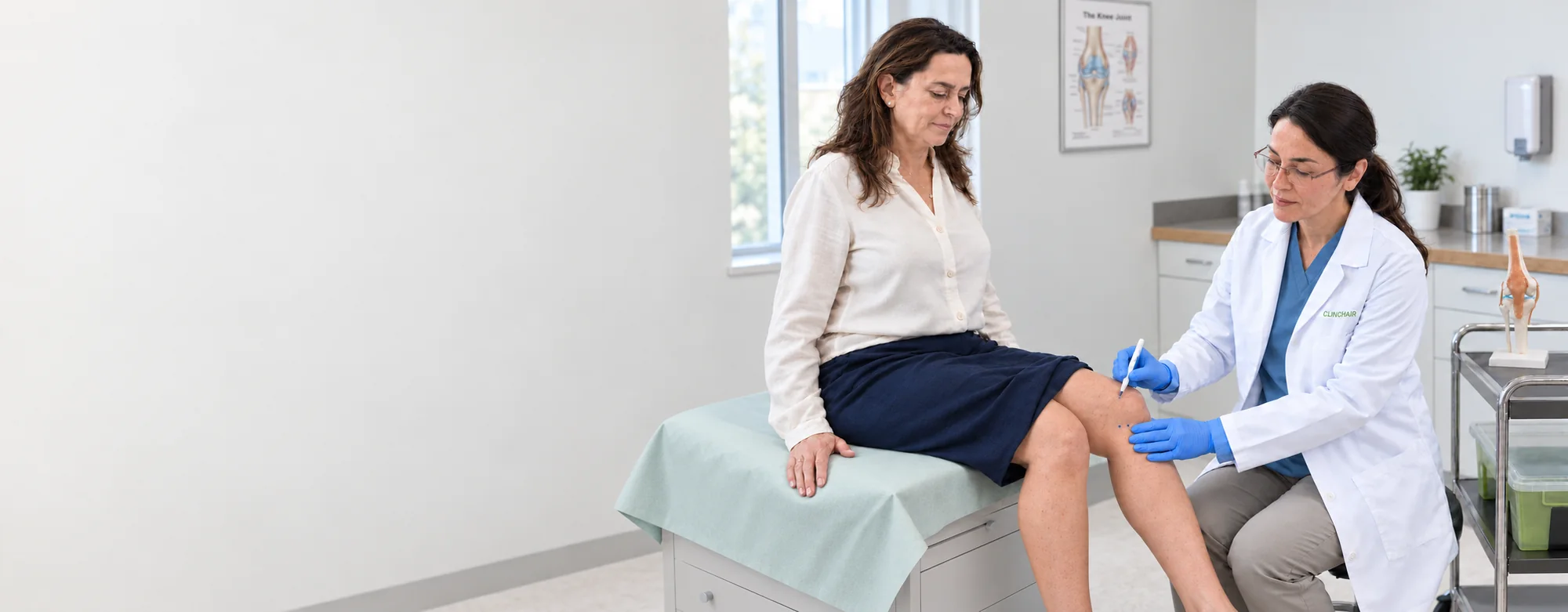
Prolotherapy is an injection method used for selected musculoskeletal complaints. Solutions usually containing dextrose are used. After the examination, the physician explains suitability, the target tissue and the follow-up process.
The final plan is determined by the physician's examination. Representative clinical image.
01ASSESSMENT AND PLANNING
How is your personal plan built?
We start by discussing how your pain relates to movement and your experience of previous treatments.
- Pain and movement history
- We discuss how long your pain has lasted, how it relates to load and how it affects everyday movements.
- Medical and medication history
- We review your illnesses, allergies, medication and previous treatments.
- Joints, ligaments and tendons
- The physician examines tenderness, range of movement and, where available, any necessary imaging findings.
- Personal treatment plan
- We explain the target area, the solution, the possible benefits, risks and other treatment options.
02SUITABILITY AND TREATMENT GOALS
Which topics do we cover at the examination?
Your diagnosis and your response to previous treatments help us understand the place of prolotherapy for you.
Knee and around the joints
We examine which structure the pain relates to and how it affects movement. We discuss suitable options together.
Ligament and tendon complaints
We consider pain that increases with load, local tenderness and previous injuries. Prolotherapy may not be suitable for every complaint.
Response to previous treatments
We discuss how much benefit you have had from medication, exercise and other treatments. We consider ongoing complaints with this information.
Movement and rehabilitation
We discuss your daily life and movement goals. Suitable exercise and rehabilitation can be part of the treatment.
03TREATMENT PROCESS
How is prolotherapy applied?
We share the steps of the process with you, from the target area to movement after the procedure.
- 1
Defining the target area
The treatment area is decided according to the examination findings. Imaging guidance is considered when needed.
- 2
Preparation and choice of solution
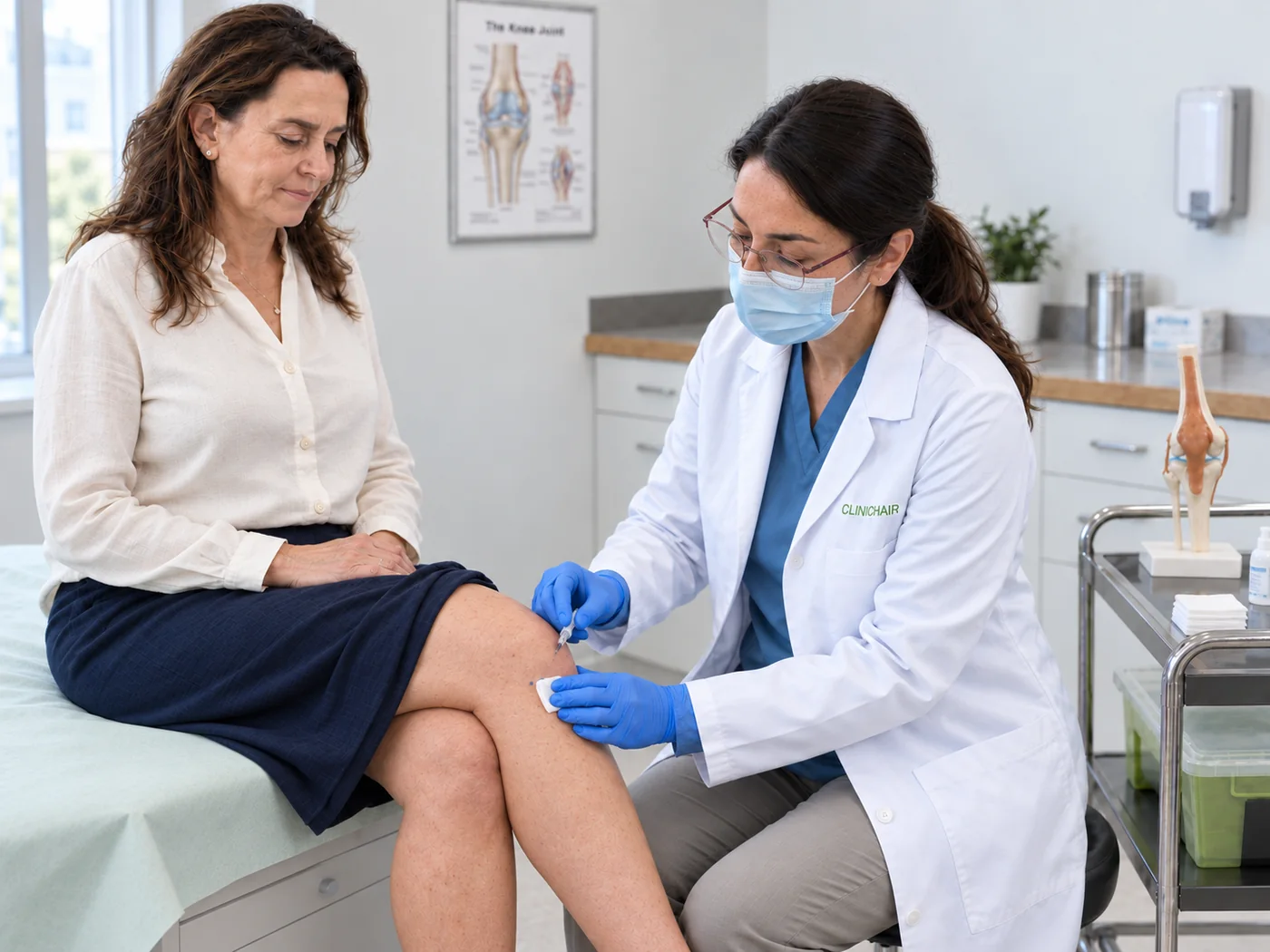
The skin is cleaned with antiseptic. The solution to be used and the measures needed for comfort are decided according to the personal plan.
- 3
Application to the target tissue
The solution is injected into the ligament, tendon or joint area set by the physician.
- 4
First check and follow-up
Your condition is assessed after the treatment. Care, movement and check-up advice is shared with you.
04CARE AND FOLLOW-UP
After the treatment, step by step.
The first day
Temporary tenderness or bruising may occur at the injection site. Follow your care advice for the area.
Movement and exercise
Returning to everyday movement and to intense exercise may not happen at the same time. Follow the advice suited to the target area and your complaints.
Check-up consultation
We monitor pain, ease of movement and daily function. If the benefit is not enough, we discuss other options.
Session plan
We discuss the number and frequency of sessions in terms of your diagnosis, your response to treatment and how well you tolerate the procedure.
05FREQUENTLY ASKED QUESTIONS
Common questions about prolotherapy
Who can prolotherapy be considered for?
For selected musculoskeletal complaints, suitability can be discussed based on the diagnosis and the response to previous treatments. Which joint, ligament or tendon the pain relates to and how it affects movement are examined. It is not suitable for every localised pain; it is considered together with other options.
Which solutions are used in the treatment?
Solutions usually containing dextrose are used. The contents and treatment area are decided by the physician's examination; any additional components and the possibility of allergy are explained before the procedure. You can ask for information about the solution to be used.
What is the difference between prolotherapy and PRP?
Prolotherapy usually uses a solution containing dextrose. PRP is based on platelet-rich plasma prepared from the person's own blood. Their contents and preparation differ; one is not an automatic substitute for the other. The choice is discussed according to the diagnosis and personal treatment needs.
How does it differ from pain mesotherapy and neural therapy?
In prolotherapy, a solution is injected into the chosen ligament, tendon or joint area. Neural therapy uses local anaesthetics; in pain mesotherapy, the contents are given into the skin with superficial injections. Because the target tissue and methods of application differ, the methods are not automatically used in place of one another.
What are the expected benefits and limits of the method?
Research results vary by diagnosis, and benefit is uncertain in many areas of use. The expected gain is discussed together with the response to previous treatments and other options. Changes in pain and daily function are monitored at follow-up; with an insufficient response, the plan is reconsidered.
Are an MRI or other tests needed at the first consultation?
An MRI is not mandatory for everyone. The location of the pain, how it relates to movement and the examination findings are considered first; imaging or other tests are requested if needed. It is useful to bring previous scans and reports. A finding seen on imaging does not on its own mean that prolotherapy should be done.
Can I use my blood thinners and painkillers?
Tell us about all your medication and supplements. In particular, confirm how to use blood thinners and painkillers such as aspirin, ibuprofen or naproxen before and after the procedure. Which medicines to continue and whether to pause any depends on your personal situation. Do not stop prescription medication on your own; ask in advance what you can take if you have pain.
Can it be done if I have diabetes, am pregnant or have an infection?
Report these conditions before the appointment. With diabetes, blood sugar control and the contents of the solution used are considered together; suitability is not decided solely on the use of dextrose. With pregnancy, breastfeeding or an active infection, the risks are examined separately. If there is an infection at the injection site, this problem is addressed first; the procedure may be postponed.
How long does a prolotherapy session take?
The number of target areas, the injection method and whether imaging guidance is needed affect the duration. The examination, preparation and check at the end of the procedure are part of the total visit. Once the target area is clear, we share the approximate appointment time in advance. When discussing your work and travel plans for the day, take into account the movement advice for the area as well as the procedure time.
Is pain felt during treatment?
A sting may be felt during the injection and temporary tenderness after the treatment. The measures to be taken for comfort are discussed before the procedure. If you have marked discomfort, tell the team; care and movement advice for the area is shared after the procedure.
When is the effect clear; does it provide permanent tissue repair?
The time for a response to appear varies with the diagnosis and personal situation; relief felt on the same day does not show a lasting change. It cannot be said that prolotherapy regenerates tissue or provides permanent repair in everyone. At check-ups, we look at changes in pain, movement and daily function and discuss other options if there is not enough benefit.
How many sessions are needed, and how are intervals set?
The number and frequency of sessions are set according to your diagnosis, the target area, your response to treatment and your tolerance. Pain, ease of movement and daily function are reviewed at check-ups. The same schedule is not used for everyone.
When can I return to everyday movement and sport?
A desk job, walking and intense sport do not create the same load. Tell us about your work and sport at the consultation; let's confirm together the steps for returning that suit the target area. Do not suddenly increase your exercise load because the pain has eased. Do not stop your current physiotherapy or rehabilitation programme yourself; share with the team any complaints that become noticeable with movement.
Does prolotherapy replace physiotherapy or surgery?
It is not a method that solves every problem on its own. The need for exercise, rehabilitation, medication or surgery is considered separately according to the diagnosis. If you have been advised to have surgery, share this and the related reports. The decision to have prolotherapy should not be a reason to delay a necessary treatment or to drop your current movement programme on your own.
What are the possible risks and side effects?
Temporary pain, tenderness or bruising may occur at the injection site. Risks such as infection and an allergic reaction to the contents are explained before the procedure. Contact the clinic if you have increasing pain, marked swelling, redness or a rash; get emergency help if you have shortness of breath or sudden swelling of the face, tongue or throat.
How are the fee and the follow-up scope agreed?
We clarify the scope of treatment and follow-up with you before the procedure. We explain how the sessions, check-ups and any additional services are included in the quote. Within the plan you approve, you will not face surprise extra charges; if the plan needs to change, we discuss it in advance.
Question not answered here?Message our patient adviser
This page is for general information. Personal assessment is made through a physician’s examination.
Updated: 4 October 2026