
MEDICAL AESTHETICS
Skin PRP Treatment
An assessment tailored to your skin.
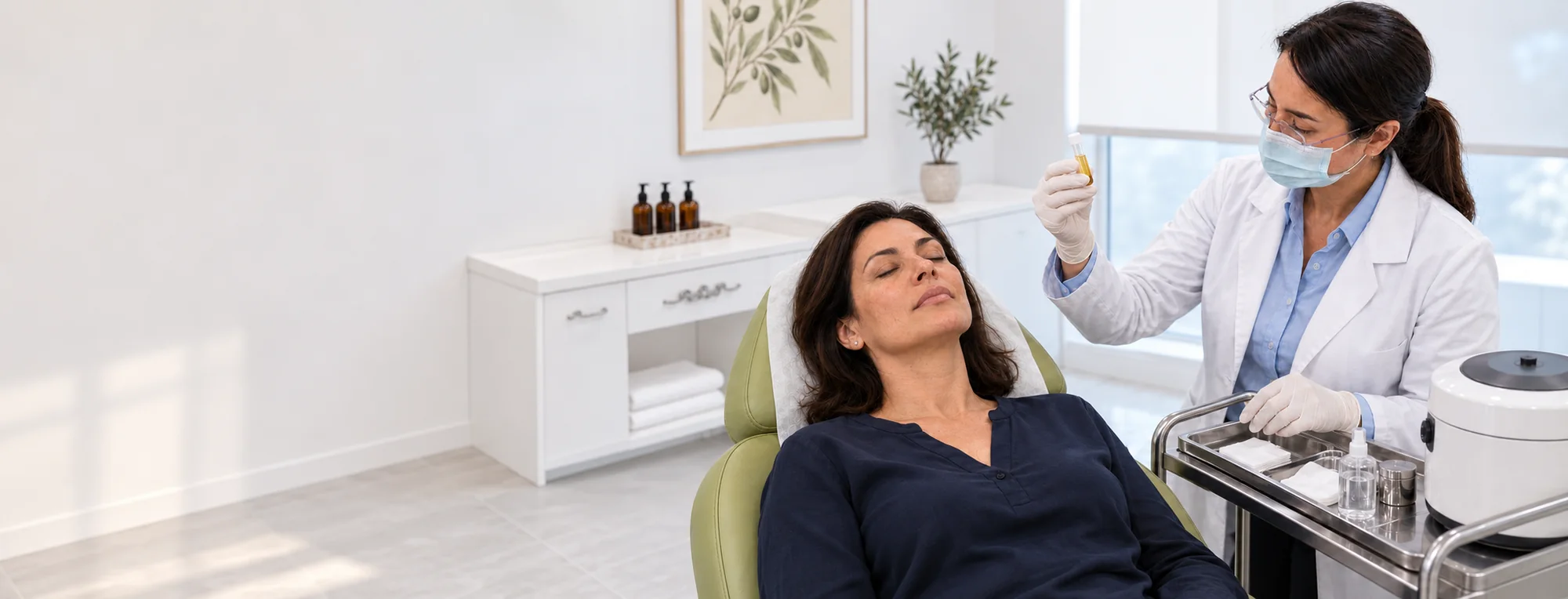
In skin PRP, platelet-rich plasma prepared from your own blood is applied to the skin. At the examination, we discuss your expectations regarding skin texture, fine lines or the appearance of acne scars, and the limits of the method.
The final plan is determined by the physician's examination. Clinical images are representative.
01ASSESSMENT AND PLANNING
How is your personal plan built?
We examine your skin findings and find out about your medication, any blood-related problems and previous procedures.
- Skin assessment
- Skin texture, fine lines, scars and the findings in the treatment area are examined.
- Medical and medication history
- Illnesses, bleeding problems, the medication you take and previous procedures are shared.
- Suitability assessment
- Active skin infection and blood-related conditions are reviewed; tests are requested if needed.
- Personal plan
- The expected change, limitations, possible risks and the check-up process are discussed together.
02AIMS OF THE TREATMENT
For which purposes is skin PRP considered?
Skin texture, fine lines and scars are different needs; PRP's place in each is examined separately.
Skin texture and appearance
We listen to the change you would like in your skin texture. We explain to what extent PRP can meet this expectation.
Appearance of fine lines
We examine the structure of the fine lines and discuss at the examination what change in their appearance can be expected.
Appearance of acne scars
We examine the type and depth of the scars. We compare using PRP alone or with other methods.
Planning together
If another skin procedure is also needed, we explain the purpose of each method and the order in which they will be done.
03TREATMENT PROCESS
How is skin PRP treatment done?
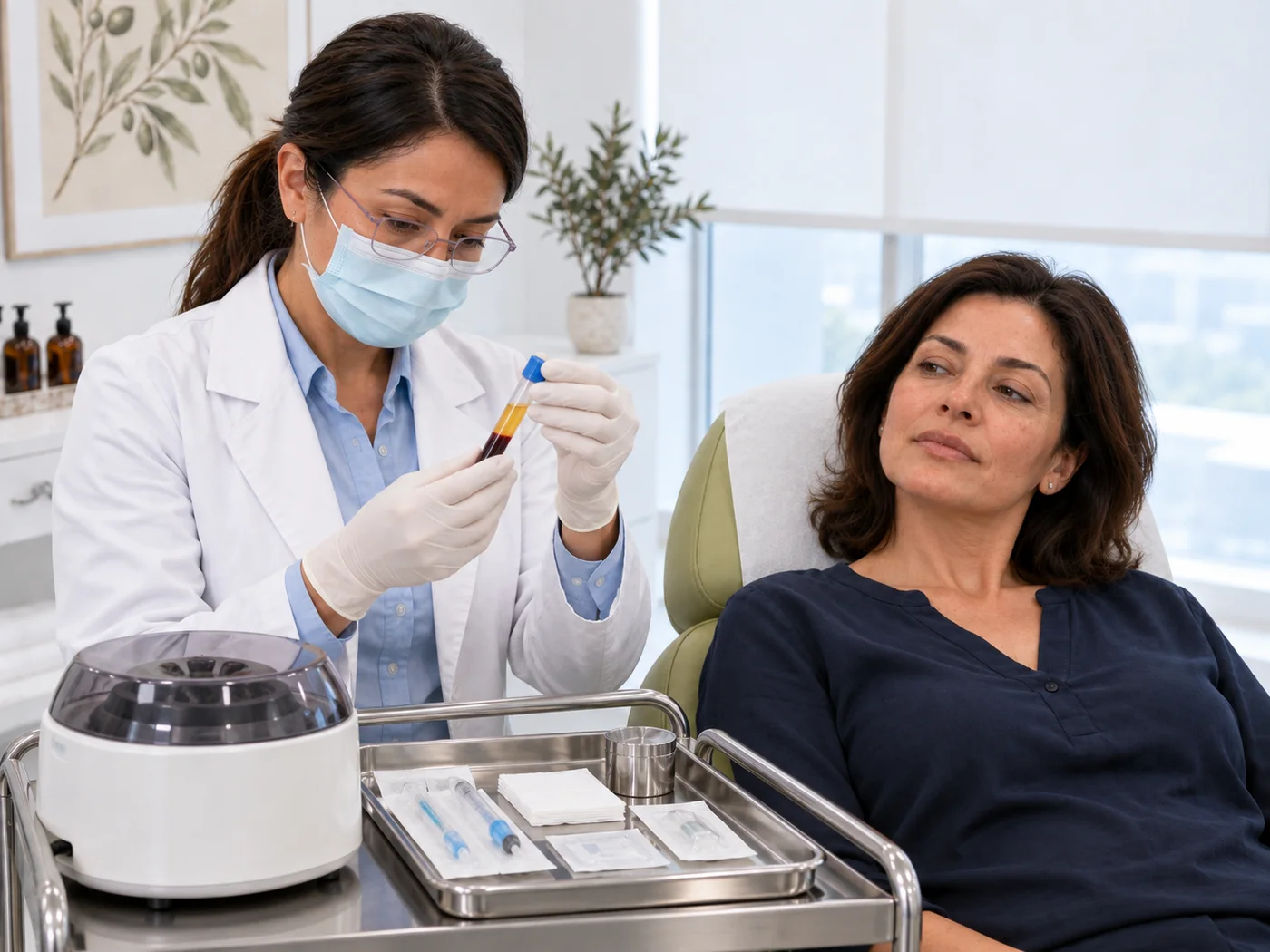
A blood sample is taken, the plasma is separated and the prepared PRP is applied to the defined areas of skin.
- 1
Taking a blood sample
The blood sample taken from you is processed in a suitable kit to prepare PRP.
- 2
Preparing the PRP
The blood is separated with a centrifuge system. The platelet-rich plasma is prepared under sterile conditions.
- 3
Application to the skin
The prepared PRP is applied to the areas of skin set by the physician with fine-needle injections.
- 4
Check-up and follow-up
Initial care advice is shared. A check-up and any further sessions are planned to assess the skin's response.
04CARE AND FOLLOW-UP
After the treatment, step by step.
The first day
Temporary redness, tenderness, swelling or bruising may occur. Care advice specific to the treatment area is shared.
Daily care
Your physician explains advice on cleansing, moisturiser, sun protection and make-up.
Check-up consultation
At the check-up, we review your skin texture, your initial concerns and the need to continue.
Session plan
The need for repeat treatment and session intervals are set individually according to the condition of the skin and follow-up findings.
05FREQUENTLY ASKED QUESTIONS
Common questions about skin PRP
16 questions · Click a question to read the full answer.
Who can skin PRP be considered for?
It can be considered for people with expectations regarding skin texture, fine lines or the appearance of acne scars. The condition of the skin, medical and medication history and blood-related problems are examined. If there is an active infection or another contraindication, the treatment may be postponed; tests are requested if needed.
How is PRP prepared from my own blood?
Blood taken from your vein is separated in a centrifuge in a suitable tube or kit. The platelet-rich plasma portion is prepared for the skin treatment. Throughout preparation and application, confirming that the blood is yours, sterile conditions and single-use materials matter.
What is the difference between PRP and skin mesotherapy?
PRP is prepared from the person's own blood. Mesotherapy uses products with chosen ingredients. Because the material used and the purpose of treatment differ, suitability and the session plan are also decided separately. We discuss at the examination which method better suits your expectations.
Skin MesotherapyDoes PRP have a filler effect?
Skin PRP is not the same procedure as filler used to add volume. On this page it is treated as a treatment aimed at skin texture and the appearance of fine lines and scars. If you have marked volume loss, different options may need to be discussed for that.
Fillers and Facial ContouringHow is it planned for fine lines and acne scars?
The structure of the lines and the type and depth of the scars are examined. Whether PRP will be used alone or together with other methods is discussed accordingly. Not every scar or line responds in the same way; we discuss realistically at the start what change can be achieved.
Does every PRP treatment have the same contents and effect?
No. The kit used, the preparation method and the person's blood characteristics affect the plasma obtained. That is why treatments at different centres cannot be considered directly the same. Rather than the method's name, it is more informative to discuss how it is prepared and which need in your skin it is recommended for.
Is a blood test needed before PRP?
Not everyone needs the same list of tests. Depending on your medical history, any bleeding or easy bruising and the medication you take, tests such as a blood count may be requested. If you have a platelet or clotting problem, be sure to tell us before the appointment.
Does the medication I take matter for PRP?
Yes. Blood thinners, medicines that affect platelets and painkillers you take regularly are particularly important. Bring a list of your medication and supplements. Do not stop any of them on your own; the decision about PRP's suitability and your medication is made taking into account the physician who follows you.
Are PRP injections and microneedling the same thing?
No. PRP refers to the prepared material, while microneedling is a method that creates small controlled channels in the skin. PRP can be applied to the skin by injection or used together with other methods in some plans. Find out in advance which procedure will be done; healing and care advice vary by method.
Is pain felt during treatment?
There may be a brief sting while blood is taken and with the skin injections. Comfort options are discussed according to your sensitivity and the treatment area. Telling us in advance about any anxiety about needles or previous fainting makes it easier for the team to help you.
How many sessions are needed, and how are intervals set?
There is no fixed number of sessions or interval for skin PRP that suits everyone. We discuss the first sessions based on your skin concern and the purpose of the treatment. In deciding whether to continue, we take into account changes in the skin and your concerns; the initial plan does not automatically mean ongoing treatment.
When can the change be assessed?
The redness and swelling right after the procedure do not show PRP's effect on the skin. We compare changes at follow-up consultations in terms of skin texture, fine lines or the appearance of scars. Because research is limited, it is not possible to give a starting week that applies to everyone. We share the check-up date at the end of the procedure.
When can I wash my face and wear make-up?
PRP injections alone and PRP with an additional skin procedure may not require the same care period. That is why you should find out at the end of the procedure when you can wash and wear make-up again. Do not rub the skin. Ask separately when you can return to peeling products or products containing acids or retinoids; follow the advice on daily moisturising and sun protection.
Can it be done together with other skin treatments?
When needed, it can be considered within the same overall plan as other skin treatments. However, whether they can be done on the same day, or which procedure should come first, depends on the condition of the skin and the methods. Tell your physician about the treatments you have had recently.
What are the risks and possible side effects?
There may be temporary redness, tenderness, swelling or bruising at the blood collection and injection sites. Sterile conditions are important to reduce the risk of infection; using your own blood does not remove all risks. Contact the clinic if you have increasing pain, redness, warmth or discharge.
How are the fee and the follow-up scope agreed?
The price is explained once the product or material to be used, the area, the amount and the number of sessions are clear. We clarify before the procedure whether check-ups, additional treatments and later sessions are included in this price.
Question not answered here?Message our patient adviser
This page is for general information. Personal assessment is made through a physician’s examination.
Updated: 4 October 2026