

PERSONALISED PLANNING
Oral & Dental Health.
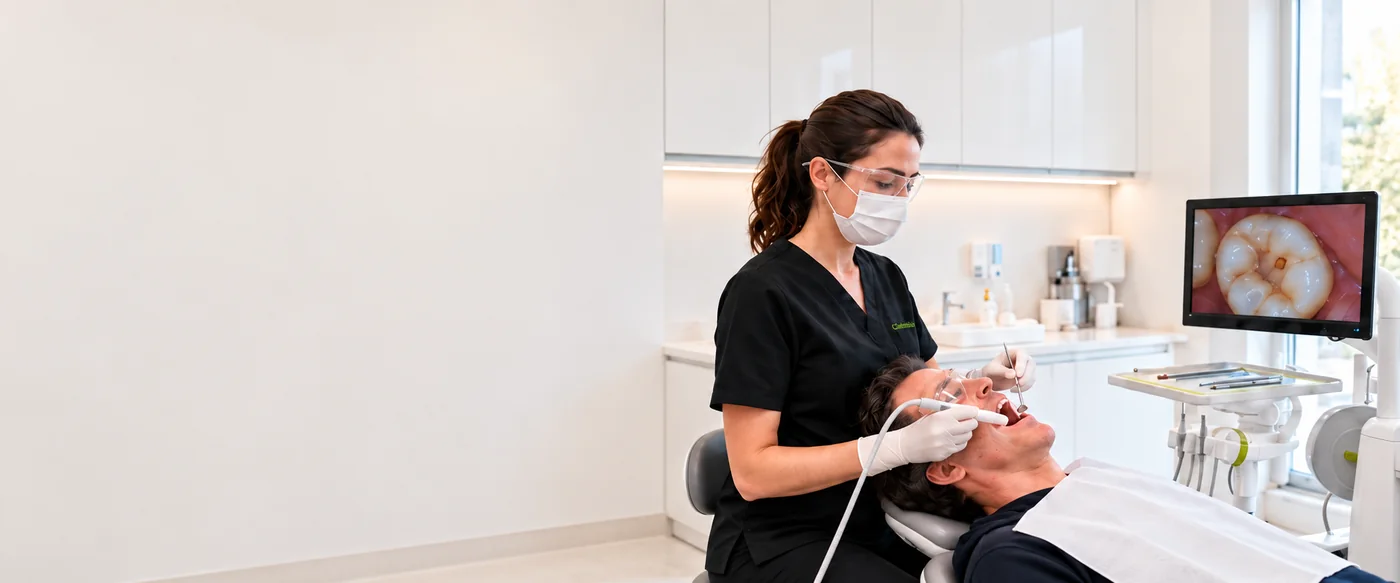
We assess your dental health, chewing function and aesthetic expectations together. Based on your examination findings and needs, we plan suitable treatment options individually.
The final treatment plan is determined by a dental examination and any necessary tests.
Clinical images are representative.
01ASSESSMENT AND PLANNING
A personal plan for your oral health.
Your teeth, gums, jaw structure and needs are assessed together.
- Oral and dental structure
- Teeth, gums, jaw structure and bite are assessed together.
- Health and treatment history
- Your complaints, general health, medication and previous treatments are reviewed.
- Expectations and options
- Necessary tests, suitable treatments, alternatives and the follow-up plan are discussed together.
02PLANNING AND TREATMENT OPTIONS
Explore the treatment options that suit you.
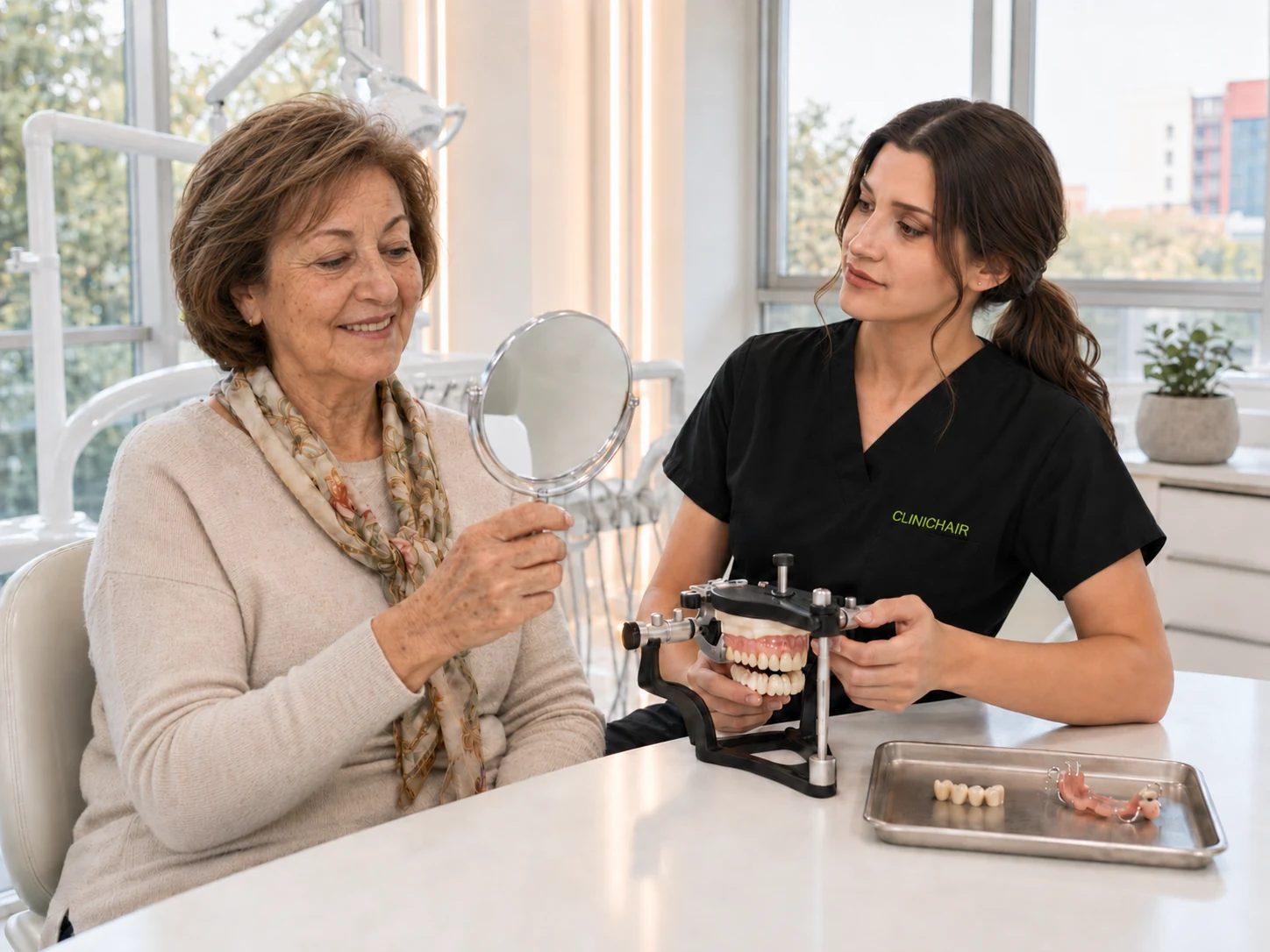
Treatment is chosen individually, based on your oral health and your dentist's assessment.



03TREATMENT AND CARE
From planning to regular oral care.
Finalising the plan
Treatment stages, material options, expected benefits and the scope of follow-up are assessed before the procedure.
Treatment and fit
Depending on the chosen treatment, the function of the teeth, the bite, appearance and tissue harmony are checked.
Regular care
Home oral care recommendations are shared. Check-up intervals are set according to your oral health and treatment needs.
Your dentist explains the possible risks and limitations specific to the treatment and the recommendations after the procedure.
04FREQUENTLY ASKED QUESTIONS
Common questions about oral and dental health
Click a question to read the full answer.
How is the treatment plan decided?
First, we listen to your complaints, expectations and health history. We examine your teeth, gums, bite and existing restorations, and request imaging if needed. We discuss with you the priority needs for your oral health, suitable options, alternatives and stages. The final plan becomes clear after the examination and any necessary tests.
What information should I share when I come to my first appointment?
Share the medication you take, your allergies, chronic illnesses, whether you are pregnant and your previous dental treatments. If you have them, you can also bring recent dental X-rays and information about implants or prostheses. Telling us when the pain started, about your sensitivity and any concerns about treatment guides us. Do not stop your regular medication on your own.
Is an X-ray or CT scan needed at every examination?
No. The need for imaging depends on your examination findings, your complaints, your previous X-rays and the treatment being considered. An X-ray and a three-dimensional CT scan are not used for the same purpose on every patient. Your dentist explains which examination is needed and why. It is important to share your previous images and whether you are pregnant at the appointment.
Should I see a dentist even if I have no pain?
Yes. Some cavities and gum problems may not cause noticeable pain at first. At a regular examination, the teeth, gums and oral tissues are checked, and your care and any possible problems are discussed early. The timing of check-ups is not the same for everyone. If you have a new complaint, do not wait for your routine check-up date.
When are fillings and root canal treatment considered?
A filling can be used to restore tooth tissue lost to decay or a fracture with a suitable material. When the living tissue inside the tooth becomes infected, root canal treatment may be needed; the canals are cleaned and filled. Not every cavity needs root canal treatment. The examination, any necessary X-rays and the remaining tooth tissue help determine the suitable repair option.
How are implant and prosthesis options assessed?
The number and location of missing teeth, the remaining teeth, bone and gum health, general health and daily care needs are considered together. An implant is the support within the bone; a prosthesis is the superstructure that replaces the missing teeth. We can compare tooth-supported, implant-supported, fixed and removable options in terms of suitability, treatment stages and care requirements.
How is dental health protected in cosmetic treatments?
Before planning a change in colour or shape, decay, gum health, the bite and existing restorations are checked. If there are priority health problems, these are addressed first. Whitening, bonding, veneers and crowns are different procedures, and their effects on tooth tissue also differ. Before the procedure, we discuss the options that suit you, the extent of any tooth reduction if needed and the care requirements.
What is professional dental cleaning and polishing?
These are treatments aimed at removing plaque, tartar and surface stains from tooth surfaces using suitable methods. Polishing, done when needed, helps reduce surface stains. If there is gum disease, cleaning alone may not be enough; other periodontal procedures may be needed. Professional care does not replace regular brushing and cleaning between the teeth at home.
Are dental cleaning and whitening the same procedure?
No. Cleaning removes build-up and surface stains from the tooth surface. Whitening aims to lighten the colour of natural teeth with suitable products. Crowns, fillings and prostheses do not lighten in the same way as natural teeth. Before whitening, the health of the teeth and gums is checked, and possible sensitivity and colour matching with existing restorations are discussed.
What should I do if my gums bleed?
Do not accept recurrent bleeding when brushing or eating as normal; make a dental appointment. Bleeding, redness, swelling or recession may be related to gum problems. Rather than stopping cleaning altogether, continue gentle and regular care. Your dentist checks the build-up, your gum health and your cleaning technique, and explains the treatment needed.
What happens if I feel pain or anxiety during the procedure?
You can share your anxiety and previous experiences at the start of the appointment. Depending on the procedure, suitable options such as local anaesthesia are discussed. You may feel pressure or movement in the numbed area; if you feel pain, tell our team immediately. We can agree a signal in advance for when you want a break. You can share your comfort needs with us throughout the procedure.
How many sessions does treatment take?
The duration varies with the type of treatment, the condition of the teeth and gums, the preparation needed, healing and laboratory stages. Some procedures can be completed in a single appointment; others require more than one visit. In implant and prosthetic treatments in particular, the stages may take place at different times. If you are travelling from another city or from abroad, let's agree on the visit and check-up schedule together before your trip.
Are daily care and post-procedure recommendations the same for everyone?
No. Daily care is generally based on brushing twice a day with fluoride toothpaste and regular cleaning between the teeth. However, additional recommendations for a filling, root canal treatment, surgery or a removable prosthesis may differ. Find out details such as eating, drinking, cleaning the area and check-up timing for the procedure you have had, and follow the personal recommendations you are given.
How often should check-ups be done?
The check-up interval is set according to your risk of decay and gum disease, your existing treatments and your care needs. The same interval does not suit everyone. Separate check-up appointments may be needed during active treatment and after implants or prostheses. Follow the schedule recommended to you; if pain, bleeding, a fracture or loosening develops, get in touch without waiting for the next routine check-up.
Which symptoms mean I should get help without waiting?
If you have severe or increasing toothache, swelling in the face or jaw, fever or difficulty opening your mouth, see a dentist without delay. Difficulty breathing or swallowing, or marked swelling that spreads quickly, needs emergency assessment; in Türkiye call 112 or go to an emergency department. With these symptoms, do not wait for a reply to an online form.
How are the price and scope of service clarified?
After the examination and any necessary tests, we share with you the recommended procedures, alternatives, materials to be used and the scope of follow-up. You can discuss in advance whether temporary teeth, laboratory stages and any additional procedures that may be needed are included in the plan. We clarify the scope of treatment and follow-up from the outset. Within the plan you approve, you will not face surprise extra charges.
Question not answered here?Message our patient adviser
This page is for general information. A personal assessment is made at a dental examination.
Updated: 4 October 2026