

PLASTIC SURGERY
Breast Aesthetics
Planning tailored to volume, shape and body proportions.
We assess breast structure, skin characteristics, your health and your expectations together. Augmentation, reduction or lift options are considered together with their possible benefits, limitations and follow-up needs.
The final plan is determined by the physician's examination and the necessary assessments.
Clinical images are representative.
01ASSESSMENT AND PLANNING
Let's assess breast structure and your personal goals.
- Tissue and proportions
- Breast volume, skin elasticity, sagging, the rib cage and asymmetry are assessed.
- Breast health
- Personal and family history, previous procedures and any imaging considered necessary are reviewed.
- Health history
- Illnesses, medication, smoking and conditions that affect healing are discussed.
- Life plans
- Pregnancy, breastfeeding, weight changes and personal expectations are included in planning.
02METHOD AND PROCEDURE
Surgical options suited to your needs.
Volume, tissue structure, body proportions and personal goals are assessed together.
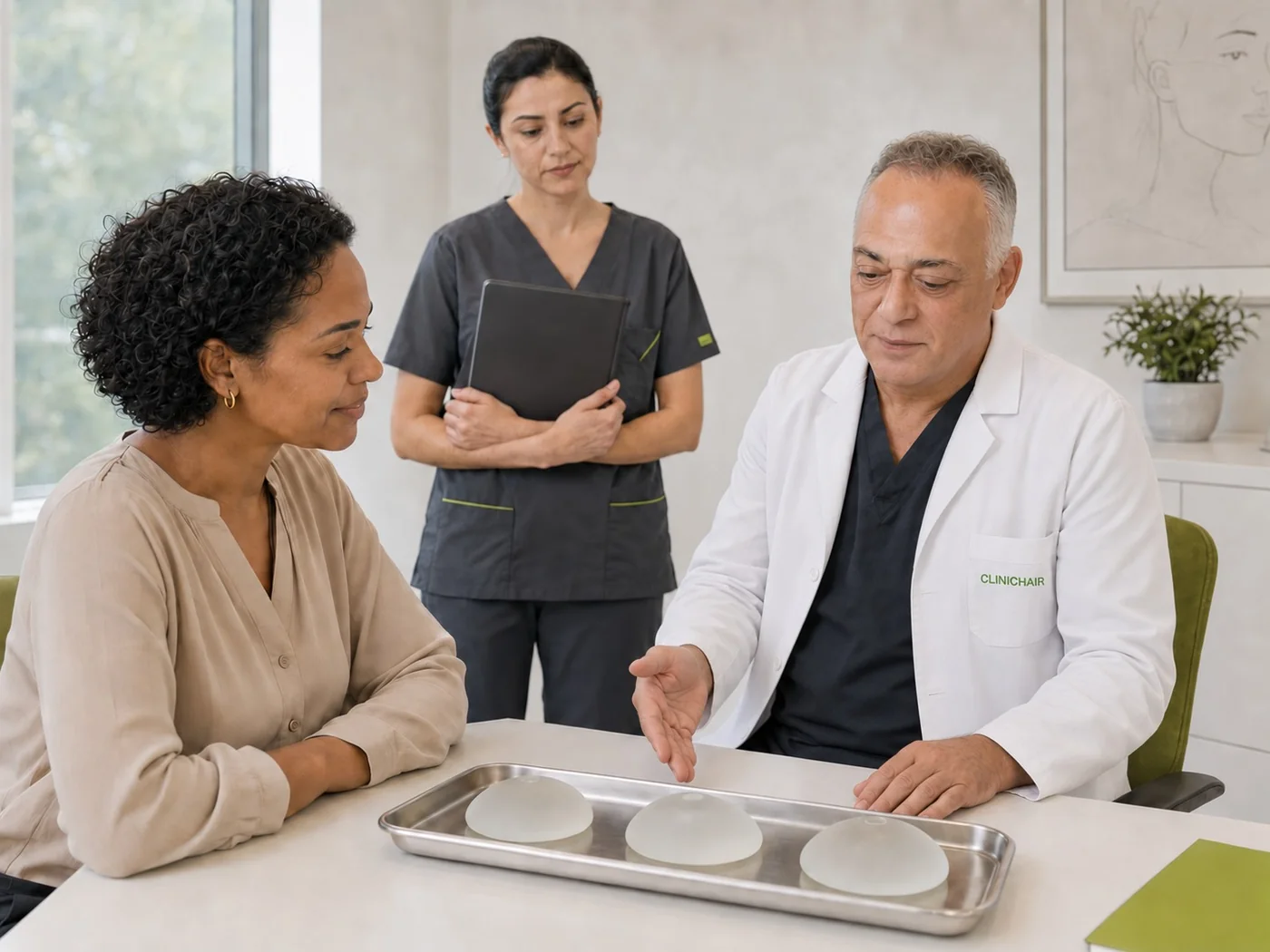
Augmentation
Depending on volume needs, tissue structure and body proportions, implants or other options considered suitable are assessed.
Reduction
Surgery for excess breast tissue and skin is planned together with volume and personal complaints.
Lift
Sagging and changes in shape are addressed. If there is a need for volume, additional options are discussed separately.
Your comfort during the procedure
We discuss anaesthesia and pain control in advance according to the extent of the augmentation, reduction or lift. In the first hours, you may feel tightness or tenderness in the chest area. Get into a comfortable position with the team's help; tell us if you have pain or nausea. Advice on the support bra is explained according to your surgery.
03CARE AND FOLLOW-UP
Let's plan healing and long-term follow-up together.
The first days
Swelling, bruising and tenderness may occur. Wound care and use of a support bra are arranged individually.
Check-up consultations
The wound, how the tissues settle, symmetry and changes in sensation are assessed. The necessary check-ups are planned by the surgeon.
Long term
Implants do not come with a lifetime guarantee. Imaging or further surgery may be needed in the future as part of follow-up.
04FREQUENTLY ASKED QUESTIONS
Common questions about breast aesthetics.
How are augmentation and reduction options decided?
Breast volume, existing tissue, skin elasticity, sagging and body proportions are considered together. Your goal and any complaints related to volume also guide the decision. We explain the scope of augmentation, reduction and lift options at the examination.
Does a lift always require implants?
No. Sagging and volume needs are assessed separately. Whether implants are needed is decided at the surgeon's examination according to existing tissue and expectations.
How are implant size and breast volume chosen?
The decision is not made solely on cup size or implant volume. The width of the rib cage, existing breast tissue, skin elasticity, nipple position and the look you want all matter. We also discuss any asymmetry at the start. Example images can help express your expectations; we confirm the limits of the volume and shape that suit you at the examination.
Do my pregnancy and breastfeeding plans affect the choice?
Yes. Share your plans for pregnancy, breastfeeding and any significant weight change at the first consultation. These are important in discussing surgical timing and options. Before deciding, also discuss with your surgeon the possible effects of the procedure on breastfeeding and breast sensation.
Is an ultrasound or mammogram needed before surgery?
The need for imaging depends on your age, examination findings, complaints and personal or family history of breast disease. Bring previous ultrasound, mammogram and biopsy results with you. Be sure to mention any new lump, nipple discharge or skin change at the cosmetic consultation; this finding may need to be clarified first.
Can I find out the product information for the implant?
Yes. You can ask for the brand, manufacturer, contents, surface, intended use, lot/serial number, expiry date and ÜTS registration details. Also find out why the product is recommended for you and what follow-up it needs. ÜTS registration does not directly mean “Ministry approval”.
What are anaesthesia and care like in the first days?
Augmentation, reduction and lift operations are usually done under general anaesthesia. Same-day discharge or an overnight stay depends on the extent of the procedure and your health. In the first days, there may be tightness, pain and swelling. Get separate instructions for the support bra, dressing, showering and any drain care; arrange help for going home and the first night.
Where will the surgical scars be?
The location of the scars varies with the procedure. In augmentation, different access routes such as the fold under the breast can be used; in lifts and reductions, the area around the nipple, a vertical line and, when needed, the fold under the breast can be used. Discuss the incision pattern while looking at it before the procedure. Scars can fade over time but are permanent; mention it if you have developed raised scars before.
Will nipple sensation and breastfeeding be affected?
There can be temporary, and sometimes permanent, changes in sensation in the breast or nipple. Breastfeeding capacity also depends on the method used, where the incisions are and how far the milk ducts and nerves are preserved; it can be affected especially with reduction. Being able to breastfeed after surgery is not certain for everyone. Share your wish to breastfeed in the future before the method is chosen.
How are scars and the return to daily life followed up?
At check-ups, wound healing, how the tissues settle, symmetry and changes in sensation are monitored. Advice on the support bra, wound care and returning to daily activities is shared according to your personal healing. Describe the movements your work and exercise require at the consultation.
When does the final shape of the breast settle?
As the swelling and tightness of the first weeks ease, the shape of the breast changes; the tissues softening and settling can take several months. Healing does not happen at the same pace in augmentation, lift and reduction. Scars take longer to mature. Weight changes, pregnancy and ageing can affect the appearance in the future; check-up photographs help compare changes more reliably.
Will implants need to be replaced in the future?
Implants do not come with a lifetime guarantee. Imaging, assessment of the implant or further surgery in the future may be needed as part of follow-up. Rather than a fixed replacement date for everyone, the decision is based on your personal situation and check-up findings.
How do breast screening and imaging continue if I have implants?
You should continue the breast cancer screening suited to your age and risk; tell them you have implants when booking. Monitoring implant integrity is a separate matter from cancer screening. A silicone implant rupture may cause no symptoms; that is why follow-up with ultrasound or MRI may be recommended. Find out when to start and the intervals according to the implant information and your personal situation.
What are the main risks of breast implants?
The capsule around the implant can harden and cause pain or a change in shape. Implant rupture, displacement and infection are also among the possible risks. BIA-ALCL is a rare lymphoma associated particularly with textured implants. It is not the same disease as breast cancer. Very rarely, other tumours in the capsule have also been reported. Discuss the surface of the recommended implant, personal risks and alternatives before deciding.
Which changes mean I should get help without waiting?
If one breast has rapidly increasing swelling, marked pain, fever, spreading redness or discharge, contact the team the same day. Persistent swelling, a new lump, hardening or a change in shape around an implant that starts months or years later also needs an examination. For sudden shortness of breath, chest pain or fainting, call 112.
How are the fee and the follow-up scope agreed?
We confirm together the surgical method, anaesthesia, place of surgery and scope of follow-up before the procedure. You can decide knowing which services are included in the price. If the scope of the plan changes, we share the reason and cost of the additional procedure in advance and proceed with your approval.
Question not answered here?Message our patient adviser
Explore plastic surgery servicesThis page is for general information. Personal assessment is made through a physician’s examination.