

HAIR TREATMENTS
Exosome Treatment
An assessment specific to hair and scalp.
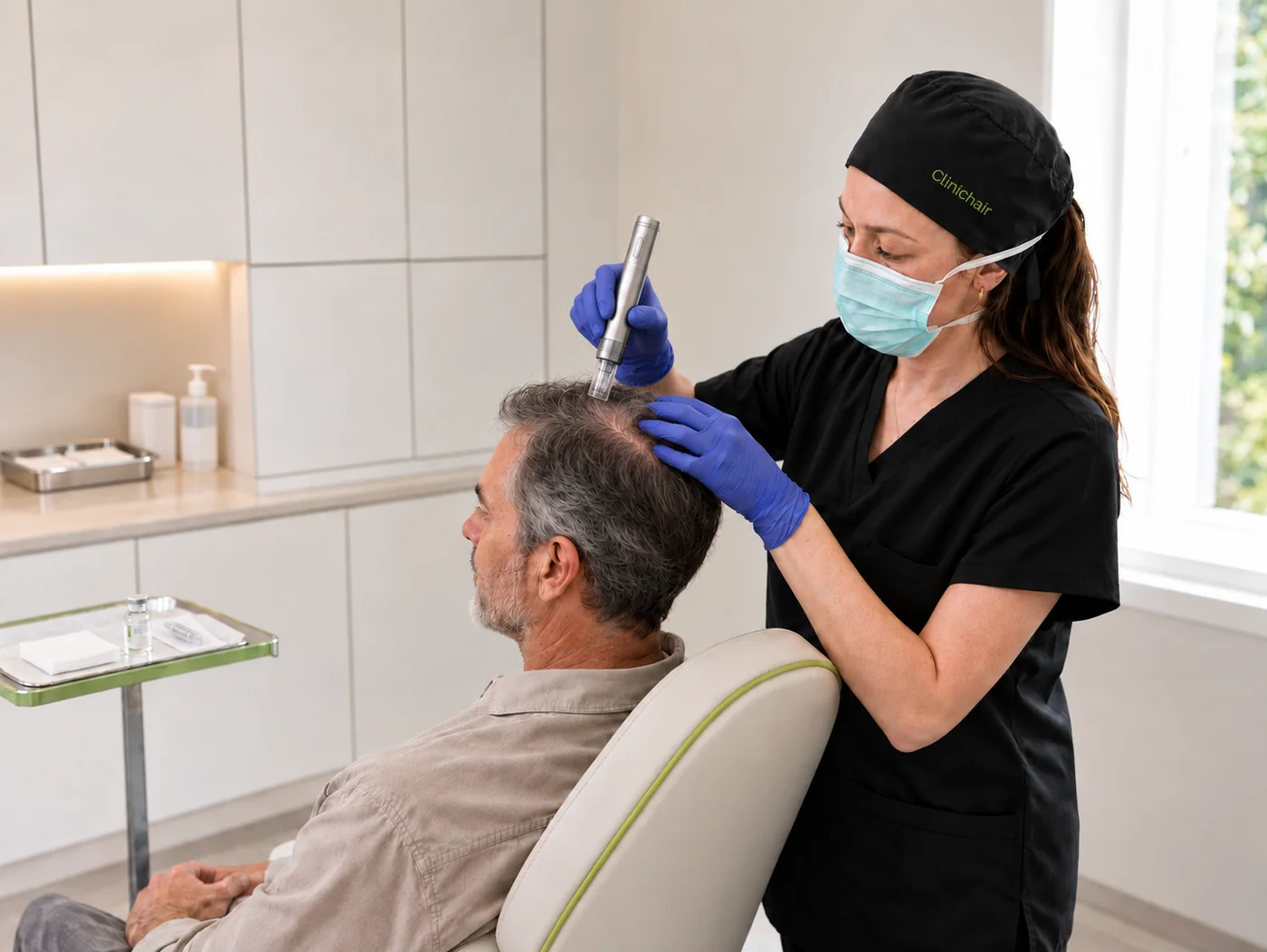
In exosome treatment, controlled microneedling is done on the scalp, and then the chosen product is applied to the surface. We examine your scalp and the cause of your hair loss to decide on the approach that suits you.
The final plan is determined by the physician's examination.
Representative clinical image.
01ASSESSMENT AND PLANNING
First, let's understand the cause of the hair loss.
We listen to your hair loss history and examine your hair, your scalp and whether the product suits you.
- Hair loss history
- We discuss when the hair loss started, how it has progressed, your stress levels and previous treatments.
- Hair and scalp
- We examine your existing hair and scalp and request a blood test if needed.
- Medical history
- We find out about your illnesses, allergies, medication and reactions to previous procedures.
- Product and personal plan
- We clarify with you the product's source and contents, how it is applied and the scope of follow-up.
02PRODUCT SOURCE AND EXPECTATIONS
Let's get to know the product used.
We explain the product's source, its contents and how it is applied to the scalp before the procedure.
What are exosomes?
They are small, membrane-bound structures released by cells. They may play a role in carrying molecules; they are not living cells.
Human-derived
Products containing exosomes derived from human umbilical cord. The product's contents and manufacturing details are examined individually.
Bovine colostrum
Colostrum is a cow's first milk after giving birth. These are products containing exosomes obtained from this source.
Support for hair
The aim is to support existing hair. In choosing the product, we take into account the cause of hair loss and your personal needs.
03TREATMENT PROCESS
How is exosome treatment done?
Including preparation, microneedling and applying the product to the scalp surface, the procedure takes about 30 minutes.
- 1
Product and treatment plan
We explain the source and contents of the product to be used and how it is applied, and define the target areas.
- 2
Preparing the scalp
We clean the treatment area and part the hair. We arrange comfort preparation according to your personal needs.
- 3
Microneedling
Controlled microneedling is done in the areas set by the physician. Device settings are chosen to suit the scalp.
- 4
Topical product application
The product is applied to the scalp surface; no injections are given. We share care advice and the check-up plan.
04CARE AND FOLLOW-UP
Let's follow your care and progress together.
The first 12 hours
Do not touch the scalp; do not scratch or rub it. Do not use hairspray, gel or dry shampoo.
First wash
If your physician considers it suitable, you can gently wash your hair with lukewarm water after 12 hours.
Treatment plan
We set the number of treatments and the repeat interval according to the product information, personal needs and the changes seen at check-ups.
Progress check-up
To assess changes more reliably, we usually carry out the progress check-up about 2 months after the procedure.
05FREQUENTLY ASKED QUESTIONS
Common questions about exosome treatment
What are exosomes; do they contain living cells?
Exosomes are small, membrane-bound structures that cells release. They can carry proteins and other molecules and may play a role in communication between cells. They are not living cells themselves; exosome treatment does not mean a stem cell transplant.
Products said to contain exosomes can differ in their source, contents and how they are prepared. That is why we look not only at the product's name but also at the information on the product to be used and how it is applied.
Who is it suitable for; is it also done for women?
For women and men who come to us because of hair thinning, we first examine the cause of the hair loss and the condition of the scalp. We listen to your hair loss history, stress levels, previous treatments and expectations.
We request a blood test if needed. If a deficiency, an inflammatory scalp condition or another cause is found, treating it may take priority. Whether exosome treatment is suitable for you is decided with this information and the product's properties.
How do human-derived and bovine colostrum-derived products differ?
The current treatment options include exosome-containing products derived from human umbilical cord and from bovine colostrum. Colostrum is a cow's first milk after giving birth. The source, the manufacturing method and the product's other components differ.
The name of a source alone does not show that it is more effective or more suitable. We examine the product's contents, manufacturing details, whether its instructions for use are compatible with application after microneedling, and your personal suitability together.
How does it differ from PRP, mesotherapy and stem cell treatment?
PRP is prepared from the person's own blood. In hair mesotherapy, a product chosen by the physician is applied with small injections. In the tissue micrograft method described on our stem cell page, small tissue samples are taken from the person's own scalp.
The exosome treatment described here uses a ready-made product; no blood or tissue sample is taken. At Clinichair, the product is applied to the scalp surface after microneedling. These methods are not the same procedure and should not be thought of as direct equivalents of one another.
Are exosomes given by injection?
At Clinichair, the treatment described on this page is not done by injection. First, controlled microneedling is applied to the scalp; then the exosome-containing product is spread or dropped onto the skin surface. This surface application is called topical application.
The small needles of the microneedling device create micro-channels in the scalp. This step is different from delivering the product into the skin with a syringe. We explain the area to be treated, the product to be used and the steps of the procedure in advance.
How long does the treatment take?
At Clinichair, exosome treatment takes about 30 minutes. Preparing the scalp, microneedling and applying the product to the scalp surface are included in this time.
The treatment area and personal comfort needs can affect the duration. If another procedure is planned for the same day, we share the total appointment time with you in advance.
Is pain felt during the procedure?
You may feel stinging, burning or tenderness during microneedling. The discomfort felt varies with the treatment area, the device settings and your personal sensitivity. We discuss comfort options before the procedure.
If you feel discomfort, tell the team; a short break can be taken if needed. It is important to keep your head in the position the team guides you to during the treatment.
How many treatments are needed; how is the repeat interval set?
There is no single number of treatments or repeat interval that suits everyone. The information on the product to be used, the condition of the scalp, the cause of hair loss and your existing treatments shape the initial plan.
At check-ups, we look at the scalp's response and the changes in photographs. Depending on the findings, it may be possible to continue the plan, consider a repeat treatment or turn to other options.
When might I notice a change; when is the check-up?
To assess changes more reliably, we usually carry out the progress check-up about 2 months after the procedure. We compare baseline photographs and examine the appearance of the hair, the course of hair loss and the condition of the scalp.
Clinical data and long-term follow-up on hair treatments are limited; findings obtained with one product cannot be generalised to all exosome products. We consider expectations according to the product to be used and your personal situation.
Does it replace a hair transplant; is it done with other treatments?
Exosome treatment is not a hair transplant procedure in which hair follicles are moved. Covering bald areas with a hair transplant is a separate goal. We do not offer exosome treatment as an option that replaces a hair transplant.
In suitable people, other hair treatments can be part of the same care plan. Combined use and timing before or after a hair transplant are decided by the physician, taking into account the products used and scalp healing. Do not change your current treatment yourself.
What should I pay attention to before the procedure?
Share your illnesses, allergies, and the medication and supplements you take. Tell your physician about conditions such as use of blood thinners, bleeding or healing problems, an active scalp infection, pregnancy and breastfeeding.
Do not stop your medication or change the dose on your own. Get preparation advice from our team about cleaning your hair and the products you apply to your scalp; also tell us about any reactions you have had to previous procedures.
What if I am allergic to milk protein or product components?
If you have a milk protein allergy or have previously reacted to a care product, tell us before the procedure. Especially with colostrum-derived products, the physician should examine all the product's components as well as its source.
There can also be sensitivity to other components of a human-derived product. The product's suitability is considered with your allergy history and the ingredient information; if needed, a different option is chosen or the treatment is not done.
When can I wash my hair; which products can I use?
If your physician considers it suitable, you can gently wash your hair with lukewarm water 12 hours after the procedure. If a different time is recommended because of the product's instructions for use or the condition of your scalp, follow that.
For the first 12 hours, avoid touching, scratching and rubbing the scalp. Do not use hairspray, gel or dry shampoo. Confirm with your physician when you can return to cosmetic products and medicines applied to the scalp.
When can I return to work, sport, saunas and hair colouring?
Plan your day bearing in mind that there may be temporary redness and tenderness. How you feel, your work environment and the condition of your scalp matter for returning to work. We share advice that suits you at the end of the procedure.
Take a break from very hot showers, saunas, steam rooms and activities that cause heavy sweating. The time for returning to swimming pools, hair dye, bleach and sport may not be the same; follow the advice given according to the product used and scalp healing.
What are the possible side effects and warning signs?
After microneedling, redness, tenderness, burning, small pinpoint bleeds or crusting may occur. There are also risks such as irritation or an allergic reaction to the product used, infection and changes in colour.
If you have increasing pain, spreading redness, discharge, fever or ongoing bleeding, contact the clinic without waiting for your check-up date. If you have symptoms such as shortness of breath or swelling of the lips or tongue, call for emergency help.
How are the fee and the follow-up scope agreed?
We explain the price before the procedure, together with the product to be used, the number of treatments, microneedling and the scope of follow-up. Within the plan you approve, you will not face surprise extra charges.
We tell you from the outset whether check-ups, any repeat treatments and recommended additional procedures are included. That way you can decide knowing both your appointment schedule and your overall plan.
Question not answered here?Message our patient adviser
This page is for general information. Your personal treatment and care plan is determined by the physician's examination.
Updated: 4 October 2026