

PLASTIC SURGERY
Face and Neck Lift
An approach suited to your facial expression and tissue structure.
We consider tissue laxity in the face and neck, the jawline, skin characteristics and your personal expectations together. At the consultation, we discuss which areas could benefit from surgery and whether additional options are needed.
The final plan is determined by the physician's examination and the necessary assessments.
Clinical images are representative.
01ASSESSMENT AND PLANNING
Let's consider the face and neck as a whole.
- Facial tissues
- Skin laxity, supporting tissues, volume distribution and the jawline are examined.
- Neck structure
- Excess skin, fat tissue and the structures affecting the neck contour are assessed.
- Health history
- Illnesses, medication, smoking and previous surgical or cosmetic procedures are discussed.
- Personal goals
- The expected change, facial expression, scars and the limits of the procedure are considered together.
02METHOD AND PROCEDURE
Surgical scope suited to tissue needs.
The location and degree of laxity guide which tissues in the face and neck will be treated.
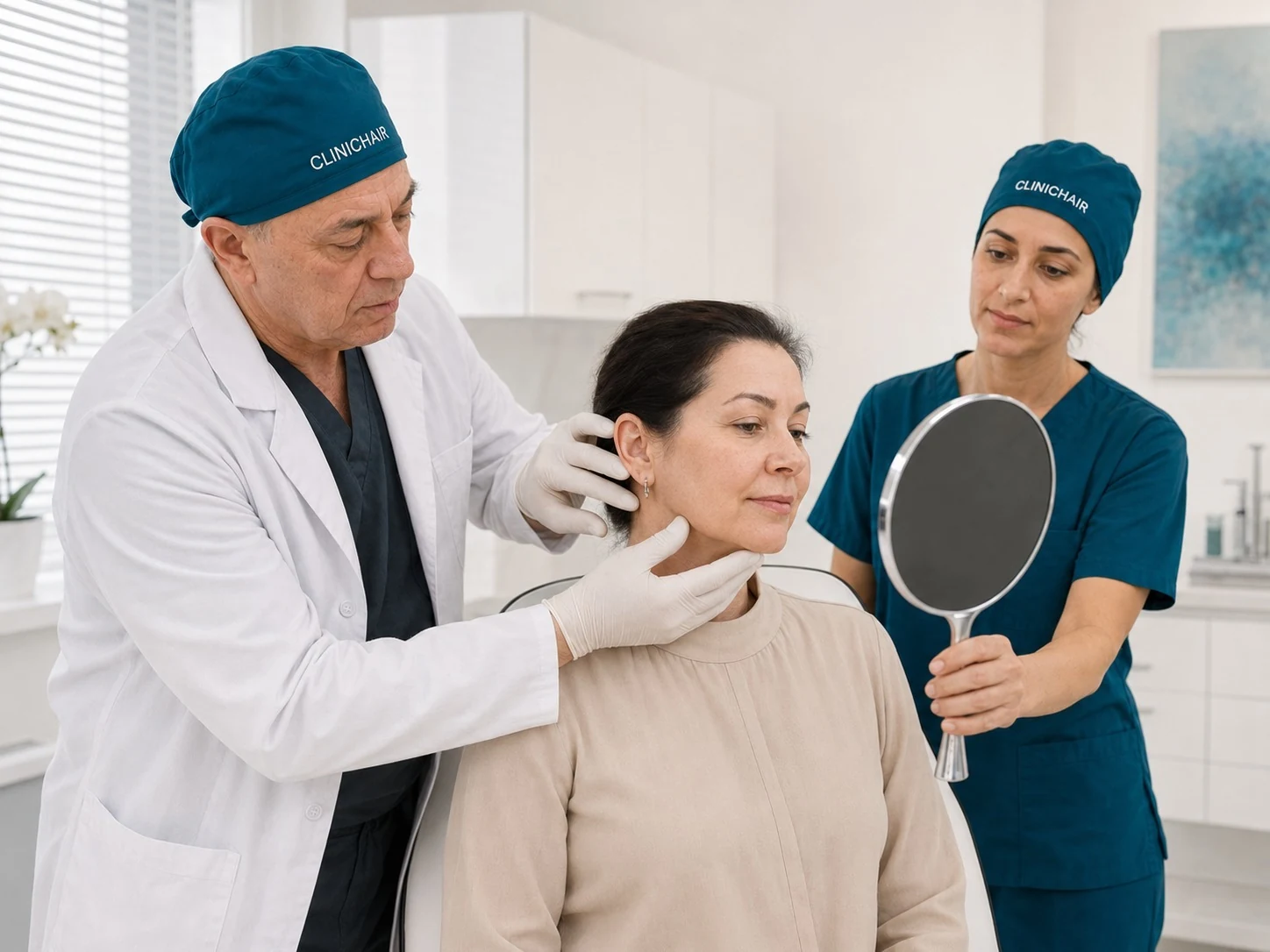
Facial area
Options for the skin and supporting tissues vary with the location and degree of laxity.
Neck area
In the surgical approach, the neck contour, excess skin and the structure of the supporting tissues matter.
Additional options
We discuss needs relating to volume, the eye area or the skin surface separately; additional procedures are not compulsory.
Your comfort during the procedure
We discuss anaesthesia and pain control after surgery before the procedure. In the first hours, you may feel tightness in the face and neck area. Support your head and neck in the way the team shows you; ask for help getting into a comfortable position. Tell the team about complaints such as pain or nausea.
03CARE AND FOLLOW-UP
Let's closely monitor healing and how the tissues settle.
The first days
Swelling, bruising, tightness and temporary changes in sensation may occur. Care advice is shared individually.
Check-up consultations
Wound healing, facial movements, how the tissues settle and any drains are assessed.
Long term
The final appearance is assessed as healing progresses. Skincare and the return to daily life are planned with the surgeon.
04FREQUENTLY ASKED QUESTIONS
Common questions about face and neck lifts.
Is there a particular age requirement for a face and neck lift?
There is no single right age. The degree of laxity in the face and neck, skin structure, general health and the change you expect are more decisive. Sagging along the jawline and neck contour can be a reason for a surgical consultation. Smoking, blood pressure, the medication you take and previous facial procedures also matter for suitability and preparation.
Are the face and neck always treated together?
The two areas can be assessed together; however, the surgical scope is decided according to personal needs. The same procedure is not applied to the same areas in everyone.
How are my facial expression and personal features assessed?
Your facial expression, tissue structure, volume distribution and jawline are examined together. Describe at the consultation the change you expect and the personal features you want to keep. The surgical scope is discussed by considering these goals and your tissues' needs together.
Which surgical approach might suit me?
The location and degree of skin laxity, the supporting tissues, neck structure and previous procedures guide the choice of method. The same surgical scope is not applied to everyone for the face and neck. We also discuss separately at the examination any additional options that may be needed.
Can the same effect be achieved with non-surgical treatments?
Fillers, injections and energy-based treatments can address different needs; they do not correct marked sagging of the skin and supporting tissues to the same extent as surgery. For mild changes, or for people who do not want surgery, some options can be discussed. Distinguishing which area has a volume problem and which has a laxity problem helps choose the approach that suits the change you expect.
Will fine lines and skin blemishes also be removed?
A face and neck lift does not remove all fine lines or skin blemishes and does not stop ageing. Needs relating to the skin surface, volume and the eye area can be considered separately. Additional treatments are not compulsory; options are discussed according to your goal.
Which anaesthesia is used; is a hospital stay needed?
Depending on the extent of the procedure, general anaesthesia or suitable sedation and local anaesthesia options can be used. Doing the face, neck and additional procedures together affects the duration and the need for monitoring. Discuss in advance where you will stay on the first night after surgery, who will accompany you and the conditions for going home. Same-day discharge is not suitable for everyone.
Which preparations are important before surgery?
Share any blood pressure problems, tendency to bleed, previous facial procedures, medication and supplements. Do not stop blood thinners on your own; make the necessary adjustments with the relevant physicians. Smoking and nicotine can harm blood flow to the skin and wound healing. Discuss a plan to quit, the anaesthesia preparation and the support you will need at home in the first days in advance.
How are incision sites and scars planned?
The incision sites are explained in advance together with the method and surgical scope to be chosen. Share your previous surgery and any history of noticeable scarring. At check-ups, wound healing, how the tissues settle and the scars are followed.
What about bandages, drains and sleeping position?
Depending on the procedure, a bandage or a temporary drain may be used; your team explains when it will be removed and how to care for it. Rest with your head raised and your neck in a comfortable, straight position; avoid sudden turning and pressure. Do not tighten or loosen the bandage yourself. Do not apply ice to the neck area; confirm all care steps with the surgical team.
When can I return to washing my hair, make-up and hair dye?
Contact between these products and procedures and the incision matters; there is no single return date for all of them. At the first check-up, find out how to wash your hair and how to dry around the incision. Do not apply make-up over the wound; confirm with your team that healing is sufficient for hair dye, bleach and chemical treatments. Avoid tight hairstyles that pull on the scalp.
How long can swelling, tightness and numbness last?
Swelling, bruising and tightness are common in the first weeks; changes in sensation can last longer. The texture of the face and comfort with movement can change over weeks and months. Both sides may not heal at the same pace. Keep up your check-ups to distinguish mild, easing complaints from newly marked asymmetry or increasing pain.
When can I return to daily life and sport?
Returning to daily life and sport is decided according to the procedure and how you are healing. At check-ups, the wound, how the tissues settle, facial movements and any drains are examined. Proceed after confirming skincare and activity advice with your team.
When does the result settle, and how long does it last?
As swelling eases, the contours of the face and neck become easier to see; the tissues softening and the final appearance settling can take several months. The change achieved with surgery can be maintained for a long time, but ageing continues. How long it lasts depends on factors such as skin structure, weight change, sun and smoking; the same number of years is not given to everyone.
What are the risks and the symptoms that need urgent attention?
There are risks such as a collection of blood, wound healing problems, impaired blood flow to the skin or nerve damage affecting facial movement. Contact the team straight away if you have rapidly increasing swelling on one side, severe pain, new loss of facial movement or a marked change in skin colour. If rapidly increasing tightness in the neck comes with difficulty swallowing or breathing, call 112.
How are the fee and the follow-up scope agreed?
We confirm together the surgical method, anaesthesia, place of surgery and scope of follow-up before the procedure. You can decide knowing which services are included in the price. If the scope of the plan changes, we share the reason and cost of the additional procedure in advance and proceed with your approval.
Question not answered here?Message our patient adviser
Explore plastic surgery servicesThis page is for general information. Personal assessment is made through a physician’s examination.