

Complementary Medicine
Ozone Treatments
Personal planning according to the method of application.
Treatment with blood and ozonated saline are two different methods. The physician examines your medical history and current treatments, explains your personal suitability, and discusses the route of administration and follow-up with you.
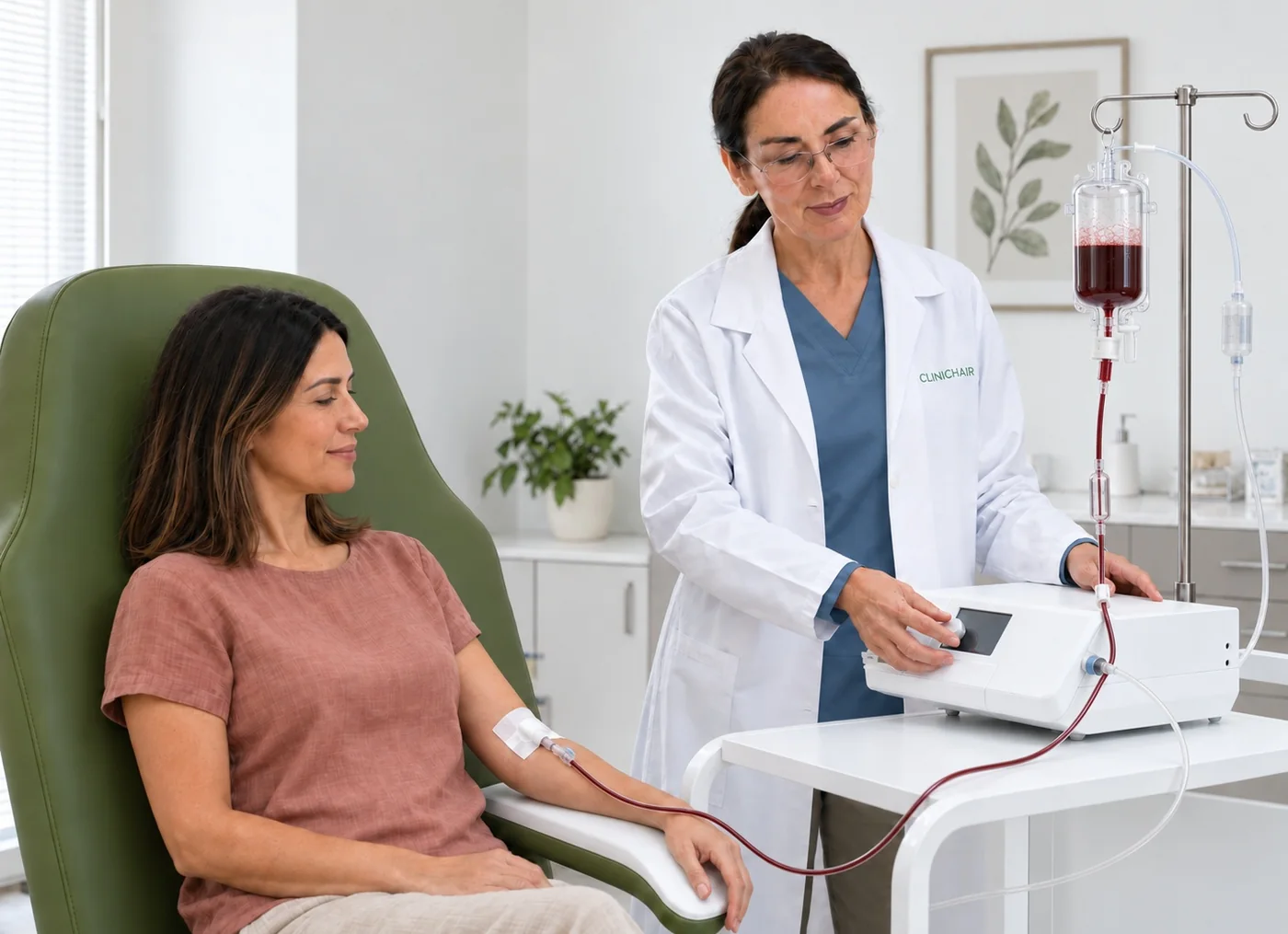
The final plan is determined by the physician's examination. Representative clinical image.
01ASSESSMENT AND PLANNING
How is your personal plan built?
We find out why you have come to us and consider the process together, from your medical history to the route of administration.
- Reason for coming and medical history
- We listen to your complaints, any accompanying illnesses and what you expect from the treatment.
- Medication and previous treatments
- The physician reviews your medication, supplements and the treatments you have had before.
- Suitability for the method
- The physician explains whether treatment with blood or ozonated saline suits your personal situation.
- Personal plan and follow-up
- We discuss the route of administration, sessions, observation period, possible risks and the scope of follow-up from the start.
02TREATMENT OPTIONS
How do blood and saline treatments differ?
Although both methods use an IV line, their preparation and method of application differ.
Treatment with blood
A defined amount of blood taken from the patient is processed with a medical ozone-oxygen mixture according to the protocol set by the physician and returned to the circulation through a closed system.
Ozonated saline
Normal saline is ozonated using a defined method and given intravenously. The method and duration of administration are planned individually by the physician.
Suitability and safety
Medical history, the medication you take, accompanying illnesses and any tests considered necessary are assessed together.
Planning alongside other treatments
The place of ozone treatment within your current treatments is decided with the physician; necessary diagnosis and medical treatment continue.
03TREATMENT PROCESS
How is ozone treatment done?
Every stage, from preparation to observation, is carried out according to the chosen method and the personal plan.
- 1
Choosing the method
The suitability of treatment with blood or ozonated saline is assessed according to the examination and your medical history.
- 2
Preparation and IV line
The necessary checks are done before treatment. The IV line and the sterile consumables to be used are prepared.
- 3
Carrying out the chosen method
Treatment with blood or ozonated saline is given according to the protocol set by the physician, using a closed system.
- 4
Observation and personal follow-up
Your condition is checked after the treatment; daily life advice and, if needed, the plan for the next session are shared.
04CARE AND FOLLOW-UP
After the treatment, step by step.
The first hours
There may be tenderness or bruising at the IV site. We set aside time for the first check and a short period of observation after the procedure.
Daily life
Do not rub the IV site. We share advice on work, exercise and fluid intake according to your health.
Monitoring the response
At follow-up consultations, we discuss changes in your complaints and any side effects.
Check-up and session plan
We consider the need for repeat treatment according to the benefit you get from it and how well you tolerate the procedure.
05FREQUENTLY ASKED QUESTIONS
Common questions about ozone treatments
Are ozone with blood and ozonated saline the same treatment?
They are not the same method. In treatment with blood, blood taken from the patient is processed with a medical ozone-oxygen mixture according to a defined protocol and returned through a closed system. With ozonated saline, normal saline is ozonated and given intravenously. The preparation and monitoring of the methods are considered separately.
Is ozone gas injected directly into a vein?
No. Giving an ozone-oxygen gas mixture directly into a vein carries a serious risk of gas embolism. In the treatment with blood described on this page, the blood is processed outside the body in a closed system and returned. Giving fluid through an IV line and injecting gas into a vein are different procedures.
How is the method of application chosen?
Your reason for coming, medical history, current treatments and examination findings are considered together. The physician explains whether the method is suitable for you and, if needed, which tests are required. The route of administration, possible risks and scope of follow-up are discussed before the decision.
Which tests may be needed before the procedure?
Your medical history and the chosen method determine the necessary tests. Alongside a blood count and any other tests needed, G6PD enzyme deficiency is especially important; this deficiency increases the risk of red blood cells breaking down and rules out ozone treatment. Bring your previous results; ask for your G6PD status to be clarified before the procedure.
In which situations is suitability assessed separately?
Chronic illnesses, bleeding or clotting problems, pregnancy or breastfeeding and reactions to previous procedures should be shared at the examination. The physician considers the risks of the chosen method together with your medical history and postpones the treatment or suggests another option if needed.
Should I tell you about my medication and supplements?
Yes. Tell us about your prescription and over-the-counter medicines, blood thinners, vitamins and herbal products. Also share previous allergies and treatments. Do not stop your medication for the treatment on your own; discuss with your physician whether any change is needed.
Should I come to the appointment fasting; how should I prepare?
Fasting for a long time or eating a heavy meal right before the procedure may not be suitable. Ask before the appointment whether fasting is required for a blood test. If you have diabetes, a fluid restriction or a history of fainting with needles, tell us; your food and fluid advice will be given accordingly.
Is an IV line placed?
The treatment with blood and ozonated saline methods described on this page use an IV line. The area is prepared and the IV line is placed with sterile materials. The system to be used and the steps of the procedure are explained to you before we start.
What might I feel during the treatment?
You may feel a brief sting when the IV line is placed. Your arm is supported so you can stay in a comfortable position. If you feel pain, burning, dizziness or any other unexpected sensation during the treatment, tell the team straight away.
How much time should I set aside for a session?
Treatment with blood requires time for taking the blood, processing it in a closed system and returning it; ozonated saline requires time for preparation and infusion. Placing the IV line and observation at the end of the procedure are also part of the total visit. Once your method is clear, we share the approximate total time before the appointment. Confirm this time with the team before scheduling work or travel straight after the procedure.
When can I return to daily life after the treatment?
Before you leave, we check how you feel and the IV site. Do not rub the area; follow the dressing and cleaning advice given. If you feel dizzy or weak, rest, do not drive and let the team know. If your work involves heavy lifting or intense effort, tell us in advance. Let's confirm separately when you can return to work and exercise, according to how you are that day.
Does ozone replace my current medication or treatment?
No. Ozone treatment does not replace necessary diagnosis, medication, surgery or other medical treatment. Its purpose is discussed together with your reason for coming and your current treatment. Even if you feel better, do not change your medication dose; for such a decision, talk to the physician managing your treatment.
How many sessions are needed, and how are intervals set?
The number of sessions and their intervals are set according to your reason for coming, your personal response and how well you tolerate the treatment. At check-up consultations, changes in your complaints and any side effects are discussed. Whether repeat treatment is needed is decided with this assessment.
How is it tracked whether I am benefiting?
At the start, we record the complaints you focused on and how they affect your daily life. At check-ups, we consider changes in these goals, examination findings and, when needed, tests together. A change you feel after a single session is not on its own a sufficient measure; if no benefit is seen, the decision to continue is discussed again.
What are the possible benefits, uncertainties and risks?
The expected benefit and level of evidence can vary with the reason for treatment. Tenderness, bruising, pain or swelling may occur at the IV site; other method-related risks are explained before the procedure. If you have shortness of breath, fainting or sudden, severe symptoms, get emergency help.
How are the fee and the follow-up scope agreed?
We clarify the scope of treatment and follow-up with you before the procedure. We explain how the sessions, check-ups and any additional services are included in the quote. Within the plan you approve, you will not face surprise extra charges; if the plan needs to change, we discuss it in advance.
Question not answered here?Message our patient adviser
This page is for general information. Personal assessment is made through a physician’s examination.
Updated: 4 October 2026