

PLASTIC SURGERY
Tummy Tuck
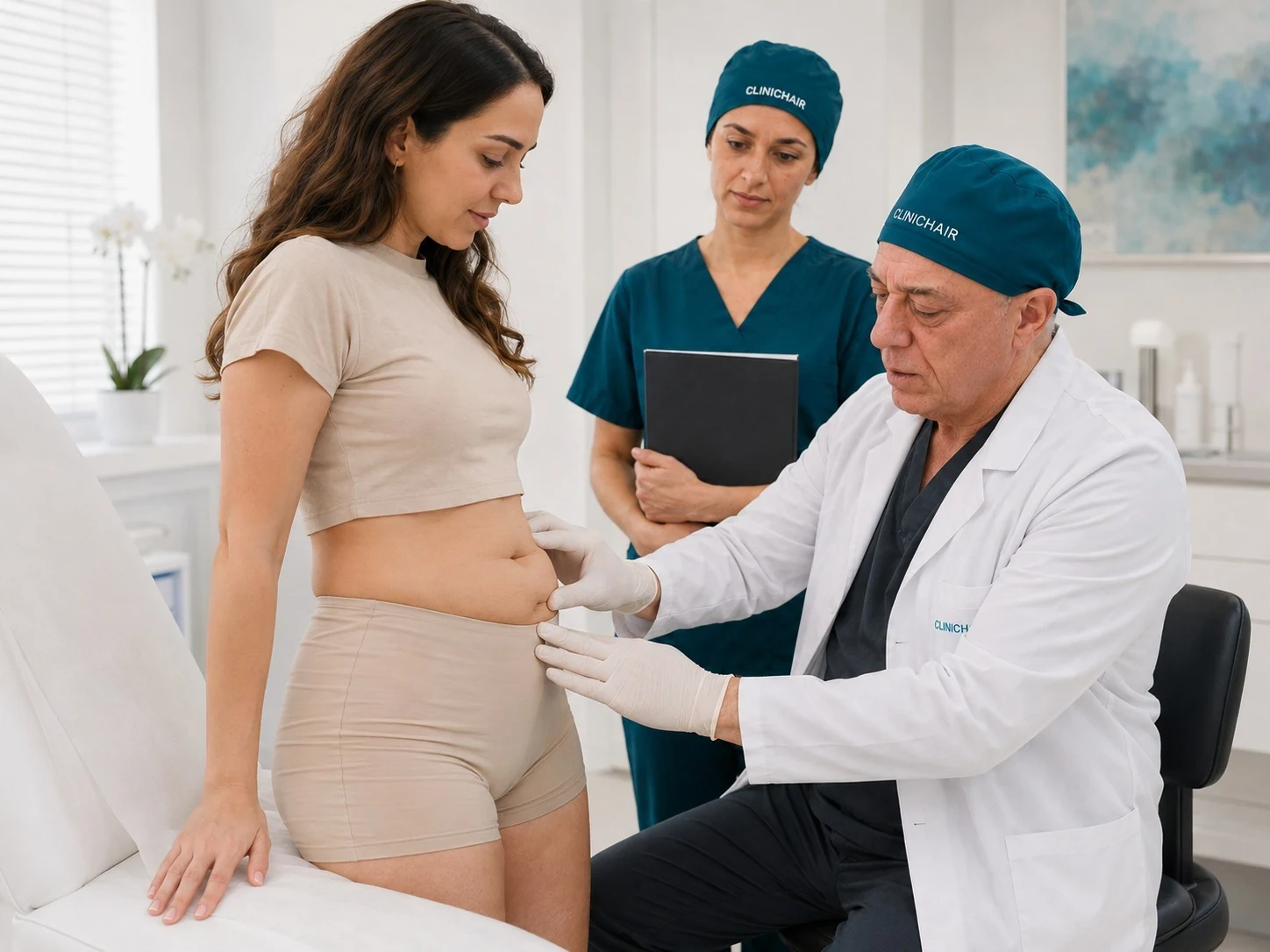
A personal assessment of excess skin and the abdominal wall.
We assess excess skin, tissue laxity and the structure of the abdominal wall together. The suitable surgical scope is decided in line with your health, weight stability and life plans.
The final plan is determined by the physician's examination and the necessary assessments.
Clinical images are representative.
01ASSESSMENT AND PLANNING
Let's assess the abdominal area as a whole.
- Skin and fat tissue
- The distribution of excess skin, skin elasticity and localised fat are examined.
- Abdominal wall
- Laxity, suspected muscle separation and previous surgical scars are assessed.
- Health and weight
- Illnesses, medication, smoking, weight stability and surgical risks are discussed.
- Life plans
- Plans for pregnancy or significant weight change, expectations and the time to set aside for recovery are considered.
02METHOD AND PROCEDURE
Surgical scope based on need.
Excess skin, the abdominal wall and additional needs are assessed together.
Limited approach
Depending on the location and amount of excess skin, a more limited procedure can be considered.
Broader approach
With widespread excess skin and abdominal wall needs, more extensive surgical planning can be done.
Additional procedures
Additional options such as liposuction are discussed by assessing personal needs and the overall surgical risk.
Your comfort during the procedure
Before a tummy tuck, anaesthesia, pain control and the support you will receive during your first movements are discussed. After you wake up, you may feel tightness in the abdominal area. Ask the team for help when changing position in bed and getting up for the first time; follow the movement and rest advice you are shown.
03CARE AND FOLLOW-UP
Let's accompany your recovery together.
The first days
Swelling, tightness and tenderness may occur. Care of the wound, dressing and any drain is explained individually.
Check-up consultations
Wound healing, fluid collection and how the tissues settle are assessed. The need for a compression garment is decided by the surgeon.
Returning to daily life
The plan for movement, lifting and returning to work and sport is adjusted according to the procedure and your recovery.
04FREQUENTLY ASKED QUESTIONS
Common questions about tummy tucks.
Who might a tummy tuck be suitable for?
If there is marked excess skin and laxity in the abdomen after weight loss or pregnancy, surgery can be considered. It is important that your general health is suitable and your weight is as stable as possible. Smoking, diabetes, previous surgery and any history of clots affect preparation. If losing significant weight is still the priority, it is better to discuss the timing of surgery together with this goal.
Are a tummy tuck and liposuction the same procedure?
No. A tummy tuck addresses excess skin and, when needed, the abdominal wall; liposuction is aimed at localised fat. Combining them depends on a personal assessment.
Is a limited or a more extensive procedure needed?
The location and amount of excess skin, the structure of the abdominal wall and previous surgical scars are considered together. A more limited approach may be enough for some people; with more widespread needs, the scope may be broader. We discuss the incision site and the targeted change at the examination.
Are separated abdominal muscles the same as a hernia?
No. Diastasis is an increase in the distance between the muscles due to widening of the connective tissue in the midline of the abdomen; on its own it is not a hernia. In a suitable tummy tuck, this area can be tightened. With a hernia, there may be a separate opening in the abdominal wall. They are distinguished with an examination and, when needed, imaging; if there is a hernia, a separate surgical opinion may be needed.
What happens if I plan a pregnancy or to lose weight?
Share any plans for pregnancy or significant weight loss at the first consultation. Weight stability, abdominal wall needs and your life plans affect the timing of surgery. A tummy tuck is not a weight-loss method; the right time becomes clear with a personal assessment.
How are stretch marks and old surgical scars assessed?
The location of stretch marks and old scars is examined together with the excess skin. A tummy tuck does not remove all stretch marks. Which area can fall within the surgical scope, how existing scars affect the plan and the new incision site are explained at the examination.
Where will the scar be; will the belly button change?
The incision usually leaves a horizontal scar on the lower abdomen, close to the underwear line; its length depends on the amount of skin to be removed. In a full tummy tuck, there may also be a scar around the belly button, and the abdominal skin is adapted to its new position. With more limited methods, the pattern differs. We go over the incision sites and the change around the belly button together before surgery.
What should I share while preparing for surgery?
Tell us about previous abdominal surgery, any history of clots, pregnancy plans, chronic illnesses, medication and supplements. Mention it if you use contraception or hormone therapy; do not stop any medication on your own. Discuss a plan to quit smoking and nicotine. Arrange support for when you get home, especially for childcare, shopping and tasks that involve lifting.
Which anaesthesia is used; is a hospital stay needed?
A tummy tuck is usually done under general anaesthesia. The extent of the procedure, additional treatments and your health affect how long you are monitored in hospital. Going home on the same day is not suitable for everyone. Find out in advance where the surgery will take place, about monitoring on the first night, pain control and discharge conditions; have someone accompany you home.
How should I walk and rest in the first days?
There may be tightness and pain with movement; follow the prescribed pain control. It is important to start short, supported walks when the team considers it suitable; do not stay completely immobile for long periods. In the first days, a slightly bent-forward posture and resting with your knees supported may be recommended to avoid stretching the incision line. Move to an upright posture and other movements without forcing them, following the instructions you are given.
How are compression garments and drains planned?
The need for a drain and use of a compression garment are decided according to the extent of the procedure. If there is a drain, your team explains its care, the dressing and how it is checked. Find out how and for how long to wear the compression garment; follow the recommended plan.
How are showering and wound care done?
When you can shower depends on the type of dressing, incision healing and whether there is a drain. At discharge, find out how to clean the wound and when the dressing will be changed. Do not apply creams or antiseptics of your own choice to the incision. For activities that involve being in water for a long time, such as baths, pools and the sea, wait for the wound to close and for the team's approval.
What determines the return to work and sport?
Returning to work and sport is decided according to the surgical scope and how you are healing. The same schedule is not used for lifting, exercise and daily movement. At check-ups, wound healing and how the tissues settle are reviewed and suitable advice is shared with you.
When do the abdominal shape and scars settle?
As swelling eases, the abdominal contour becomes more defined; the result can take months to settle. Tightness and numbness around the incision can also change over time. Scars are noticeable at first and usually soften and fade over months. Keeping your weight stable helps preserve the result; pregnancy or significant weight change can affect the abdominal tissues again.
Which symptoms need urgent assessment?
If you have increasing abdominal pain, rapidly growing swelling, fever, the wound opening or foul-smelling discharge, contact the team the same day. New pain and swelling in one leg may be a sign of a clot; get a medical assessment without delay. For sudden shortness of breath, chest pain or fainting, call 112. Do not wait for a planned check-up with these symptoms.
How are the fee and the follow-up scope agreed?
We confirm together the surgical method, anaesthesia, place of surgery and scope of follow-up before the procedure. You can decide knowing which services are included in the price. If the scope of the plan changes, we share the reason and cost of the additional procedure in advance and proceed with your approval.
Question not answered here?Message our patient adviser
Explore plastic surgery servicesThis page is for general information. Personal assessment is made through a physician’s examination.