
Complementary Medicine
Cupping and Hijama
Personal planning according to your skin and medical history.
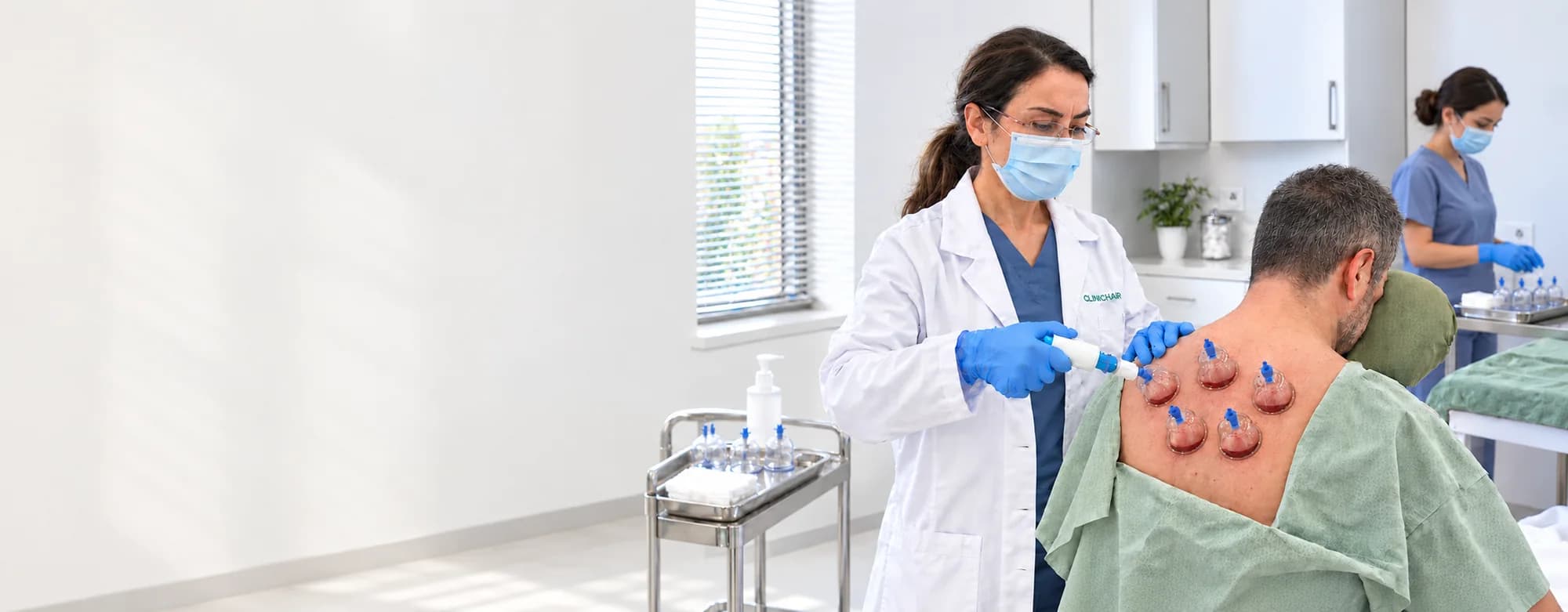
In dry cupping, suction is created on the skin; in wet cupping (hijama), superficial skin incisions are added. The physician examines your skin, medical history, medication and bleeding risk and discusses the suitable method with you.
The final plan is determined by the physician's examination. Representative clinical image.
01ASSESSMENT AND PLANNING
How is your personal plan built?
We listen to your complaint and discuss the differences between dry cupping and hijama for you.
- Complaint and goal
- We find out where your complaint is, how long it has lasted, how it affects your daily life and your expectations.
- Medication and bleeding history
- We discuss blood thinners, bleeding or clotting problems and your experiences of previous procedures.
- Skin and infection assessment
- The physician examines the treatment area for skin integrity, active infection and sensitivity.
- Method and follow-up plan
- We explain the dry or wet cupping option, the treatment area, the possible risks and the follow-up steps.
02SUITABILITY AND AREAS OF SUPPORT
Which complaints can we discuss?
We first investigate the cause of your complaint and discuss the place of cupping in your current treatment.
Musculoskeletal complaints
We investigate the cause of muscle, back, neck or shoulder complaints. With this information, we discuss whether cupping is a supportive option.
Lower back and localised pain
We first examine the source of pain in and around the lower back. You can discuss with the physician the place of cupping in your personal treatment.
Knee and joint complaints
We consider joint pain, restricted movement and accompanying findings together. Necessary diagnosis and treatment continue.
Headache and tension
With migraine or tension-type headache, we first investigate the underlying causes. Then we discuss supportive options.
03TREATMENT PROCESS
How are cupping and hijama done?
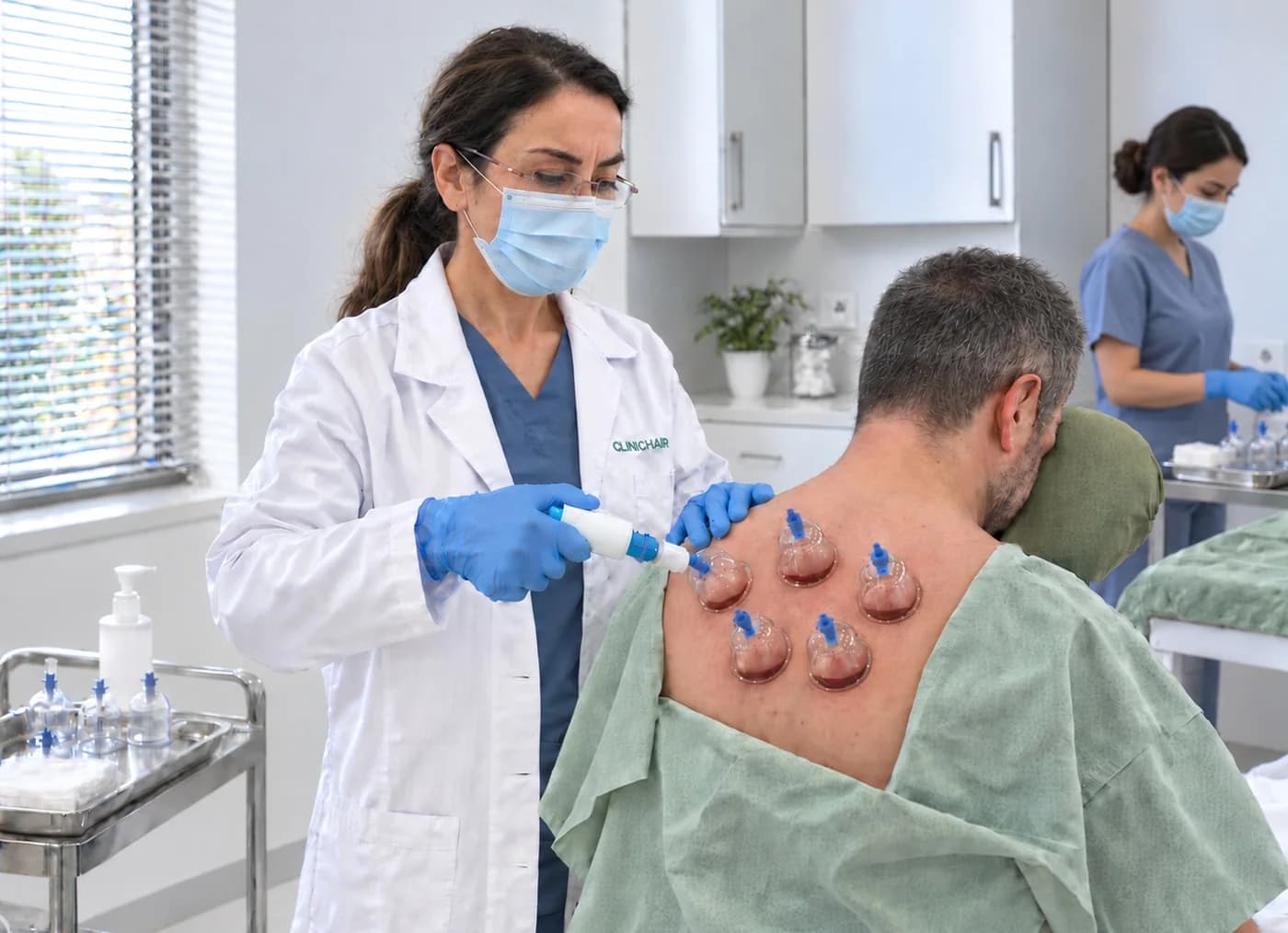
We explain step by step the preparation, treatment and skin care according to whether dry or wet cupping is chosen.
- 1
Choosing the method
The suitability of dry cupping or wet cupping (hijama) is assessed according to the examination and your medical history.
- 2
Skin preparation and cup placement
The treatment area is cleaned; cups are placed on the defined areas and controlled suction is created.
- 3
Dry or wet cupping
In dry cupping, the skin is kept intact. In wet cupping, superficial skin incisions are made and suction is applied again.
- 4
Finishing and first check
The cups are removed. After wet cupping, the area is cleaned and a suitable dressing is applied; your initial condition is assessed.
04CARE AND FOLLOW-UP
After the treatment, step by step.
The first hours
Temporary redness, circular marks and tenderness may occur. We distinguish normal effects from signs that need help.
Skin care
Keep the dressing clean and dry after wet cupping. Do not rub the area; follow your advice on showering and changing the dressing.
Daily life
Protect the sensitive area from friction. We discuss your return to exercise and hot environments according to the condition of your skin.
Check-up and session plan
We consider the need for repeat treatment in terms of the change in your complaint and how your skin recovers.
05FREQUENTLY ASKED QUESTIONS
Common questions about cupping and hijama
What is the difference between dry cupping and wet cupping (hijama)?
In dry cupping, controlled suction is created on the skin; the skin is not cut. In wet cupping, i.e. hijama, superficial skin incisions are made and suction is applied again. After wet cupping, the area is cleaned and dressed; the risks of bleeding and infection are considered separately.
Does hijama clean “dirty blood” or toxins?
It is not accurate to describe hijama as a procedure that rids the body of toxins or “cleans dirty blood”. There is no strong scientific evidence to support such general claims. The possible benefit of cupping is considered in relation to a specific complaint; the amount of blood drawn or the darkness of the marks does not show whether the treatment has worked.
Which areas are treated?
The area is chosen according to the cause of your complaint and the examination findings. Personal suitability is discussed for back, neck, shoulder or other musculoskeletal complaints. Cupping is not automatically applied to every painful area; skin structure and accompanying findings are also taken into account.
Can hijama be done if I have anaemia or am pregnant?
Anaemia, bleeding or clotting problems and pregnancy must be shared in advance. Because wet cupping involves blood loss, it may not be suitable, especially with anaemia; repeated procedures can worsen anaemia. Also tell us if you are breastfeeding and about any chronic illnesses. Suitability for dry cupping and for hijama is not considered the same; the decision is made with a personal examination.
What should I do if I take blood thinners?
Share the name and dose of your medicine and why it was prescribed at the consultation. Because of the bleeding risk, a separate suitability assessment is needed, especially for wet cupping. Do not stop your blood thinner on your own; the treatment decision and medication plan are considered together with your physician.
Can it be done if I have a skin condition or infection?
An active infection, open wound, sensitivity or skin condition in the treatment area should be assessed first. These findings can change the choice of method or area; the procedure may be postponed. Do not hide your skin problem, and mention the skin products you use at the consultation.
How should I prepare for the first consultation; are tests needed?
Share your list of medication, any blood count results and previous experiences of bleeding or fainting. The need for further tests depends on your medical history and whether dry or wet cupping is chosen. You may prefer clothing that gives easy access to the treatment area. Ask in advance whether fasting or a special diet is needed.
How long does a cupping or hijama session take?
The time the cups stay on the skin is only part of the total appointment. Time is also needed for the examination, preparing the area and the check at the end of the procedure; hijama also involves the superficial incisions and dressing stage. The number of areas and the skin's response affect the duration. When booking, confirm whether dry cupping or hijama will be done and the approximate total visit time.
Is pain felt during treatment?
You may feel pulling and tightness from the suction. With wet cupping, there may also be tenderness from the superficial incisions. Share any discomfort with the team; you are not expected to put up with severe pain. Your position and comfort are monitored throughout.
Why does it matter that materials are clean and single-use?
Materials that may come into contact with blood can transmit infection. In hijama, materials that pierce or cut the skin must be sterile and single-use; cups and other equipment must also be used with appropriate infection control rules. Skin cleansing, hand hygiene and correct waste management all matter. You can ask for information about the materials used.
How long do cupping marks last?
Circular marks from the suction usually fade within 1-2 weeks; they can last longer depending on skin structure and the intensity of the treatment. This time is not the same as the healing of hijama incisions. Do not rub the area hard to remove the marks. If the marks come with increasing pain, warmth, discharge or fever, contact the clinic; do not accept these as normal marks.
When can I shower and exercise after the treatment?
In dry cupping, the skin is not cut; even so, avoid rubbing or irritating the sensitive area. After hijama, keep the dressing clean and dry; find out at the end of the procedure how to protect it in the shower and when to change it. Follow the instructions for changing a dressing that gets wet or dirty. Confirm your return to intense exercise and hot environments according to the condition of your skin; do not push yourself while bleeding or marked tenderness continues.
Do I need to stop my medication or physiotherapy?
Having cupping or hijama does not mean you need to stop your current medication or physiotherapy. In particular, do not pause blood thinners on your own. Share your exercise and physiotherapy days with the team; discuss together any adjustments needed according to the tenderness in the treatment area and the condition of your skin.
How many sessions are needed, and how are intervals set?
The need for repeat treatment and session intervals are set according to your complaint, your skin's response and how well you tolerate the treatment. At the check-up, the expected change and any side effects are considered. The same number of sessions or fixed intervals are not used for everyone.
What are the possible benefits, uncertainties and risks?
The quality and results of research on the possible benefit for pain are variable. Alongside temporary marks and tenderness, there are risks of skin damage, infection and, especially with wet cupping, bleeding. Contact the clinic if you have increasing redness, discharge, fever or prolonged bleeding.
How are the fee and the follow-up scope agreed?
We clarify the scope of treatment and follow-up with you before the procedure. We explain how the sessions, check-ups and any additional services are included in the quote. Within the plan you approve, you will not face surprise extra charges; if the plan needs to change, we discuss it in advance.
Question not answered here?Message our patient adviser
This page is for general information. Personal assessment is made through a physician’s examination.
Updated: 4 October 2026