
PERSONAL CORRECTION PLAN
Revision Hair Transplant
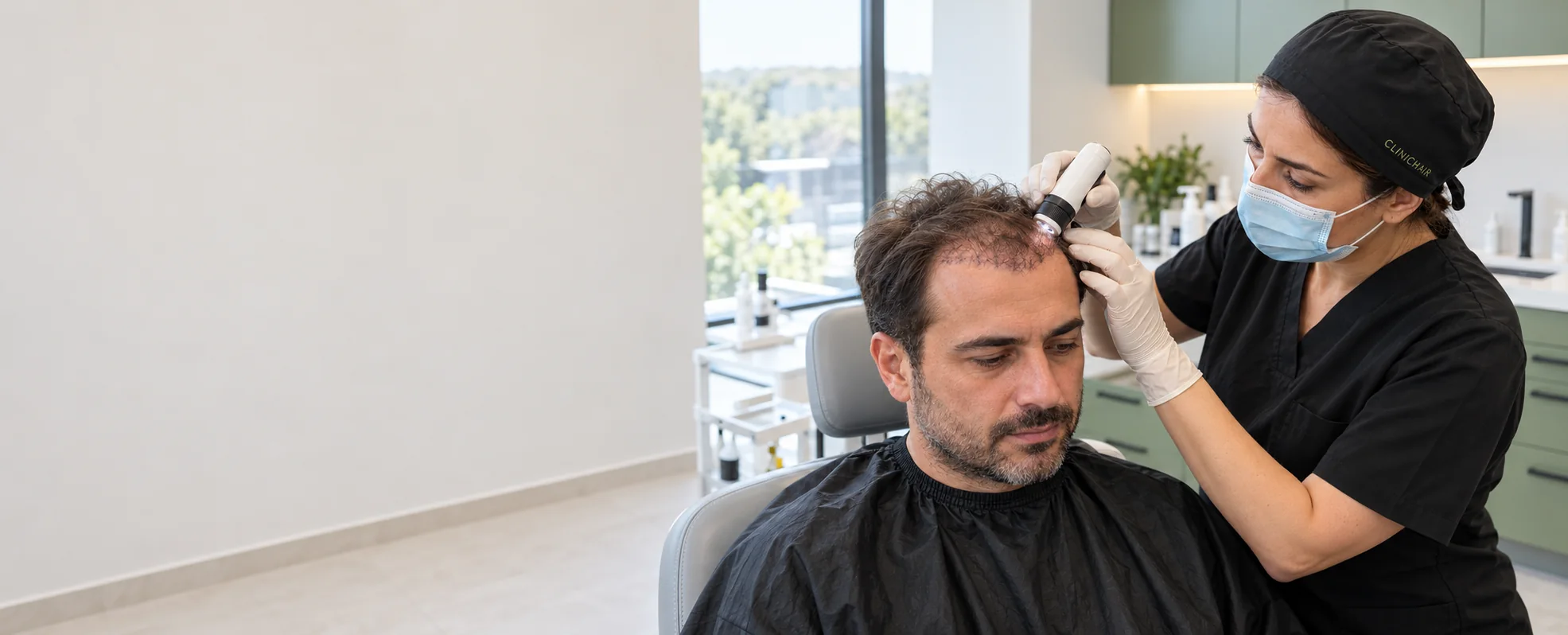
We assess your previous transplant, your hairline and the capacity remaining in your donor area together, and build a personal correction plan around your existing hair and your future needs.
01ASSESSMENT AND PLANNING
How is your personal plan built?
We examine the result of the previous transplant, ongoing hair loss, the remaining donor capacity and your expectations for correction together.
Remaining donor capacity
We examine thinning from previous extraction, the remaining density and any scars. We plan additional extraction while protecting the donor area. Where needed, we assess the suitability of beard and chest follicles separately.
Hairline and correction
We examine the existing line, angle and direction. We discuss options for adding density or removing grafts placed in an unsuitable position.
Shaving plan and preparation
We consider shaving of the donor and recipient areas separately. We take the existing hair, the grafts to be removed and the working area into account.
Health and tissue condition
We discuss illnesses, medications and your healing history. Your physician examines the effect of the previous procedure on the tissue and your existing hair.
We review the date of the previous procedure, any graft information and photographs. We consider old grafts, scarred areas and the need for a new transplant together. Some corrections may proceed in stages that need healing time in between.
02OPTIONS IN THE TRANSPLANT PLAN
Choosing a technique for revision hair transplants
AGraft extraction and shaving plan
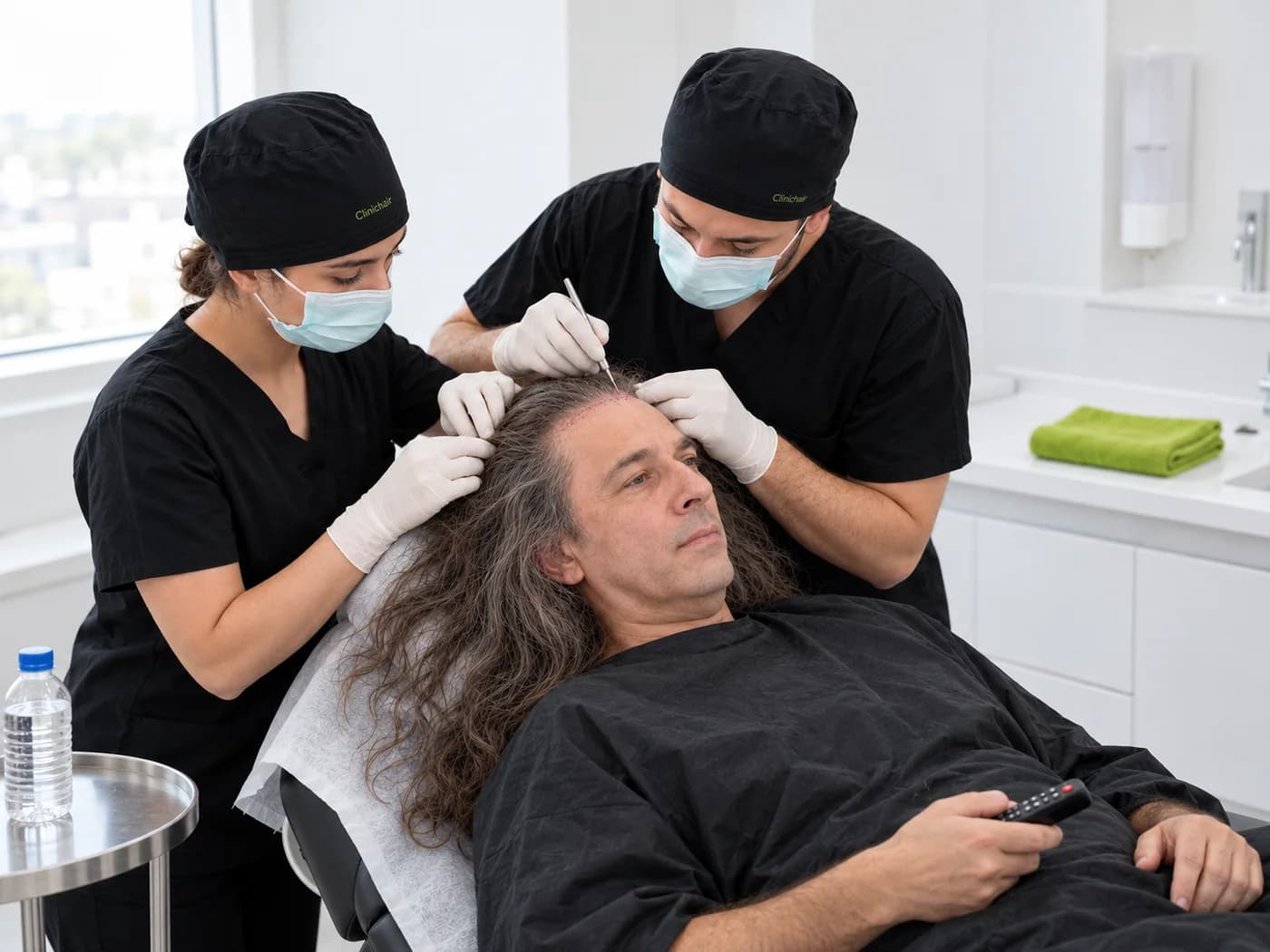
Long Hair FUE
Without shortening your existing hair, we extract the grafts with FUE with the hair left long. Depending on your placement plan, we can leave the hair on the grafts long or trim it.
See the details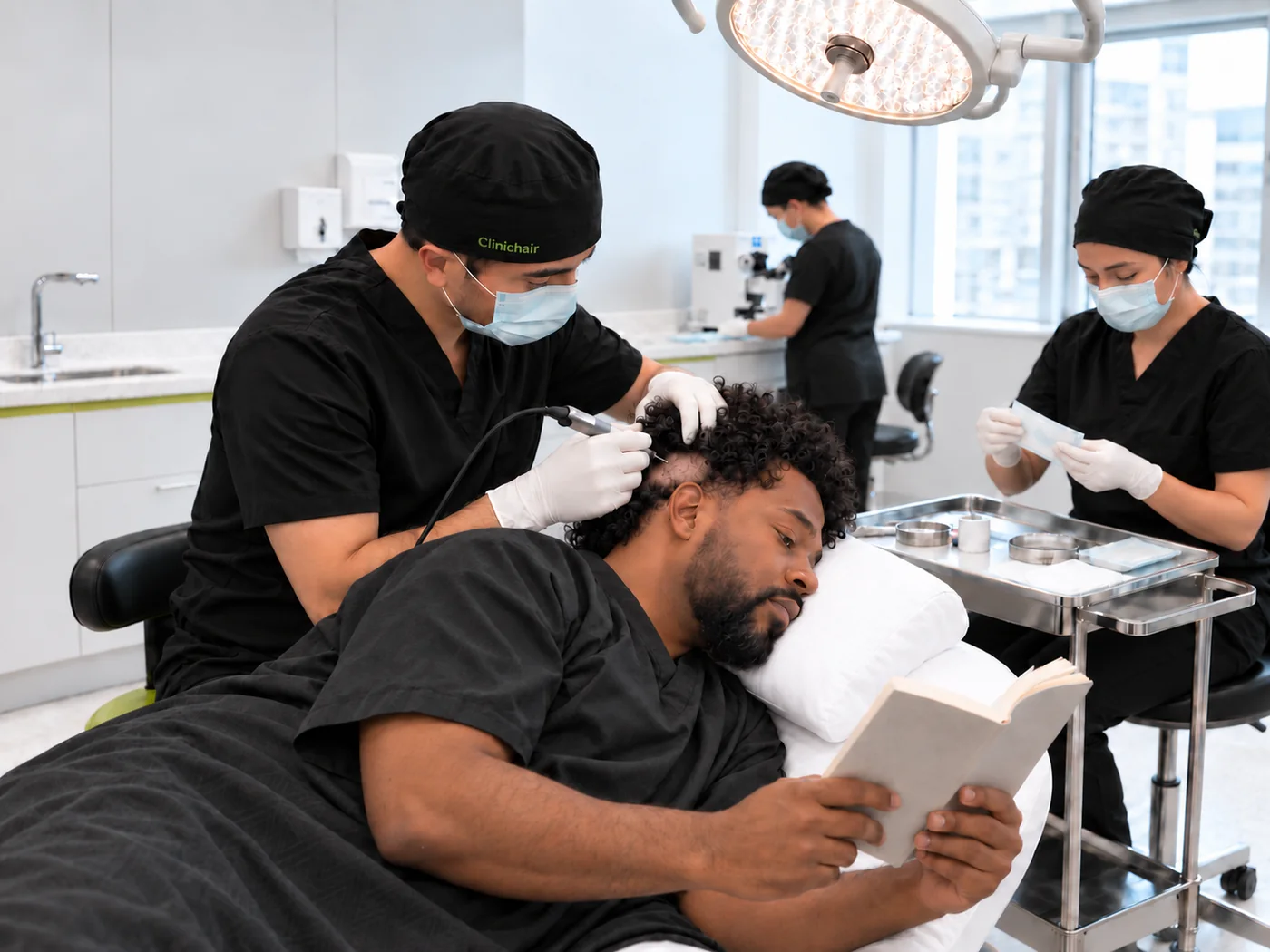
Partial Shave FUE
We can shorten limited parts of the donor area, or all of it, and leave the hair in the recipient area long. If the hair length allows, we can cover limited shaved zones with the surrounding hair.
See the details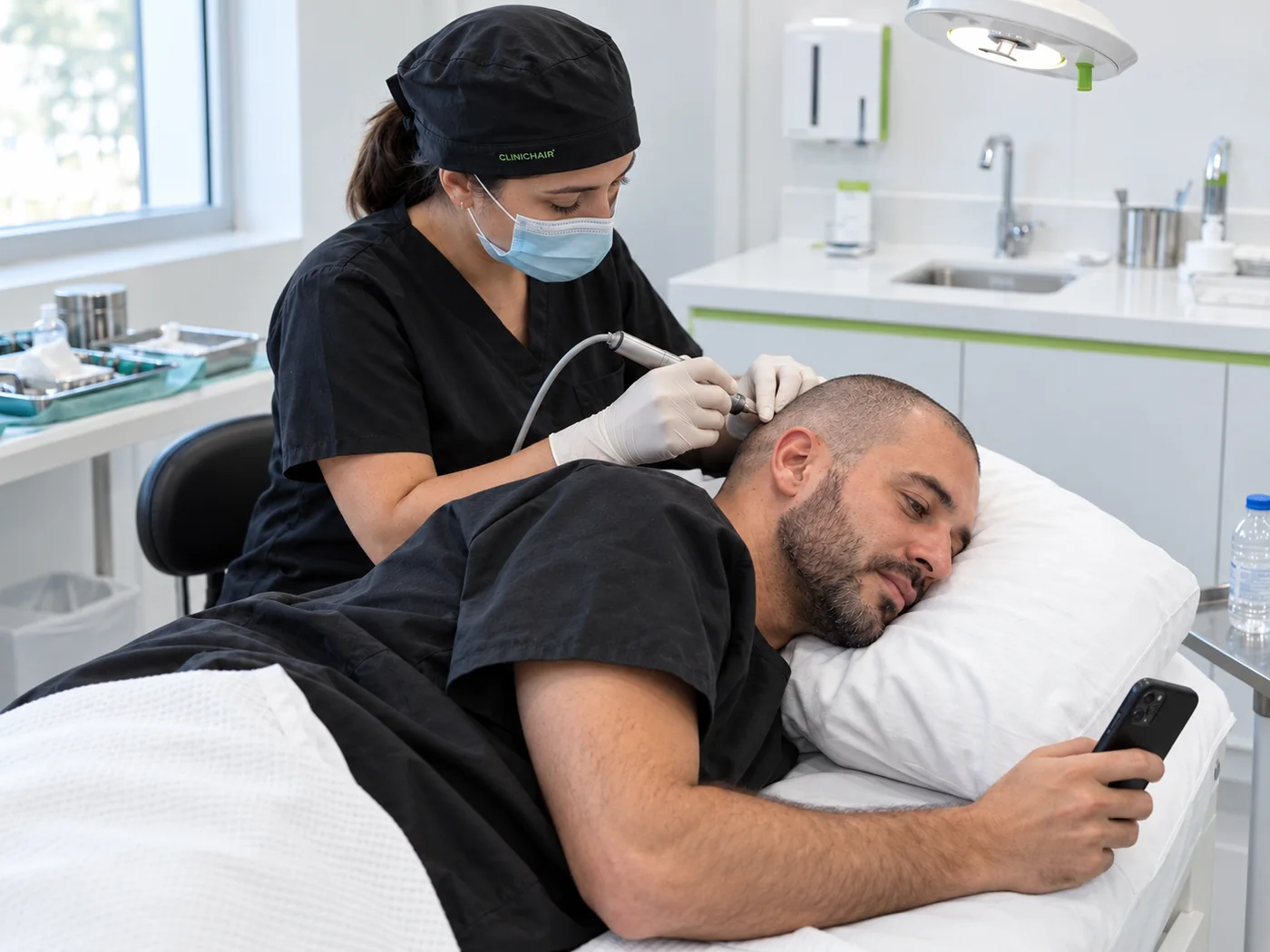
Shaved FUE
We shorten the hair in the donor and recipient areas. We extract the grafts one by one with FUE. We build the extraction and placement plan around your donor capacity and the needs of your recipient area.
See the detailsBChannel opening and graft placement
This stage comes after extraction. We can use either placement option with different FUE preparations.
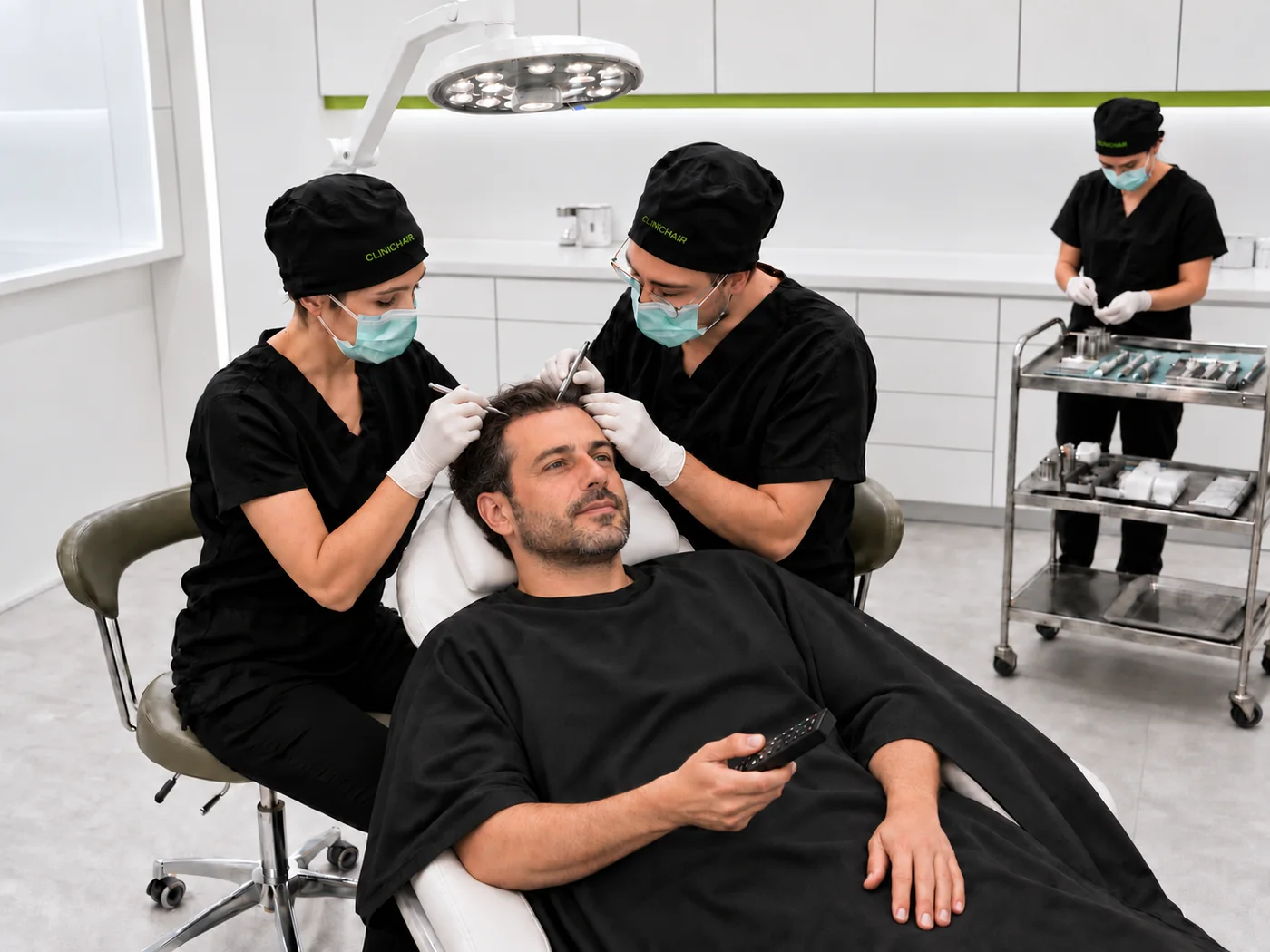
CHANNEL OPENING AND PLACEMENT WITH FORCEPS
Titanium / Sapphire + Forceps
We open the channels with titanium or sapphire blades and place the grafts one by one with implantation forceps.
See the details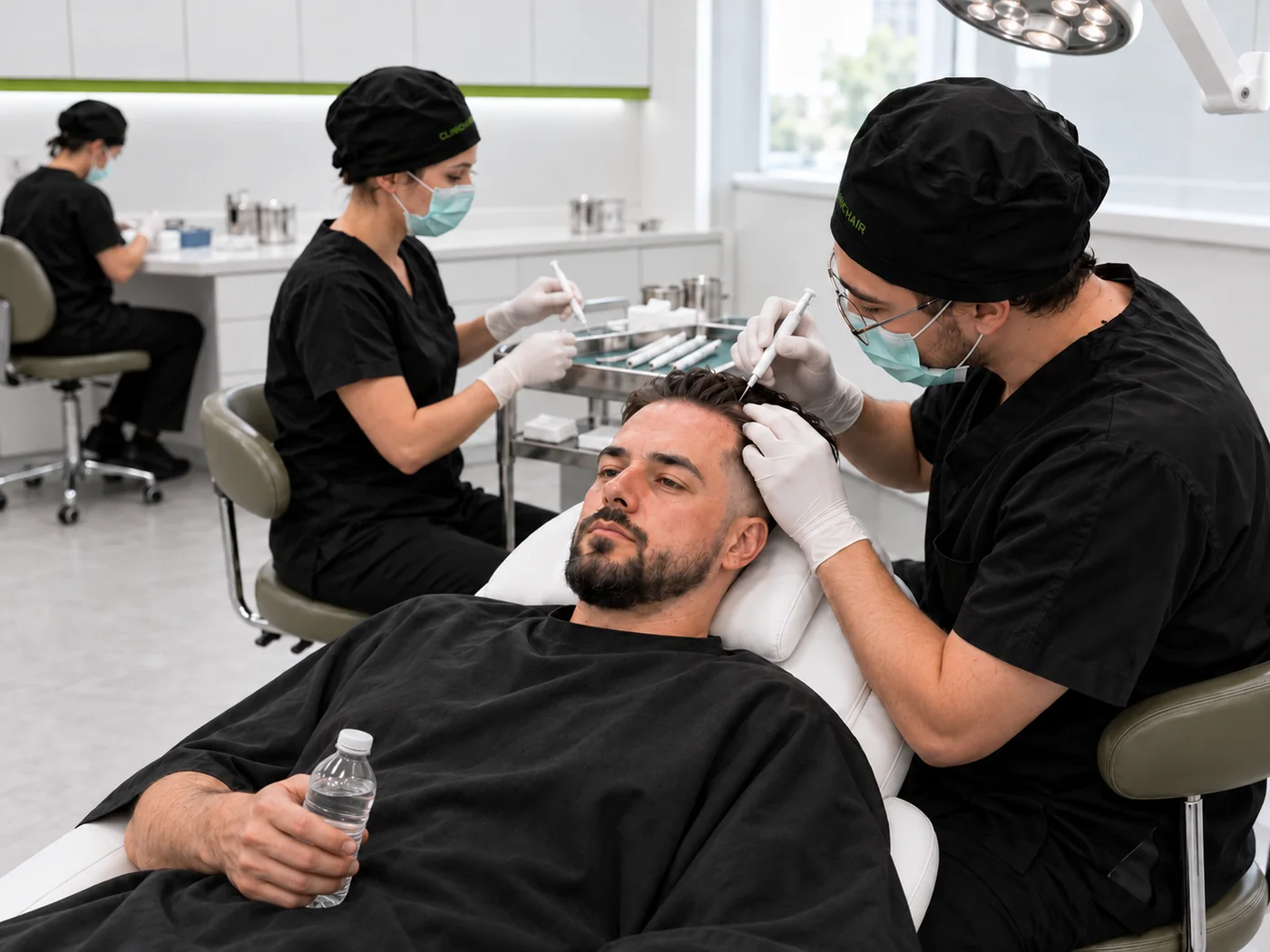
CHANNEL CREATION AND PLACEMENT WITH AN IMPLANTER
DHI
We open the channel and place the graft with the same sharp-tipped implanter pen.
See the detailsWhere needed, we can use Titanium / Sapphire + Forceps and DHI together in different areas in the same session (hybrid approach). We do not need to use both options for every patient.
03HOW IS THE PROCEDURE DONE?
How is a revision hair transplant performed?
The flow of the procedure follows the correction plan; graft removal and a new transplant may be done at different stages.
01
Marking the hairline and recipient area
We mark your hairline, the recipient area and any grafts to be removed. We agree with you the target angle, direction and distribution.
02
Graft extraction
We take new grafts with FUE from suitable donor areas. Depending on the plan, we can also remove old grafts using the method our physician considers suitable.
03
Preparing the grafts
We examine the grafts; suitable grafts among the removed old ones can be reused. We set the length of the hair according to the placement method and the recipient area. Until placement, we keep the grafts in a special cooler in a suitable storage solution.
04
Channel opening and placement
We place the grafts with Titanium / Sapphire + Forceps or DHI, depending on the chosen method. We set suitable angles and directions, taking tissue characteristics and the existing hair into account.
04AFTER THE PROCEDURE
Care after a revision hair transplant
The first two days
Rest in the position your physician recommends. Protect the donor and recipient areas from pressure and friction, and follow the care advice and check-up schedule.
Day 3 / First wash
If our physician agrees, we do your first wash on day three. We show you in person how to clean the recipient and donor areas. Follow the products, cleaning method and frequency we recommend.
Day 7 review
We discuss your return to light daily activities according to your healing and the nature of your work. We set suitable times for sport, heavy exertion, haircuts and shaving separately.
Areas where grafts were removed or scarred areas were treated may need additional care; follow our personal advice.
Hair growth and the follow-up process
From days 10–15
Temporary shedding
The transplanted hairs may begin to shed temporarily.
From around month 3
New hair appears
New hair may begin to grow; growth increases over time.
Between months 6 and 9
A clearer appearance
The look and fullness of the hair may become clearer. Growth continues in the following months.
Month 12 check-up
Reviewing the growth
We review overall growth together at month 12, and the crown at about month 15.
Previous tissue changes and staged treatments can affect the process; growth varies from person to person.
05FREQUENTLY ASKED QUESTIONS
Questions about revision hair transplants
Who is a revision hair transplant suitable for?
A revision can be considered for people who need corrections to the hairline, exit direction, distribution or density after a previous transplant. New hair loss that develops over time can also create a need for further planning. First, we agree together on the look that bothers you and your expectations.
The date of the previous procedure, any graft information and photographs, your existing hair and your remaining donor capacity are reviewed. If the tissue and donor conditions are not suitable, a new transplant may not be recommended. Our aim is to discuss openly from the start what improvement is possible and its limits.
How long after a previous transplant can a revision be considered?
You can apply for an assessment; we decide when a new procedure can be done according to the growth of the previous transplant and the healing of the tissue. Judging a transplant whose growth is not yet complete only by its sparse look in the early period can be misleading.
At the examination we discuss options for waiting, follow-up or staged correction. Graft removal, a new transplant and work on a scarred area may need different timing. So it would not be accurate to give a single waiting time for everyone.
Can the hairline and wrong exit directions be corrected?
In suitable people, the transition, distribution and natural look of the hairline can be improved. In some areas the transition can be softened with new grafts; removing some grafts placed too far forward, too densely or in an unsuitable direction can also be considered.
We build the plan around the existing line, facial proportions, tissue and remaining donor capacity. It may not be possible to move every line to the desired point or to fully resolve every direction problem. We agree the scope of the procedure together at the examination.
Are old grafts removed, and can they be reused?
Not every revision requires removing old grafts. If there are grafts that spoil the natural look, sit too far forward or point in an unsuitable direction, selective removal can be planned. The physician decides the method according to the condition of the grafts and the surrounding tissue.
The removed grafts are examined; only those found suitable can be considered for re-transplantation. It cannot be said that all of them will be removed intact or can be reused. Removal and new placement may be done in the same session, or a healing period may need to be left in between.
How are the number of grafts, procedure time and number of sessions decided?
We determine the number of grafts according to the needs of the areas to be corrected and the capacity remaining in the donor area. Softening the hairline, increasing density, removing old grafts or working in a scarred area require different plans. We choose the priority areas together with you.
The number of grafts alone does not determine the duration; the effect of the previous procedure on the tissue, graft removal, bleeding, the shaving plan and the placement approach also affect the flow of the procedure. We share an estimated duration after the assessment. Some corrections can be done in one session, while others follow a staged plan with healing and growth follow-up in between.
Does hair grow back where grafts were taken from the donor area?
Follicles that have been fully extracted do not regrow in their original place in the donor area. That is why we assess the capacity used in previous procedures at the start of the new plan.
The density of the remaining hair, the extraction distribution and any scars are examined together. If taking more follicles could cause visible thinning in the donor area, extraction may be limited or a new transplant may not be recommended. We make protecting your existing donor area and your future needs a priority.
If my scalp donor is insufficient, can grafts be taken from the beard and chest?
In suitable people, follicles from the beard or chest can be considered as an additional source. Whether there is enough suitable hair in these areas, the condition of the skin and any scarring history are examined together; they cannot be used in everyone.
Beard hair is usually thicker, and chest hair differs from scalp hair in length and growth. So they are not a like-for-like replacement for scalp donor hair. If they are used, which areas they go to and with what distribution is planned separately.
Can the look of scars from a previous transplant be reduced?
Depending on the location and width of the scar, the thickness of the tissue and its healing characteristics, options to reduce its visibility can be considered. Some suitable scarred areas can be transplanted; in some cases a different correction approach is needed.
Graft growth in scar tissue can differ from that in normal scalp. Your physician may recommend a limited trial or a staged approach. It cannot be guaranteed that previous scars will be erased completely or that the same density will be achieved in every area.
What is the difference between Long Hair FUE, Partial Shave FUE and Shaved FUE?
With Long Hair FUE, the existing hair is not shortened and grafts are extracted with the hair left long. With Partial Shave FUE, limited zones or all of the donor area are shortened while the hair in the recipient area can be left long. Surrounding hair of suitable length can cover the limited shaved area.
With Shaved FUE, the hair in the donor and recipient areas is shortened. These names describe hair preparation and the extraction plan; the channel opening and placement option is decided separately. In a revision, suitability depends on the remaining donor capacity, the tissue and the areas to be corrected.
Are the donor and recipient areas shaved in a revision?
Shortening all of the hair is not needed in every revision. We assess the donor and recipient areas separately, taking your existing hair, the grafts to be removed and the scope of the new transplant into account together.
In suitable people we can work with long hair or limited shaving. Some corrections may need wider shaving so that the grafts and the working area can be seen more clearly. We discuss with you before the procedure the extent of shaving and its effect on how you look day to day.
What is the difference between Titanium / Sapphire + Forceps and DHI?
With Titanium / Sapphire + Forceps, the channels are prepared with titanium or sapphire blades and the extracted grafts are placed into them one by one with forceps. With DHI, the grafts are loaded into sharp-tipped implanter pens and, without separate channels being opened first, the channel is created and the graft placed in the same pen step.
DHI is not a separate extraction method. Both placement approaches can be planned with suitable FUE preparations. In a revision, the tissue, the direction of the existing hair and the structure of the grafts are assessed; a single method may not be equally suitable for every correction.
Can placement options be combined in the same session?
Where needed, in the same session, grafts can be placed with forceps into channels opened with titanium or sapphire blades in one area, and with a sharp-tipped implanter pen in another. We call this the hybrid approach.
Combined use is considered if the recipient area, the existing hair and the graft structure call for it. Using both options in the same session is not necessary for everyone and does not in itself mean a better result.
When does the transplanted hair grow, and when does the result become visible?
Temporary shedding of the newly transplanted hairs may occur in the first weeks. On its own, this does not mean the follicles have been lost. New growth may begin to be noticed from around month 3; it takes time for the hairs to thicken and for the look to fill out.
The look may become clearer between months 6 and 9. Previous tissue changes and staged treatments can affect the process; growth varies by person. In general we follow the new transplant for 12 months, and for about 15 months at the crown, with planned check-ups.
When can I return to hair care, haircuts and sport?
If your physician agrees, we do the first wash on day three and show you the care method. If grafts were removed or a scarred area was treated, additional care advice may be given for those areas.
Do not neglect cleaning, or limit it to a quick surface rinse, for fear of harming the grafts. Clean off blood, scabs and product residue using the method we show you; do not scratch the scabs or pull them off. If you feel the cleaning is not enough, ask our team for help.
We plan your return to daily life around your healing and the nature of your work; we discuss it again at the day-seven review. Follow your personal advice for haircuts, clipper shaving, sport and heavy exertion. The timeline from your previous transplant may not apply as it is to this procedure.
What are the possible risks, scarring and limitations?
Swelling, tenderness, scabbing and temporary shedding may occur. Bleeding, infection, scarring, effects on the existing hair and graft loss are also possible risks. New scars or tissue irregularities may form where old grafts were removed.
Tissue changes from previous procedures and donor capacity limit the scope of the correction that can be made. It is not guaranteed that every graft will be reused, that all scars will be removed or that the target density will be reached in one session. We assess together from the start the expected improvement and the possibility of more than one procedure.
Swelling may appear on the forehead and around the eyes in the first days. The expected mild swelling is usually temporary and eases on its own within a few days.
During the first nights, rest with your head at the height your physician recommends. This position can help the swelling go down. Protect the transplanted areas from the pressure and friction of the pillow or bed. At the end of the procedure we show you in person the sleeping angle that suits you and how to use support.
If the swelling comes with increasing pain, marked tenderness or fever, let our clinic know without waiting.
How are the fee and the follow-up scope agreed?
The fee is shared once the scope of the correction, whether old grafts will be removed, the need for a new transplant and the session plan are clear. Two revisions with the same number of grafts can require different amounts of work.
We discuss the scope of the procedure, care and check-ups from the start. If there is a staged treatment, the scope and fee of each stage are set out separately. There are no surprise extra charges within the plan you approve. In general we follow the new transplant for 12 months, and for about 15 months at the crown.
Question not answered here?Message our patient adviser
This page is for general information. Personal assessment is made through a physician’s examination.
Updated: 6 October 2026