

HAIR TREATMENTS
Hair Ozone Treatment
A localised treatment for the scalp.
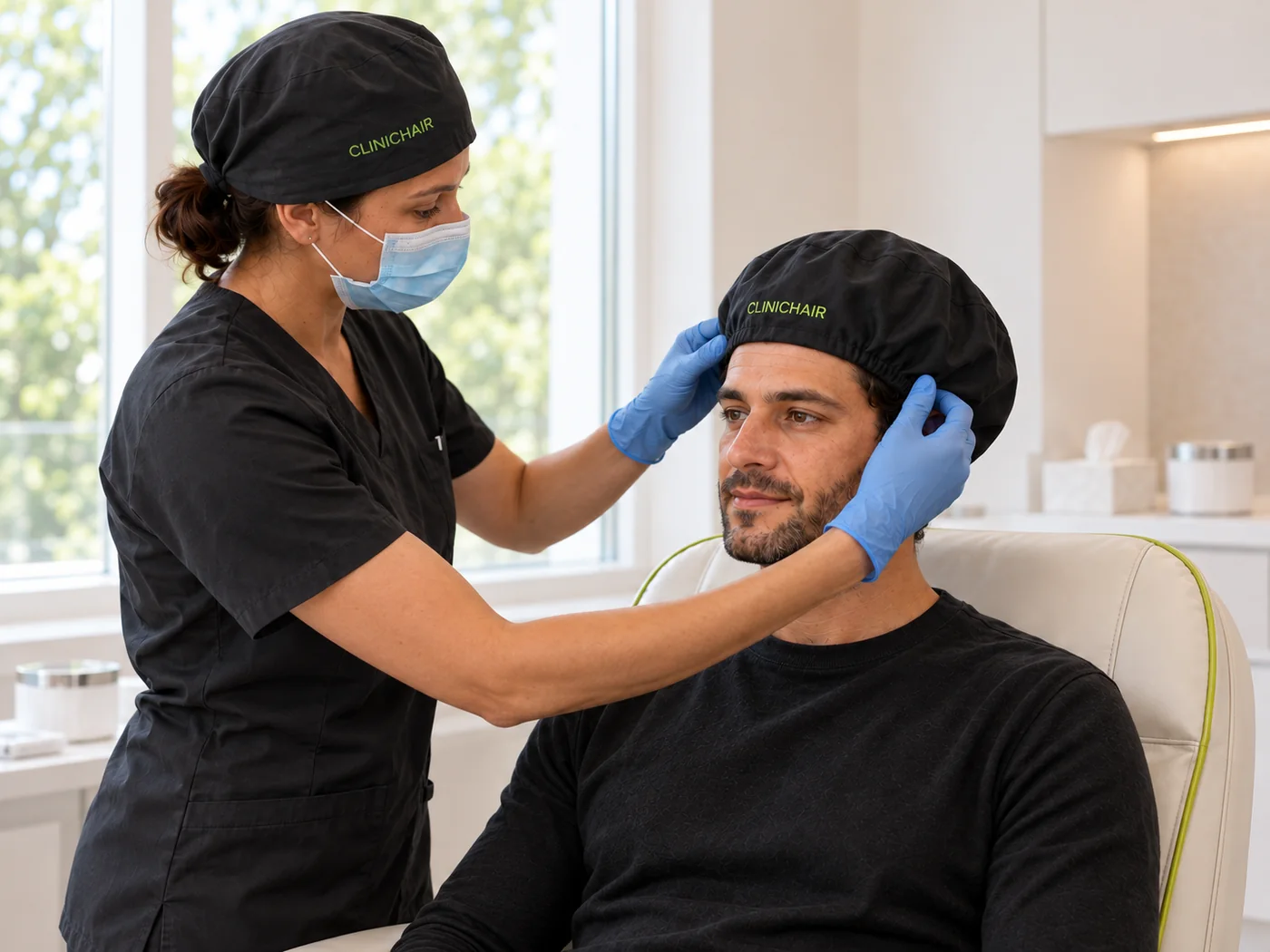
Hair ozone is a localised treatment applied to the hair and scalp inside a cap. We first examine your complaints and your scalp, then discuss its place in your care plan, your expectations and its timing with your other treatments.
The final plan is determined by the physician's examination.
Representative clinical image.
01ASSESSMENT AND PLANNING
First, let's understand your scalp and your needs.
We listen to your complaints and consider your scalp, hair loss history and general health together.
- Hair and scalp
- We check whether there is sensitivity, redness or any other complaint on the scalp.
- Hair loss history
- We discuss when the hair loss started, how it has progressed, your stress levels and previous treatments.
- Medical history
- We find out about your illnesses, respiratory complaints, allergies and medication.
- Personal plan
- We clarify with you the scope of the treatment, your expectations and the follow-up plan.
02SCOPE OF THE TREATMENT
A localised treatment focused on the scalp.
We explain how the treatment is applied, the materials used and your personal care plan before we start.
Application with a cap
The treatment is limited to the hair and scalp. No blood is taken and no injections are made into the scalp.
A controlled process
The equipment, cap and treatment set-up are checked in advance. The healthcare team monitors you throughout.
Other hair treatments
We review your current treatments. We discuss whether combined treatment is needed and the time between procedures.
Personal expectations
Scientific data on its effect on hair loss are limited. We consider your expectations and care goals together.
03TREATMENT PROCESS
How is hair ozone treatment done?
Hair ozone treatment takes about 15 minutes. We share the preparation and treatment flow before the procedure.
- 1
Assessment and preparation
We examine your scalp and prepare the treatment area and the materials to be used.
- 2
Fitting the cap
The cap is fitted to cover the hair. Its fit on your head and your comfort are checked.
- 3
Delivering ozone into the cap
Ozone is delivered into the cap. The team monitors the waiting time and your comfort.
- 4
Final check and care
At the end of the treatment, the team removes the cap. We check the scalp and share care advice.
04CARE AND FOLLOW-UP
Let's follow your care and progress together.
After the treatment
If unexpected burning, redness or sensitivity occurs on the scalp, tell our team. Follow the care advice given to you.
First wash
You can wash your hair 12 hours after the procedure. If different care advice was given, follow our team's guidance.
Need for repeat treatment
We consider the need for repeat treatment, your complaints and the check-up findings together.
Personal follow-up
We monitor the scalp and changes in appearance. We set the check-up time together with your other treatments.
05FREQUENTLY ASKED QUESTIONS
Common questions about hair ozone
What is hair ozone; how is it applied?
Hair ozone is a localised ozone treatment applied inside a cap that covers the hair and scalp. Its suitability is considered together with the condition of the scalp, your complaints and your current treatments.
No injections are made into the scalp. We explain the treatment process, the materials used and your personal plan before we start. The stages after the cap is fitted are carried out under the supervision of the healthcare team.
Who is it considered for; is it also done for women?
For women and men, we first examine the condition of the scalp, the hair loss history and the reason for coming to us. With complaints such as itching, sensitivity or hair loss, understanding the underlying cause is important; diagnostic investigation is done when needed.
We discuss whether hair ozone can be part of your personal care plan together with your health and expectations. If there is an active scalp problem, priority may go to diagnosing and appropriately treating that problem.
Is the cap connected to a device; do I need to stay still?
No. After ozone has been delivered into the cap, you can wait in a comfortable position without being connected to a device.
Do not remove and refit the cap yourself. Let the team know when you want to change position or take a break; the team supervises you throughout the treatment.
How does it differ from PRP, mesotherapy and ozone done with blood?
PRP is the application to the scalp of a product prepared from the person's own blood. In hair mesotherapy, a chosen product is given with small injections. In hair ozone, the treatment is done inside a cap and is aimed at the hair and scalp area.
In the procedure described on this page, no blood is taken and nothing is done with blood. Ozone treatments done with blood differ in method and purpose; information about one method should not be applied directly to another.
Does it stop hair loss or grow new hair?
Strong clinical evidence that localised ozone treatment with a cap stops hair loss or grows new hair is limited. Results of studies using ozonated water, oil or other routes cannot be presented as results of this method.
That is why we do not use hair ozone in place of treatment aimed at the cause of hair loss. We consider the condition of your existing hair and your expectations together; if needed, we discuss suitable hair treatments separately.
How long does the treatment take?
At Clinichair, hair ozone treatment takes about 15 minutes. We share the preparation and treatment flow with you before the procedure.
If another hair procedure is planned for the same day, the total appointment time may change. The team monitors the treatment time; our team will tell you when the cap is to be removed.
Is pain felt; can I rest during the procedure?
Hair ozone does not use needles or injections into the scalp. While you wait, you can read a book and sip your drink as the team considers suitable.
If the cap feels tight, your scalp burns or you feel any other discomfort, tell the team. Do not wait, assuming the discomfort is a normal part of the treatment; let the team check you and the cap.
How many treatments are needed; how are session intervals set?
We do not recommend the same number of sessions or repeat interval for everyone. The condition of your scalp, the reason you came to us and your other treatments shape the initial plan. We explain the recommended number of treatments and the reasons in advance.
At check-ups, we re-examine your complaints and the condition of the scalp. We consider the need for repeat treatment according to these findings and change the care or treatment plan when needed.
When is the check-up; how is change followed?
We set the check-up date together with the condition of your scalp, your current complaints and any other treatments. We compare the appearance with baseline photographs and also listen to the changes you have noticed.
The appearance of the hair and the course of hair loss can change over time. If different treatments are being used in the same period, it would not be right to attribute an observed change to hair ozone alone. We follow up across your whole care plan.
What should I pay attention to before the procedure?
Share your illnesses, allergies, the medication you take and the products you apply to your scalp. Also tell our team about any recent hair transplant, dye, bleach or other hair procedures.
Get advice from our team about cleaning your hair and using products before the appointment. Do not stop prescription medication yourself. If you have a new cough, wheezing, shortness of breath or marked scalp irritation, let us know before the appointment.
Is the ozone gas inhaled; is it the same as oxygen treatment?
No. Ozone is not the same gas as the oxygen we breathe and must not be inhaled. The method described on this page is a localised treatment in which the gas is used on the hair and scalp area.
Suitable equipment and a treatment set-up that keep the gas away from the face and breathing zone are needed. If you feel burning in the eyes or throat, a cough or discomfort breathing, tell the team straight away.
What should I do if I have asthma or a respiratory condition?
If you have asthma, COPD, recurrent wheezing or another respiratory condition, tell the physician before the procedure. Inhaling ozone can worsen symptoms, especially in people with respiratory conditions.
Suitability should be considered together with your personal health. Also share conditions such as pregnancy, breastfeeding, an active illness or an open wound on the scalp; if needed, the treatment is postponed or a different approach is chosen.
When can I wash my hair; which products can I use?
You can wash your hair 12 hours after the procedure. If a different time is recommended because of the condition of your scalp or another procedure done on the same day, follow the care plan the team gives you.
If there is irritation or sensitivity, do not rub the scalp hard. Follow personal advice for dye, bleach and medicines applied to the scalp. Do not apply the care timings of another treatment to this procedure on your own.
Can it be done with a hair transplant or other hair treatments?
We discuss with the physician whether combined treatment is needed and the time between procedures. Each method has a different purpose, method of application and care needs; grouping several procedures on the same day may not suit everyone.
Especially in a newly transplanted area, the healing of the grafts and scalp must be taken into account. Confirm with the transplant team when you can use a cap and start other procedures. Do not change your current treatment on your own.
What are the possible side effects and important warning signs?
Irritation, redness or sensitivity can occur on the scalp. If ozone gas reaches the eyes or airways, it can cause burning, coughing and breathing complaints. That is why the duration and method of application are monitored by the healthcare team.
If discomfort occurs during the treatment, tell the team straight away. If complaints continue afterwards, contact the clinic without waiting for your check-up date. In the case of marked shortness of breath, chest tightness or fainting, call for emergency help.
How are the fee and the follow-up scope agreed?
We explain the price before the procedure, together with the number of treatments, the materials used and the scope of follow-up. Within the plan you approve, you will not face surprise extra charges.
We tell you from the outset whether check-ups, any repeat treatments and other recommended hair procedures are included. If a change of plan or an additional procedure becomes necessary, we discuss it separately.
Question not answered here?Message our patient adviser
This page is for general information. Your personal treatment and care plan is determined by the physician's examination.
Updated: 4 October 2026