
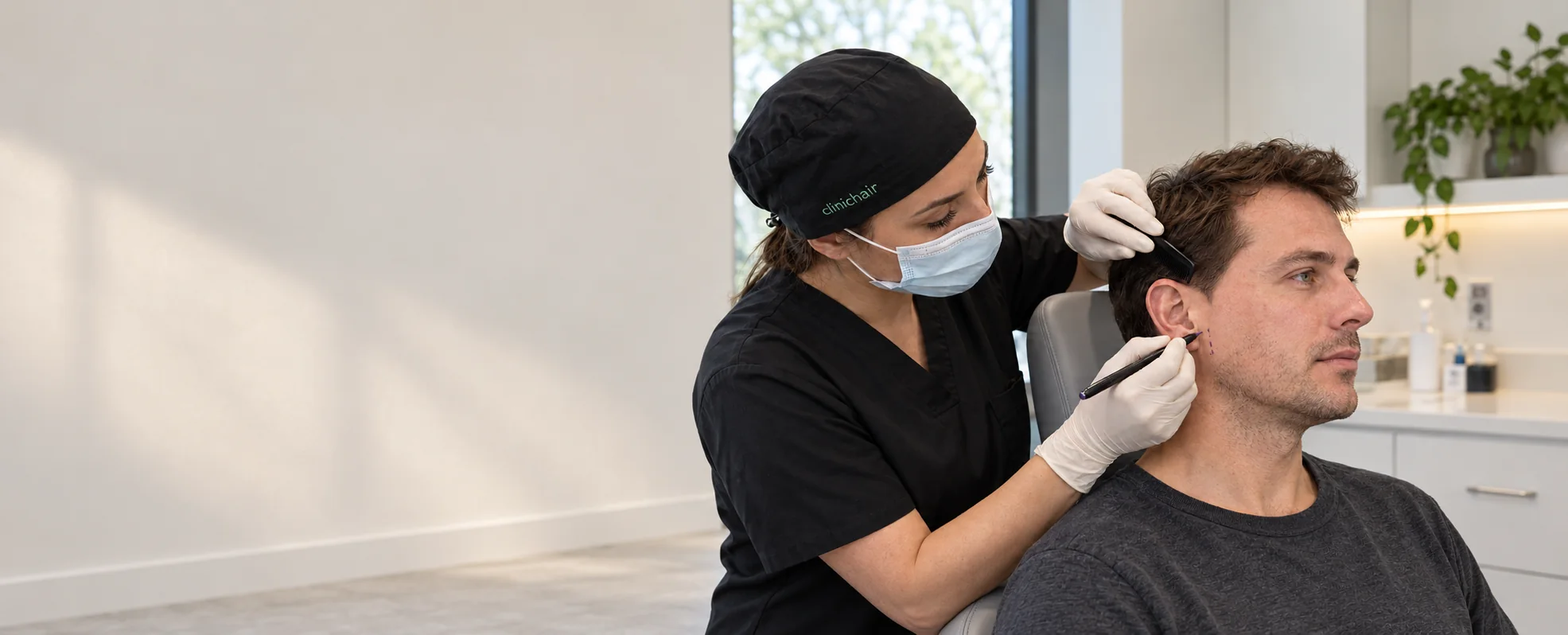
SIDEBURN PLANNING THAT SUITS YOUR FEATURES
Sideburn Transplant
We assess your sideburn line, the sparse areas and your donor capacity together, and plan individually a length, density and transition that match your facial proportions, your hairline and, if present, your beard line.
01ASSESSMENT AND PLANNING
How is your personal plan built?
Your physician examines your sideburn line, your skin and your donor capacity, and discusses your expectations with you.
Donor and hair match
We examine donor density and how well the thickness, colour and structure of the hair match. We take the remaining capacity and future hair transplant needs into account.
Sideburn borders and facial proportions
We examine the area in front of the ear, the temple hairline and, if present, the beard line. We set the length, width and lower border of the sideburns according to left-right balance.
Shaving plan and preparation
We consider shaving of the donor area and preparation of the sideburn area separately. We take the existing hair directions and the working area into account.
Sideburn and skin assessment
We discuss the cause of the sparseness, your medical history and medications. We examine scars, previous operations, skin problems and healing.
Sideburns shape the side border of the face. We follow a lie close to the skin, the natural growth direction and graduated density at the borders. We consider the match with the hairline and, if present, the beard line together with your hair structure, donor capacity and preferences.
02OPTIONS IN THE TRANSPLANT PLAN
Choosing a technique for sideburn transplants
AGraft extraction and shaving plan
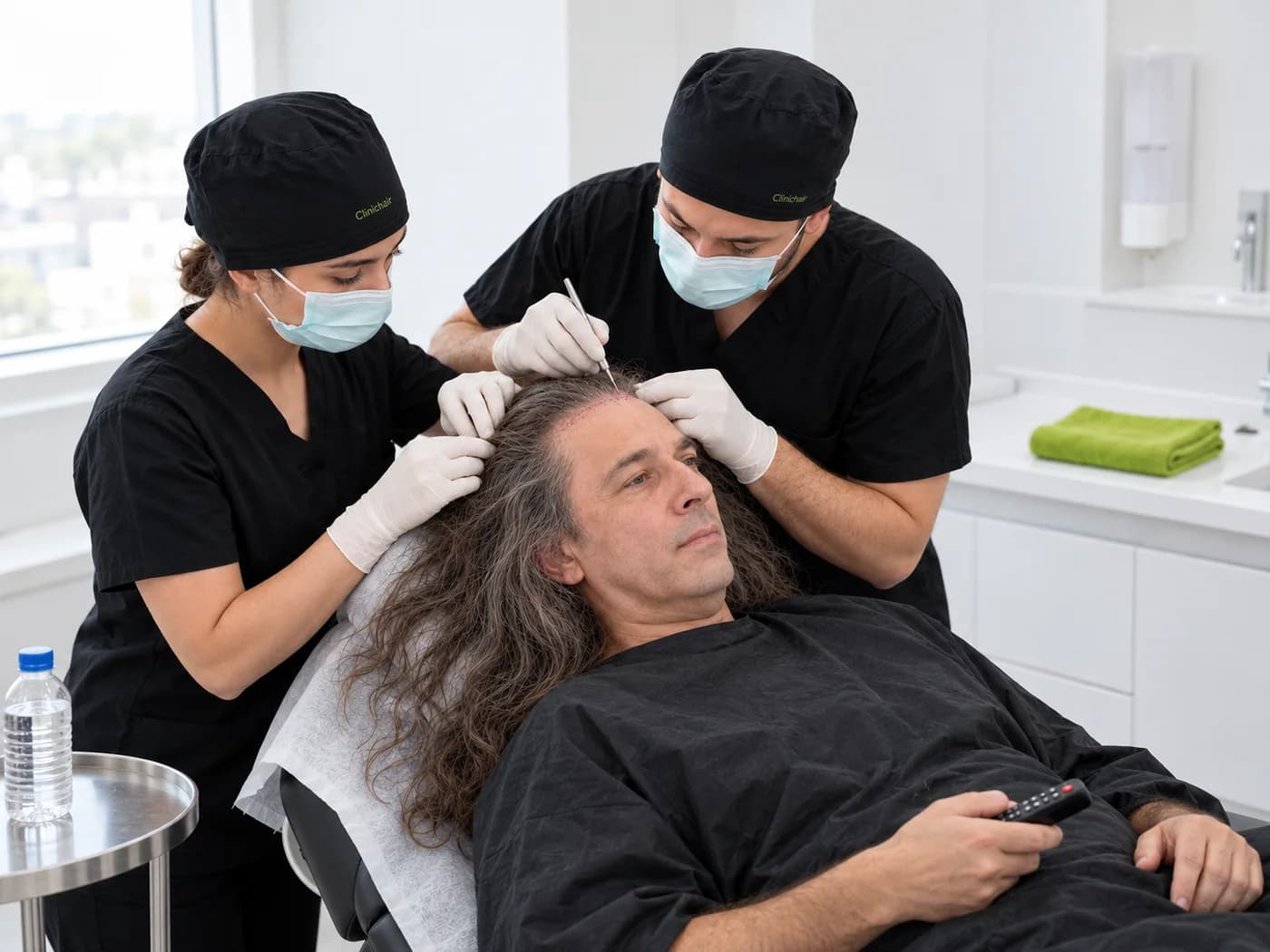
Long Hair FUE
Without shortening the hair in the scalp donor area, we extract the follicles with FUE with the hair left long. We set the length of the hair according to the placement method and the sideburn area.
See the details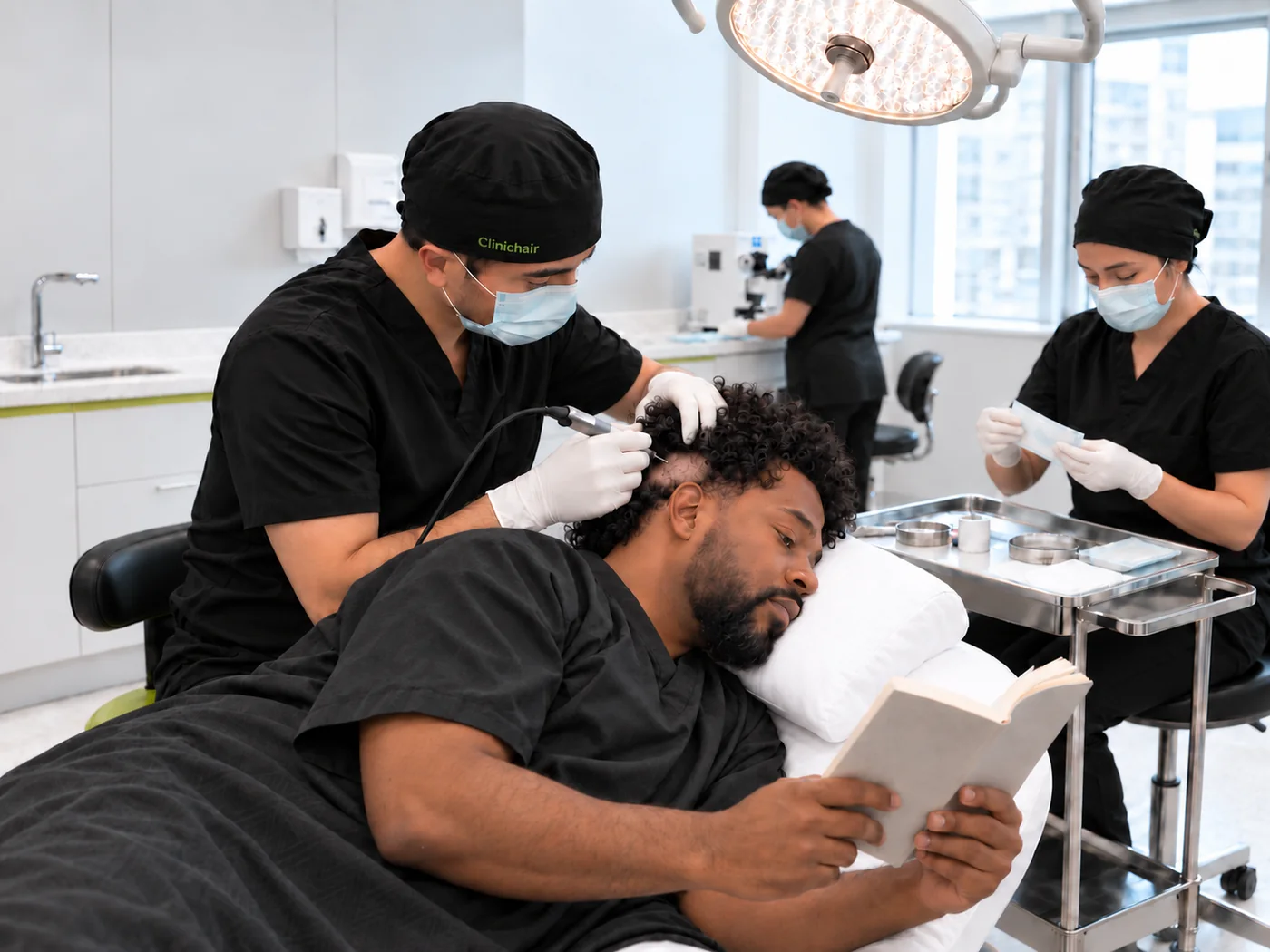
Partial Shave FUE
We shorten limited zones or all of the donor area. We can cover limited shaved zones with surrounding hair of suitable length. We decide the preparation of the sideburn area separately.
See the details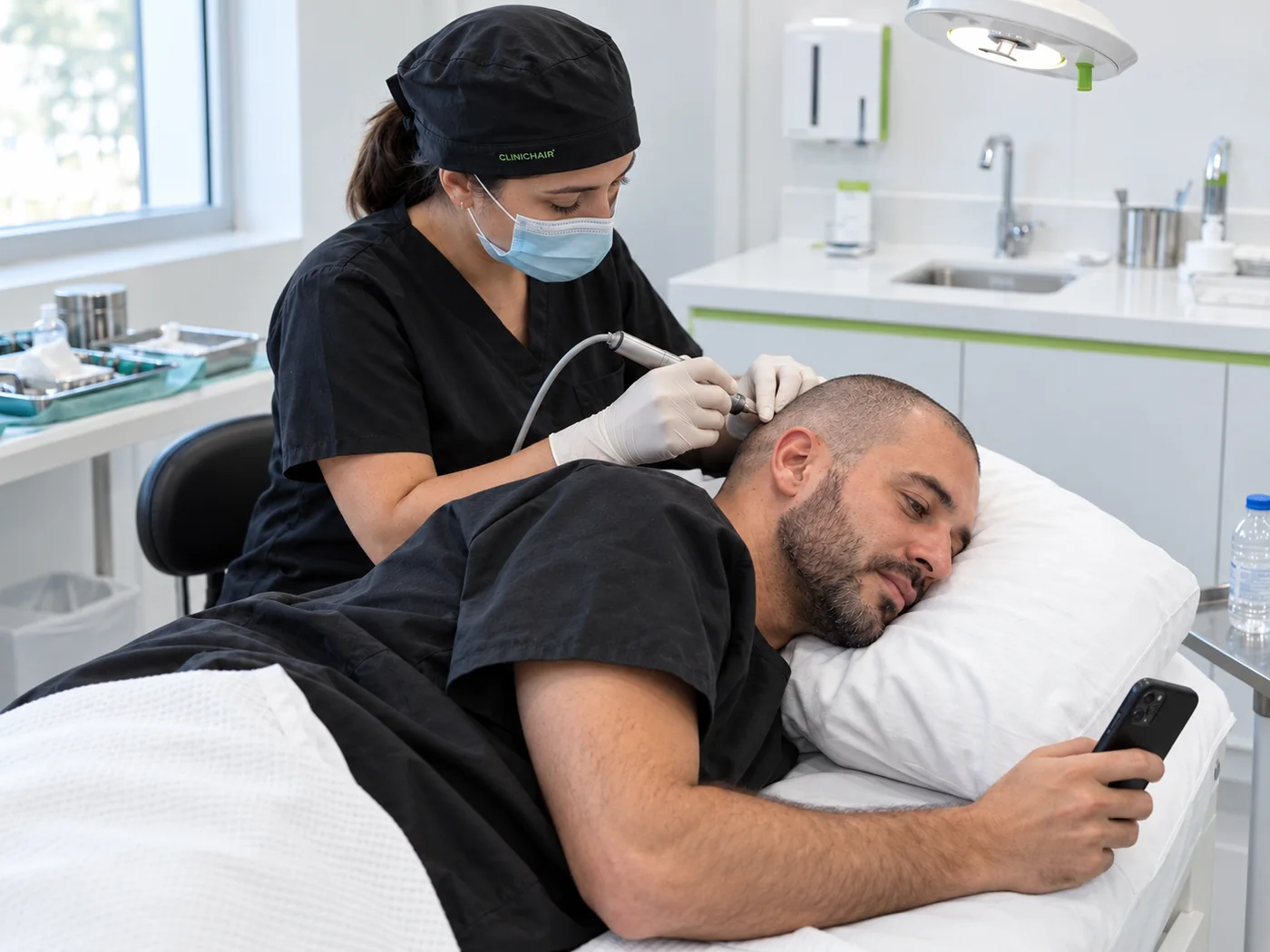
Shaved FUE
We shorten the hair in the scalp donor area and extract the follicles one by one with FUE. We decide whether to keep or shorten the hair in the sideburn area according to your personal transplant plan.
See the detailsBChannel opening and graft placement
This stage comes after extraction. We can use either placement option with different FUE preparations.
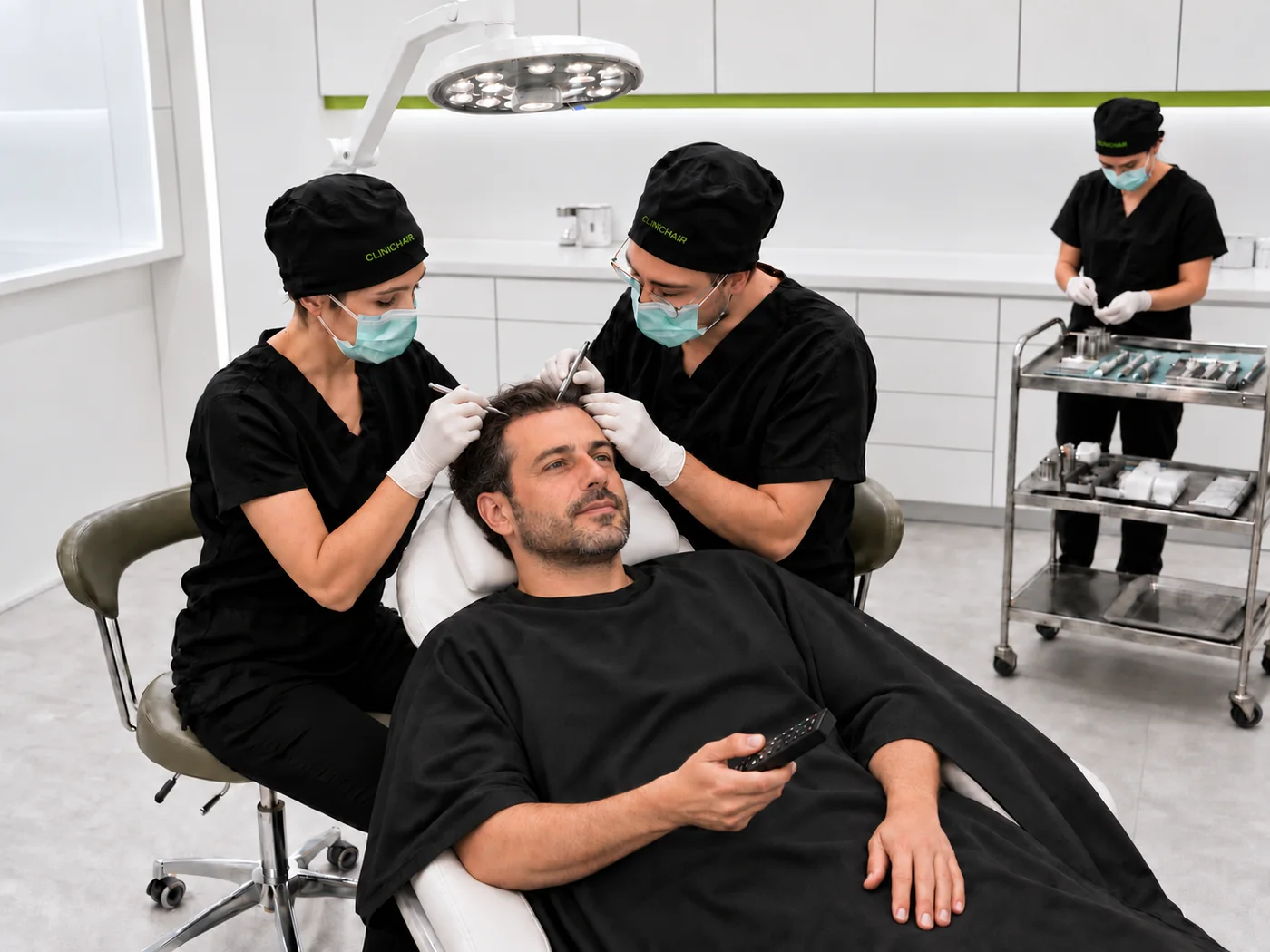
CHANNEL OPENING AND PLACEMENT WITH FORCEPS
Titanium / Sapphire + Forceps
We open the channels with titanium or sapphire blades and place the grafts one by one with implantation forceps.
See the details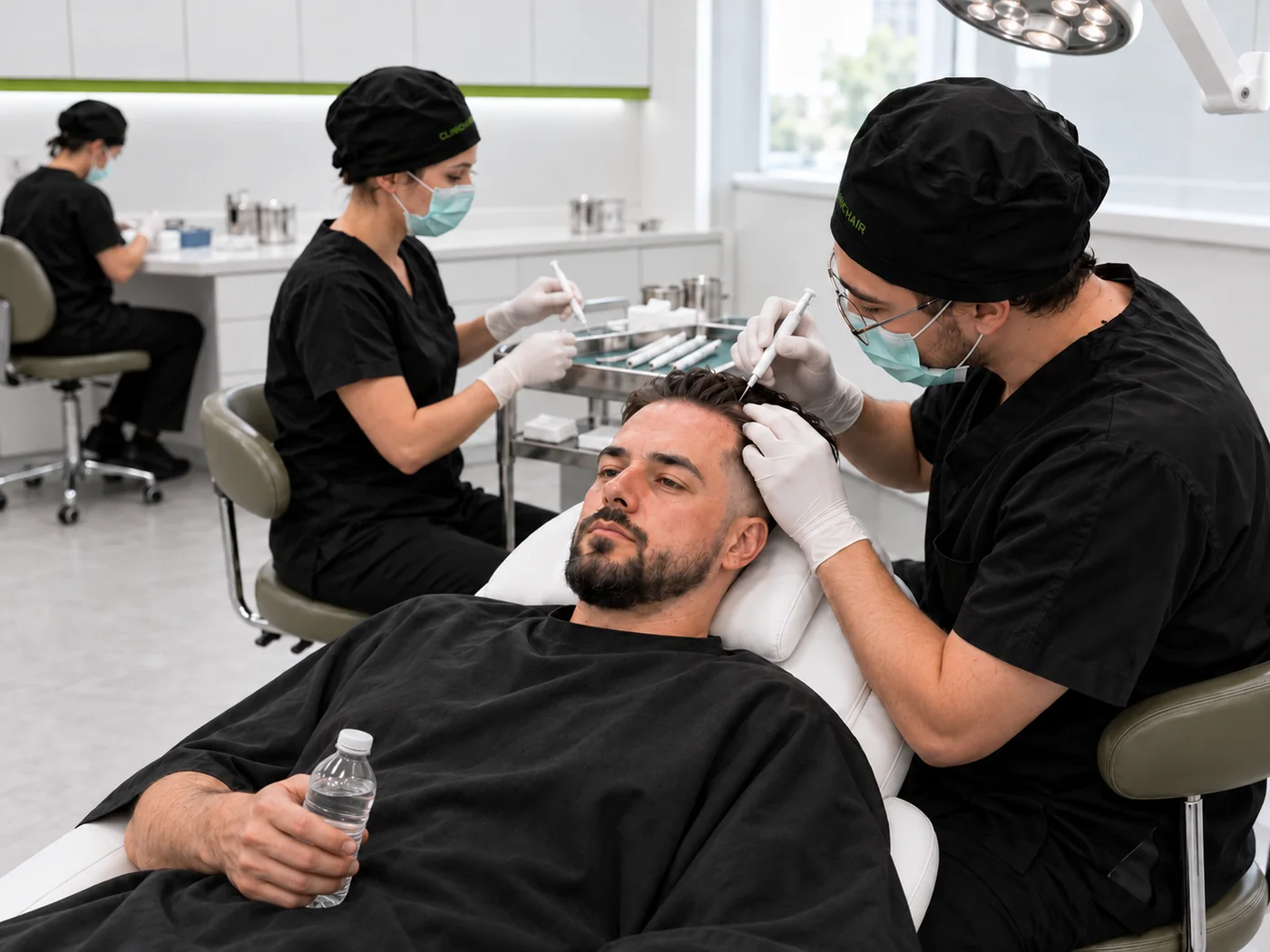
CHANNEL CREATION AND PLACEMENT WITH AN IMPLANTER
DHI
We open the channel and place the graft with the same sharp-tipped implanter pen.
See the detailsWhere needed, we can use Titanium / Sapphire + Forceps and DHI together in different areas in the same session (hybrid approach). We do not need to use both options for every patient.
03HOW IS THE PROCEDURE DONE?
How is a sideburn transplant performed?
We tailor the sideburn line, FUE graft extraction and placement to your hair type, your skin and the natural growth directions. Depending on your personal plan, the procedure can take about 3-4 hours.
01
Marking the sideburn borders and the transplant area
We mark the sideburn borders and the transplant area. We check the length, width and lower border together with the temple hairline, the area in front of the ear and, if present, the beard line.
02
Graft extraction
We extract the grafts one by one with FUE from a suitable donor area. We consider hair thickness and how well the colour and structure match, together with the remaining capacity of the donor area.
03
Preparing the grafts
We sort the grafts by number of hairs and structure. For a natural transition at the sideburn borders, we select suitable single-hair grafts. Until placement, we keep them in a special cooler in a suitable storage solution.
04
Channel opening and placement
We place the grafts with Titanium / Sapphire + Forceps or DHI, depending on the method we choose. We take as our guide how sideburn hairs lie close to the skin and their natural directions.
04AFTER THE PROCEDURE
Aftercare following a sideburn transplant
The first two days
Rest in the position your physician recommends. Protect the donor and recipient areas from pressure and friction, and follow the care advice and check-up schedule.
Day 3 / First wash
If our physician agrees, we do your first wash on day three. We show you in person how to clean the recipient and donor areas. Follow the products, cleaning method and frequency we recommend.
Day 7 review
We discuss your return to light daily activities based on your healing and the nature of your work. We set suitable times for sport, heavy exertion, haircuts and shaving the sideburns separately.
Protect the area in front of the ears from pressure and friction. We decide separately, according to your healing, when you can return to combing, haircuts, trimming with scissors and shaving.
Sideburn growth and follow-up
In the first weeks
Temporary shedding
The transplanted hairs may begin to shed temporarily.
From around month 3
New hair appears
New hairs may begin to grow; growth increases over time.
Between months 6 and 9
A clearer appearance
The look and fullness of the sideburns may become noticeable. Development continues over the following months.
Month 12 check-up
Reviewing the growth
At the month 12 check-up, we review the growth, direction and density of the hair together.
The timing of shedding, new growth and visible change can vary from person to person.
05FREQUENTLY ASKED QUESTIONS
Common questions about sideburn transplants
Who is a sideburn transplant suitable for?
A transplant can be considered for women and men whose sideburns have sparse areas or areas without hair growth, or who want to adjust their length or borders. First, we examine your hairline, the area in front of the ears, your skin and your donor capacity together.
The cause of the thinning, how long it has been present and any previous procedures matter. If hair loss has only recently started or there is an active skin problem, this may need to be assessed first. Suitability for a transplant is determined at the physician's examination, and we share the plan that is possible with you.
Can a transplant be done only on sparse areas or on one side?
Yes, in suitable cases a transplant can be planned for sparse areas only or for one side. Both sideburns do not necessarily have to be completed with the same number of grafts; we assess the existing hair distribution and the need on each side separately.
Even when a one-sided procedure is planned, we look at both sides of the face together. The aim is for the sideburns to look balanced with your face in length, width and density. We take the face's natural differences into account.
How are the shape, length and symmetry of my sideburns planned?
The area in front of the ears, the temple hairline, facial proportions and, if present, the beard line are assessed together. We plan the length, width and lower border of the sideburns together with the way you prefer to wear your hair and beard.
When comparing the right and left sides, we take the existing hairline and the natural features of the face into account. Rather than a sharp template, we aim for borders that blend with the surrounding hair and gradual transitions in density.
How is a natural transition with the hairline and beard line achieved?
We select grafts so that they match the thickness, colour, curl and direction of your existing hair and, if present, your beard hair. We follow how hair in the sideburn area lies close to the skin and its natural direction of growth.
Suitable single-hair grafts and a gradual distribution at the borders help us plan a softer transition. Because transplanted hair can keep growing, regular trimming may be needed to keep the sideburn length you want.
How are the number of grafts, procedure time and number of sessions decided?
We assess the area to be transplanted, the existing hair distribution, the target length and density, the condition of the skin and your donor capacity together. A small gap on one side and rebuilding both sideburns call for different plans.
Depending on your personal plan, a sideburn transplant can take about 3-4 hours. Besides the number of grafts, the duration is also affected by extraction, skin characteristics, bleeding, the shaving plan and the placement approach. We share the estimated duration after the examination. One session may be enough; if needed, we consider an additional session once growth can be seen.
Does hair grow back where grafts were taken from the donor area?
Follicles that are removed whole do not grow back in their old place in the donor area. That is why we plan the number of grafts that can be taken and the distribution of the remaining hair together.
When grafts are taken from the scalp for the sideburns, your possible future need for a hair transplant is also taken into account. Using the donor area in a balanced way and avoiding excessive extraction is an important part of planning.
If the scalp donor area is insufficient, can other donor areas be used?
Because matching the hairline matters for sideburns, we first assess a suitable scalp donor area. If the donor supply is insufficient, the transplant area and target density may be re-planned; in some cases a transplant may not be recommended.
A different donor area, such as the beard, can be considered in selected people only if the hair structure and the transition allow it. Thicker or differently curled hair is not suitable for every sideburn area. Having another donor area does not mean every desired look can be achieved.
Can a transplant be done on scars or areas lost after surgery?
A transplant can be done on some suitable scars or areas lost after surgery. The type of previous procedure, when it was done, how the tissue has healed and the change at the sideburn border are assessed. With an active or not yet mature scar, follow-up may be needed first.
In scar tissue, graft growth may differ from the surrounding normal skin. Your physician may suggest a limited test or a staged approach. The aim is to improve the appearance; it cannot be guaranteed that the scar will disappear completely or that the same density will be achieved everywhere.
What is the difference between Long Hair FUE, Partial Shave FUE and Shaved FUE?
In a sideburn transplant, these options mainly describe how the scalp donor area is prepared. In Long Hair FUE, the grafts are taken with the hair left long. In Partial Shave FUE, limited parts of the donor area or the donor zone are trimmed; surrounding hair of suitable length can cover the limited shaved areas.
In Shaved FUE, the hair in the scalp donor area is cut short. Whether the hair in the sideburn area is kept or trimmed is planned separately for all three options. The length of the hair on the extracted grafts is adjusted to suit placement in the sideburn area.
Are the donor and transplant areas shaved for a sideburn transplant?
The donor area and the sideburn area do not have to follow the same shaving plan. We assess the preparation of the scalp area where grafts will be extracted separately from the existing hair in the sideburn area.
Your hair length, graft need and extraction approach affect donor preparation. The sideburn hair, in turn, can be kept or trimmed so that the directions and the transplant area can be seen. We agree the extent with you before the procedure.
What is the difference between Titanium / Sapphire + Forceps and DHI?
With Titanium / Sapphire + Forceps, channels are prepared in the sideburn area and the grafts are placed into them one by one with forceps. In DHI, the grafts are loaded into sharp-tipped implanter pens; without opening separate channels beforehand, the channel is created and the graft placed in the same step.
DHI is not a separate extraction method. We choose the placement option according to the graft structure, the skin and the area being treated. With both approaches, the natural exit angle and direction of the sideburn hair are respected.
Can placement options be combined in the same session?
Where needed, in the same session, grafts can be placed with forceps into channels opened with titanium or sapphire blades in one area, and with a sharp-tipped implanter pen in another. We call this the hybrid approach.
Combined use is considered if the characteristics of the area, the skin and the grafts call for it. Not everyone needs both options. The focus of the plan is a balanced distribution with natural angles and directions.
When does the transplanted hair grow, and when does the look settle?
In the first weeks, temporary shedding of the transplanted hairs may occur. On its own, this does not mean the follicles have been lost. New growth may start to be noticeable from around month 3; it takes time for the first hairs to thicken and for the look to fill out.
The sideburn look may become noticeable between months 6 and 9 and matures over the following months. The pace of growth varies from person to person; month 12 is not a fixed end date. We monitor the growth, direction and density of the hair with planned check-ups over 12 months.
When can I get a haircut, shave my sideburns and return to sport?
If your physician considers it suitable, we do the first wash on the third day and show you how to care for the area. In the early period, it is important not to rub the transplant area, not to pick off scabs and to protect it from friction.
Do not neglect cleaning out of fear of damaging the grafts, and do not limit it to a superficial rinse. Clean away blood, scabs and product residue using the method we show you; do not scrape scabs or force them off. If you feel the cleaning is not enough, ask our team for support.
We assess separately, according to your healing, when you can return to trimming with scissors, clippers and razor shaving. The transplant area must also be protected during haircuts. We discuss daily life and work again at the day-seven check-up and share personal recommendations for sport and heavy exertion.
What are the possible risks, scarring and limitations?
Redness, swelling, tenderness and scabbing may occur. Bleeding, infection, ingrown hairs, folliculitis, scarring and changes in colour are also possible risks. A mismatch in the exit angle or direction of the hair, irregularities in the skin or less growth than expected may occur.
Donor capacity, hair structure and the characteristics of the skin limit the density that can be achieved. It is not guaranteed that every graft will take or that the desired fullness will be achieved in one session. We assess the expected look and the limitations together before the procedure.
The expected mild swelling in the treated area is usually temporary and eases within a few days.
During the first nights, rest with your head at the height your physician recommends. This position can help the swelling go down. Protect the transplanted areas from the pressure and friction of the pillow or bed. At the end of the procedure we show you in person the sleeping angle that suits you and how to use support.
If the swelling comes with increasing pain, marked tenderness or fever, let our clinic know without waiting.
How are the fee and the follow-up scope agreed?
We share the price with you once the areas to be transplanted, the graft need, donor preparation, the placement approach and the session plan are clear. The number of grafts alone does not show the full scope of the treatment.
We discuss from the outset what is included in the procedure, aftercare and check-ups. We define the scope clearly so that you do not face surprise extra charges within the plan you approve. Sideburn growth is monitored with planned check-ups over 12 months.
Question not answered here?Message our patient adviser
This page is for general information. Personal assessment is made through a physician’s examination.
Updated: 7 October 2026