

PERSONALISED PLANNING FOR WOMEN
Hair Transplant for Women
We assess the cause of your hair loss, the thinning areas and the capacity of your donor (extraction) area together, and plan around your existing hair, your parting direction and your natural hairline.
01ASSESSMENT AND PLANNING
How is your personal plan built?
Your physician examines the cause of your hair loss, your medical history and your donor capacity, and discusses your expectations with you.
Donor area and hair structure
We examine the density and structure of the hair at the back and sides of the head. We also check whether the donor area itself is thinning.
Hairline and parting direction
We take your facial proportions, hairline, parting direction and existing hair into account. We set the angle, direction and density distribution of the grafts.
Shaving plan and preparation
We consider shaving of the donor and recipient areas separately. We take your hair length and how you style your hair day to day into account together.
Medical history and follow-up
We discuss hormonal changes, illnesses, medications and previous procedures. We agree your expectations and the scope of treatment and follow-up.
Not every case of thinning in women needs a transplant. If necessary, we first recommend investigation or treatment of the cause of the hair loss. A hair transplant does not stop the existing hair from falling out; we consider together options that protect the donor area and your existing hair.
02OPTIONS IN THE TRANSPLANT PLAN
Choosing a technique for hair transplants in women
AGraft extraction and shaving plan
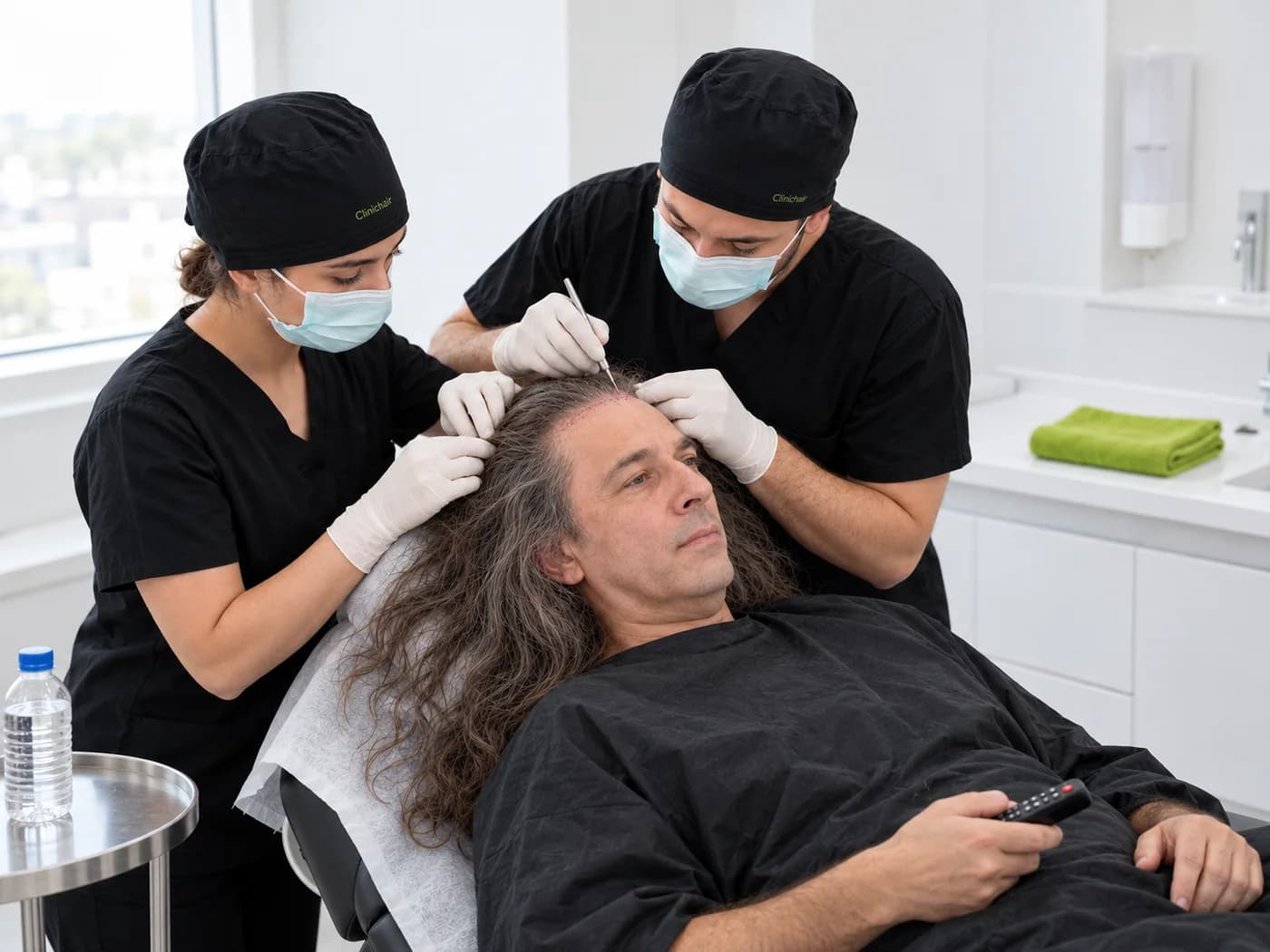
Long Hair FUE
Without shortening your existing hair, we extract the grafts with FUE with the hair left long. Depending on your placement plan, we can leave the hair on the grafts long or trim it.
See the details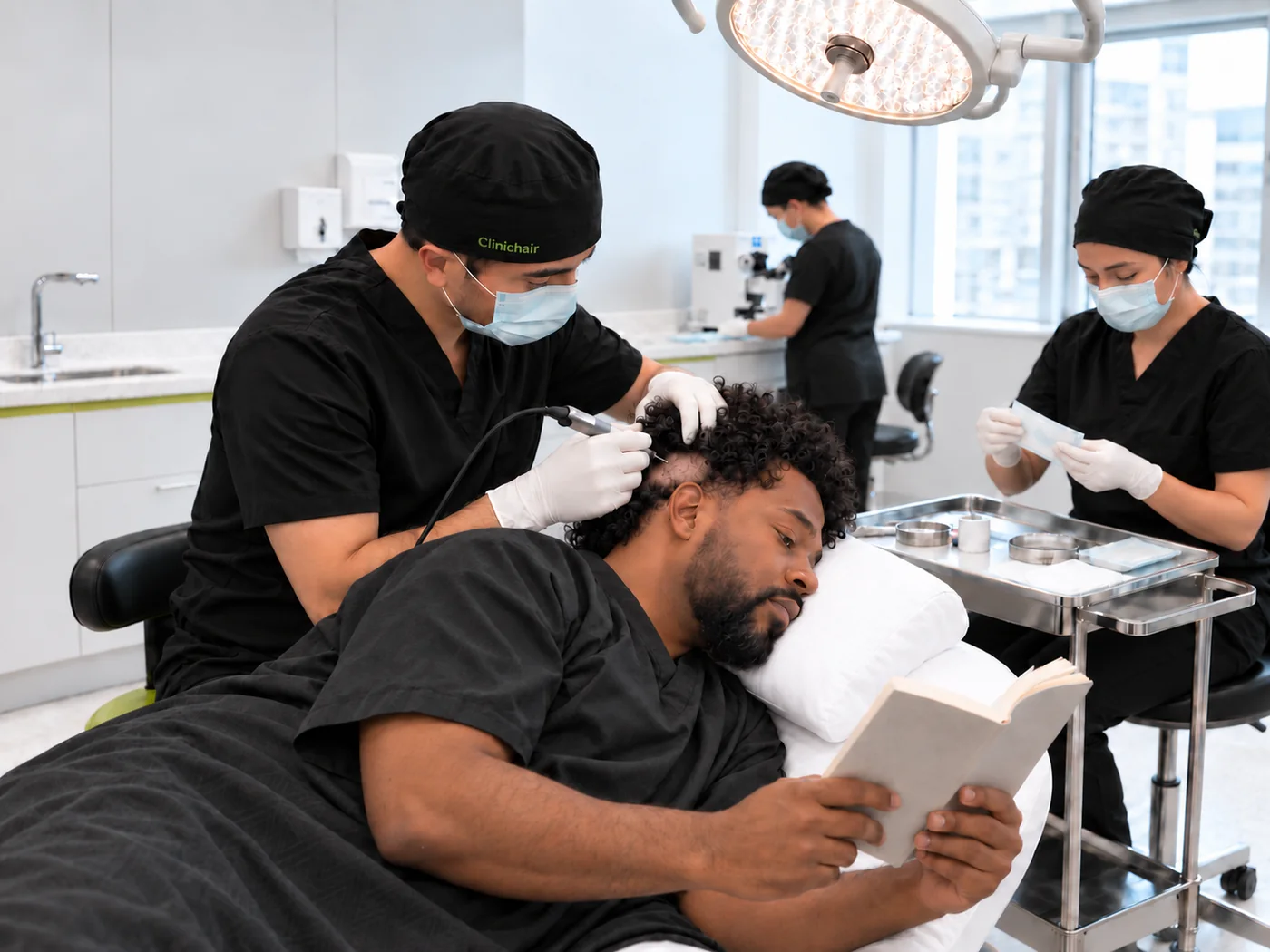
Partial Shave FUE
We can shorten limited parts of the donor area, or all of it, and leave the hair in the recipient area long. If the hair length allows, we can cover limited shaved zones with the surrounding hair.
See the details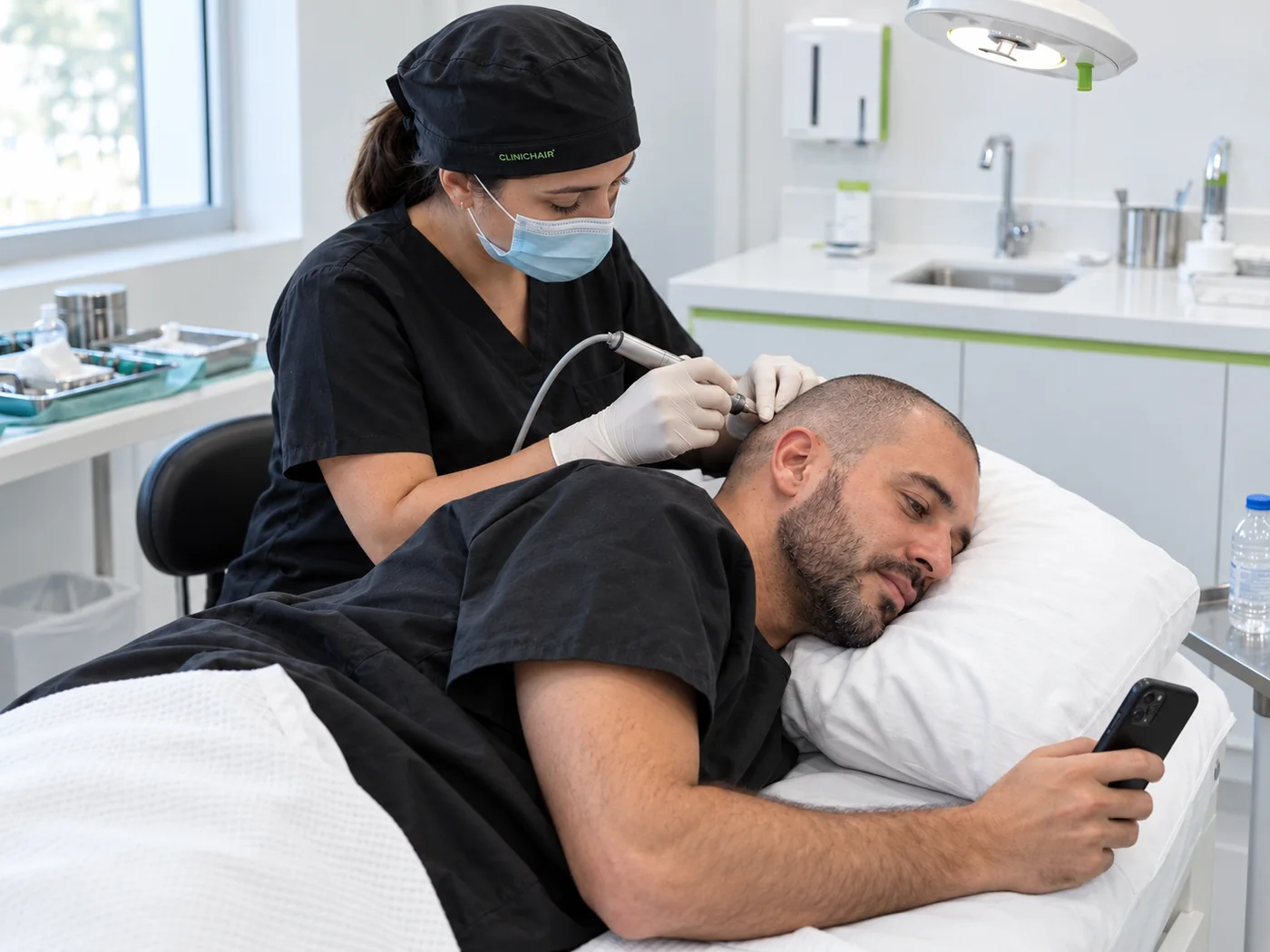
Shaved FUE
We shorten the hair in the donor and recipient areas. We extract the grafts one by one with FUE. We build the extraction and placement plan around your donor capacity and the needs of your recipient area.
See the detailsBChannel opening and graft placement
This stage comes after extraction. We can use either placement option with different FUE preparations.
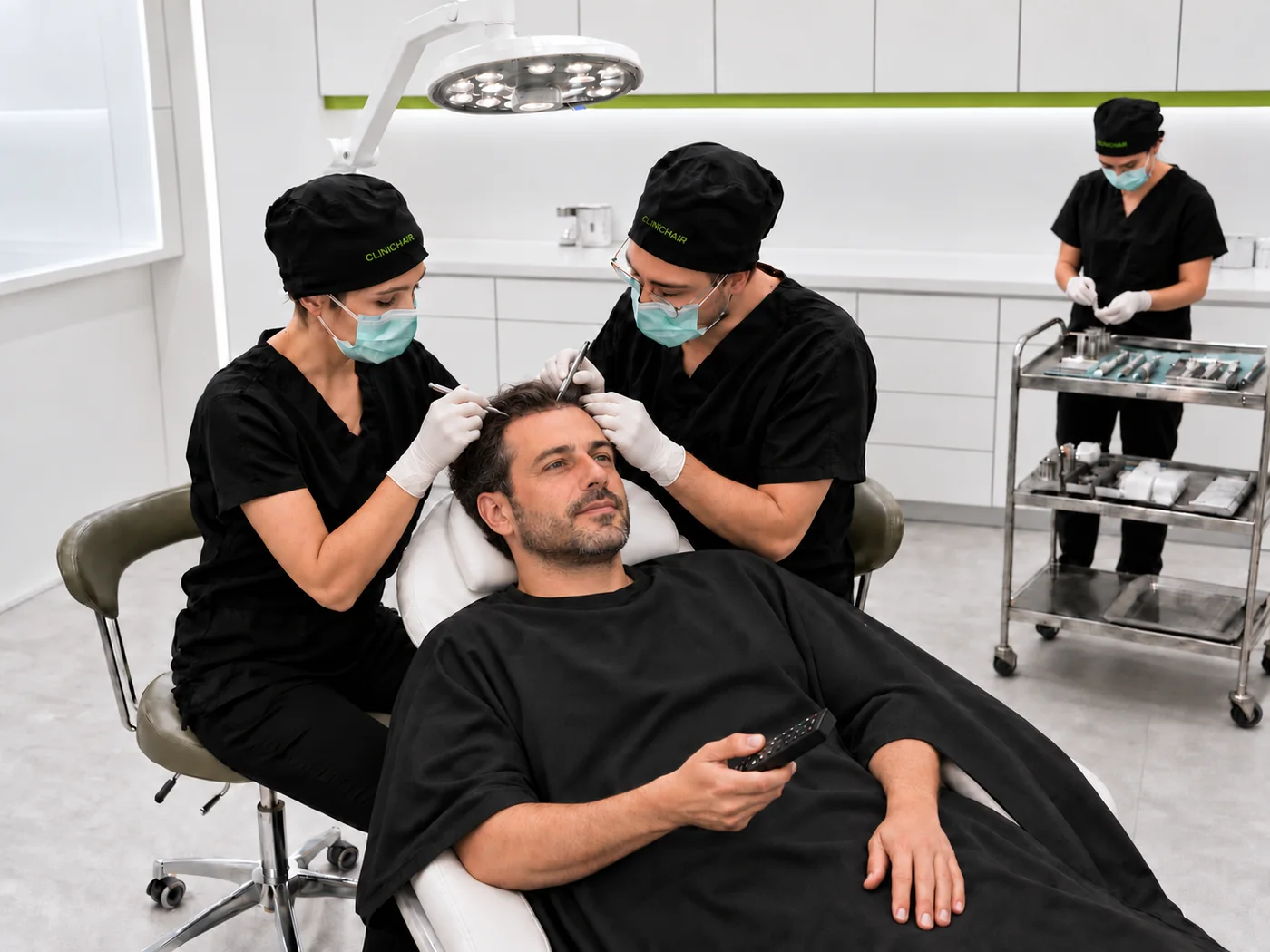
CHANNEL OPENING AND PLACEMENT WITH FORCEPS
Titanium / Sapphire + Forceps
We open the channels with titanium or sapphire blades and place the grafts one by one with implantation forceps.
See the details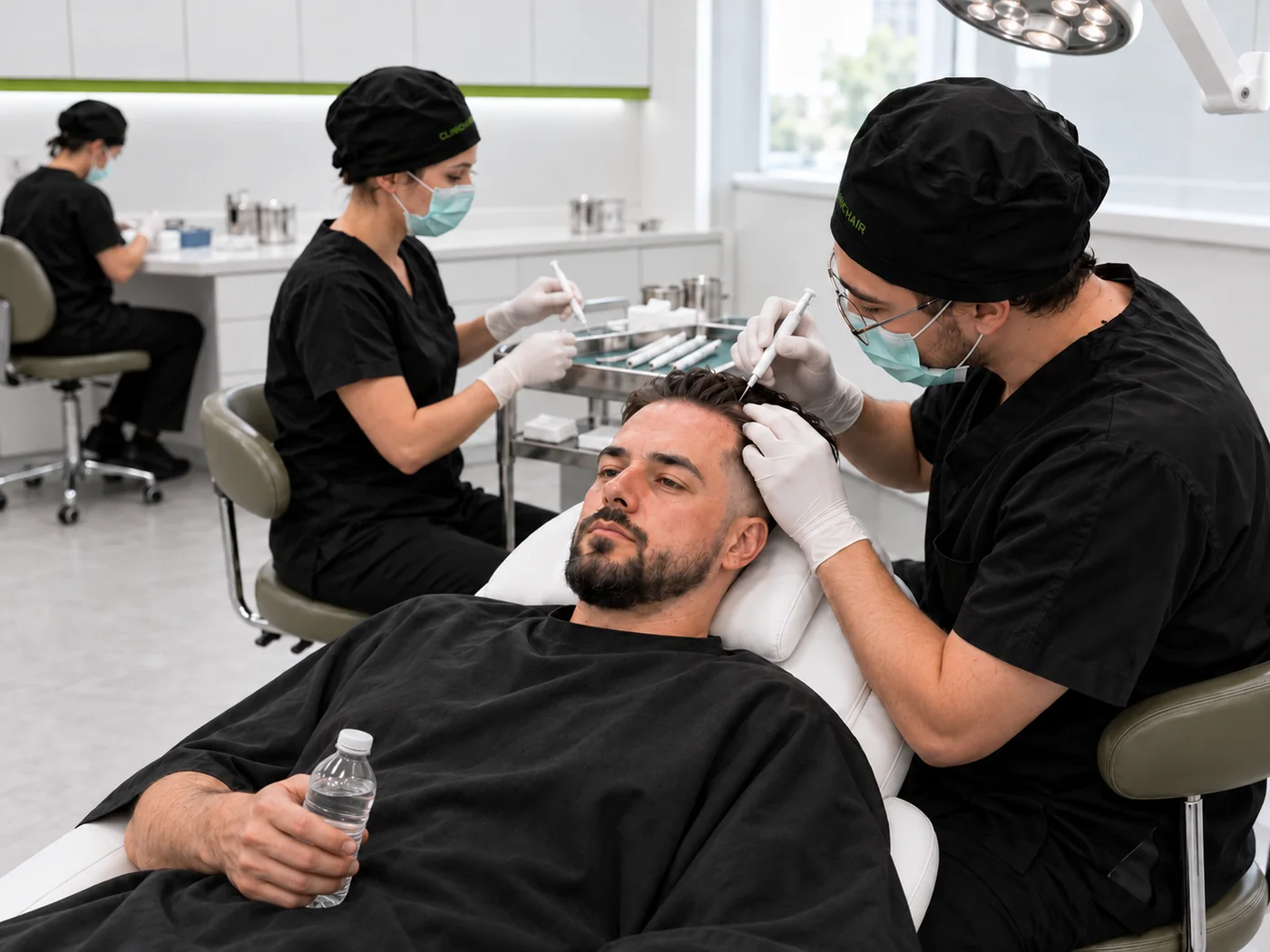
CHANNEL CREATION AND PLACEMENT WITH AN IMPLANTER
DHI
We open the channel and place the graft with the same sharp-tipped implanter pen.
See the detailsWhere needed, we can use Titanium / Sapphire + Forceps and DHI together in different areas in the same session (hybrid approach). We do not need to use both options for every patient.
03HOW IS THE PROCEDURE DONE?
How is a hair transplant for women performed?
We adapt the stages of the procedure to your personal transplant plan, taking your hairline, parting direction and existing hair into account.
01
Marking the hairline and recipient area
We mark your hairline, parting direction and the recipient area before the procedure. We confirm the shaving preparation and the distribution plan together with you.
02
Graft extraction
We prepare the donor area according to the chosen shaving plan. We extract the grafts one by one with FUE, in a number suited to your donor capacity and existing density.
03
Preparing the grafts
We prepare the grafts for placement. We set the length of the hair according to the placement method and the recipient area. Until placement, we keep them in a special cooler in a suitable storage solution.
04
Channel opening and placement
We place the grafts with Titanium / Sapphire + Forceps or DHI, depending on the chosen method. In placement, we follow the direction of the existing hair and the parting line.
04AFTER THE PROCEDURE
Care after a hair transplant for women
The first two days
Rest in the position your physician recommends. Protect the donor and recipient areas from pressure and friction, and follow the care advice and check-up schedule.
Day 3 / First wash
If our physician agrees, we do your first wash on day three. We demonstrate washing and combing in person. Follow the products, washing method and frequency we recommend to keep your scalp clean.
Day 7 review
We discuss your return to light daily activities according to your healing and the nature of your work. We set suitable times for sport, heavy exertion, haircuts and shaving separately.
Follow our personal advice, suited to your healing, on haircuts, colouring, heat styling and the products you use.
Hair growth and the follow-up process
From days 10–15
Temporary shedding
The transplanted hairs may begin to shed temporarily.
From around month 3
New hair appears
New hair may begin to grow; growth increases over time.
Between months 6 and 9
A clearer appearance
The look and fullness of the hair may become clearer. Growth continues in the following months.
Month 12 check-up
Reviewing the growth
We review overall growth together at month 12, and the crown at about month 15.
The timing of shedding, new growth and visible change can vary from person to person.
05FREQUENTLY ASKED QUESTIONS
Questions about hair transplants for women
Who is a hair transplant suitable for in women?
We plan a hair transplant if it is found suitable after assessing the cause and course of the hair loss, the distribution of thinning, the condition of your donor area and your expectations together. A widening parting, thinning in certain areas or a need at the hairline is not enough on its own to decide.
At the examination we assess your existing hair and the follicles that can be taken from the donor area, and we discuss with you the look that can be achieved. If there is marked thinning across the whole scalp, there may not be enough suitable donor hair for a transplant.
Can a transplant be done for every type of hair loss?
No. In women, thinning that looks similar can have different causes. When the hair loss started, how it has progressed, your medical history, hormonal changes and the medications you take are assessed. If your physician considers it necessary, they plan further investigation or an assessment by the relevant specialty.
In some cases, treatment or monitoring of the cause of the hair loss is needed first. A hair transplant is not the answer to every type of hair loss and does not stop the existing hair from falling out. We agree together the approach that suits you after the examination.
What if the donor area is also thinning?
If the hair at the back and sides is also thin, we assess more carefully how many follicles can be taken there and how the remaining area will look. We consider not only the donor area’s current density but also the structure of the hair and the course of the hair loss.
If there is not enough suitable donor hair, a transplant may not be recommended, or we discuss that the target density will be limited. Taking more follicles does not always mean a better result; we make protecting your donor area a priority.
Are the donor and recipient areas shaved in a hair transplant for women?
Shortening all of your hair is not necessary in every plan. We assess the donor and recipient areas separately. In suitable people, Long Hair FUE allows us to work without shortening the existing hair; with Partial Shave FUE, limited zones or a wider part of the donor area are shortened while the hair in the recipient area can be left long.
We decide the shaving plan together with your graft needs, hair length and the working area. We also discuss in advance how well limited shaving can be covered by the surrounding hair. Complete concealment should not be expected for every limited shaved area.
Will my existing hair be affected by the procedure?
When placement between existing hairs is planned, their position, direction and the working space between them are taken into account. Our aim is to create a suitable distribution while respecting your existing hair; however, the procedure does not stop it from falling out.
Temporary shedding may also occur in the existing hair around the treated area. The growth of thinned hair in particular, and the course of the hair loss, vary from person to person. We assess together with your physician whether treatment to protect your hair is needed and the risks specific to you.
How are the hairline and parting direction planned?
We assess your natural hairline, your facial proportions, which side you part your hair on and how you usually wear it together. Not only the position of the line but also the density distribution among your existing hair is part of the plan.
In placing the grafts, the exit direction and angle of the surrounding hair are respected. We consider the needs of the parting line, the front and the crown together with your donor capacity, and discuss in advance what look can be aimed for in each area.
How are the number of grafts, procedure time and number of sessions decided?
We determine how many grafts you need together with the size of the thinning area, the existing hair density, the hair structure and the number of follicles that can be taken from the donor area. The areas where grafts will be placed between existing hairs and the target distribution are also built into the plan.
Procedure time can vary with the number of grafts, the shaving preparation, working between long hairs, tissue characteristics, bleeding and breaks. So it would not be accurate to give the same time for everyone. We confirm at the preliminary consultation how long you can expect to spend at the clinic, including preparation and breaks.
Whether more than one session is needed is assessed together with your donor capacity, the recipient area and the look you are aiming for. The need for, and timing of, a further session can be reviewed according to the growth process.
Does hair grow back where grafts were taken from the donor area?
Follicles that have been fully extracted do not regrow in their original place. The hair remaining in the area keeps growing. The look of your donor area therefore depends on the density of the remaining hair, your hair length and the zones the grafts were taken from.
Because donor capacity is limited, the extraction plan must be made carefully. In planning, we aim to reduce visible thinning and to preserve grafts you may need in the future.
What is the difference between Long Hair FUE, Partial Shave FUE and Shaved FUE?
With Shaved FUE, the hair in the donor and recipient areas is shortened. With Partial Shave FUE, certain parts of the donor area can be shortened and hidden by the long hair above; a plan can also keep the donor area short and the recipient area long. With Long Hair FUE, the existing hair is not shortened, and grafts can be extracted and placed with the hair left long.
These names describe how the hair is prepared for the procedure. Whether the grafts are placed with forceps or a suitable implanter is planned separately. When choosing, we assess your donor characteristics, recipient area and expectations together.
What is the difference between Titanium / Sapphire + Forceps and DHI?
With Titanium / Sapphire + Forceps, the channels are prepared with titanium or sapphire blades and the grafts are then placed into them with forceps. In the DHI procedure described here, the grafts are loaded into sharp-tipped implanter pens, and the channel is created and the graft placed with the same instrument.
This difference concerns the placement stage. Extracting the grafts with FUE and how much your hair is shortened are planned separately. We choose the right option for you by assessing your hair and graft structure together with the recipient area.
Can placement options be combined in the same session?
Yes, if needed both approaches can be used in the same session. Grafts can be placed with forceps into opened channels in one area and with sharp-tipped implanter pens in another. On our site this combination is called the hybrid approach.
Not every patient needs the two options combined. We build the plan around the needs of the areas to be treated.
When does the transplanted hair grow, and when does the result become visible?
The transplanted hairs may shed temporarily in the first weeks. On its own, this does not mean the follicles have been lost. You may start to notice new hair from around month 3; in the following months the look becomes clearer as the hair grows longer and thicker.
The look may become clearer between months 6 and 9 and matures in the following months. The pace of growth varies by person and by transplant area. In general we follow hair growth for 12 months, and for about 15 months at the crown, with planned check-ups.
When can I wash, comb and cut my hair?
If our physician agrees, we do your first wash on day three. We show you in person how to wash and rinse your hair, how to care for the hair left long and how often to wash.
You may worry about harming the grafts. Do not skip washing for this reason, or limit it to a quick surface rinse. Keeping the scalp clean and preventing blood, scabs and product residue from building up is an important part of aftercare.
We show you how to wash and how much pressure to apply at each stage of healing. In the first days, do not rub the recipient area; do not scratch the scabs or pull them off. If you feel you cannot clean thoroughly enough with the method we show you, ask our team for help.
When combing, avoid pulling the hair and pressing on the recipient area. Agree with your physician, according to your healing, when you can return to haircuts, colouring and heat styling. The same waiting time may not apply to every treatment; follow your personal care plan.
When can I return to daily life and sport?
When you return to daily life depends on your healing and the physical demands of your work. At Clinichair, we discuss your return to light daily activities at the day-seven review. The timing for light daily tasks may differ from that for sport and heavy exertion.
Activities that involve sweating, impact or pressure on the recipient area should also be assessed separately with your physician. Based on your check-up findings, we agree step by step when you can start each activity.
What are the possible risks and limitations of the procedure?
Possible risks include bleeding, infection, reactions to anaesthesia, scarring or growth below the expected level. After FUE, small dot-like marks may remain in the donor area; taking too many grafts can lead to visible thinning. Leaving the hair long does not remove these risks.
The density that can be achieved is limited by your donor capacity, hair structure and recipient area. The existing hair may continue to fall out; we assess at follow-up whether additional treatment or another session in the future is needed. You can discuss the risks specific to you with your physician before the procedure.
Swelling may appear on the forehead and around the eyes in the first days. The expected mild swelling is usually temporary and eases on its own within a few days.
During the first nights, rest with your head at the height your physician recommends. This position can help the swelling go down. Protect the transplanted areas from the pressure and friction of the pillow or bed. At the end of the procedure we show you in person the sleeping angle that suits you and how to use support.
If the swelling comes with increasing pain, marked tenderness or fever, or if you have severe pain or any other unexpected symptom, let our clinic know without waiting for your planned check-up. Let us also agree in advance how you can reach your physician after the procedure if needed.
How are the fee and the follow-up scope agreed?
We agree your fee before the procedure, together with your personal treatment plan and the follow-up scope. At Clinichair there are no surprise extra charges within the plan you approve. We set the scope and timing of check-ups together and generally follow your hair growth for 12 months, and for about 15 months at the crown, with planned check-ups.
At the preliminary assessment you can also discuss care recommendations, contact after the procedure and the scope of any additional treatments. For any questions, you can reach us through the patient adviser or WhatsApp link on this page. Matters that need a medical assessment should be discussed with your physician.
Question not answered here?Message our patient adviser
This page is for general information. Personal assessment is made through a physician’s examination.
Updated: 6 October 2026