
TRANSPLANT PROCEDURES
Beard Transplant
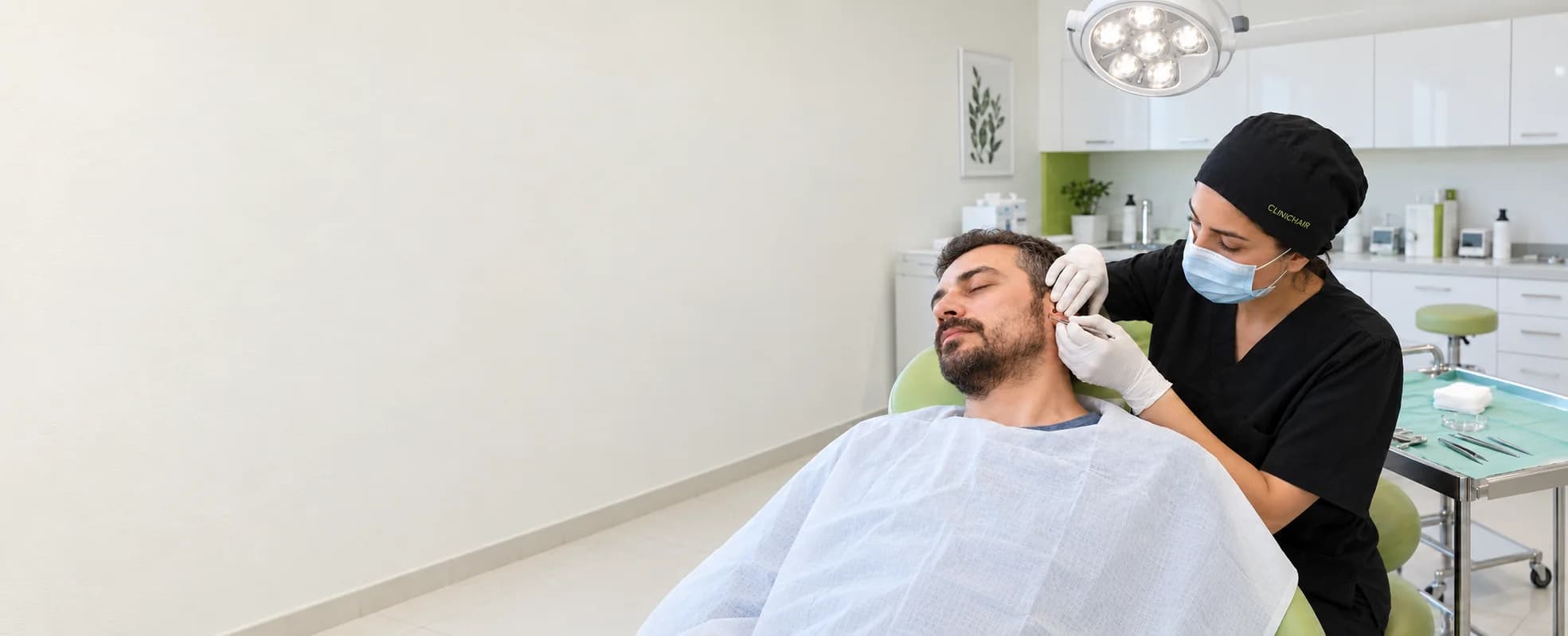
We design your beard line around your facial proportions and preferences. For sparse areas or areas where no hair grows, we prepare a personal transplant plan that takes your donor (extraction) capacity and the structure of your existing beard into account.
01ASSESSMENT AND PLANNING
How is your personal plan built?
Your physician examines your beard and skin structure and builds your transplant plan by bringing your expectations and your donor capacity together.
Beard and skin analysis
Your physician examines the cause of the sparseness and the structure of your beard and skin. Your medical history, any active skin problems and the condition of any scars determine whether a transplant is suitable for you.
Donor (extraction) area
Donor density and how well the thickness, colour and structure of the hair match are examined. Beard donor hair from under the chin can be an option when needed. Future hair transplant needs are also taken into account.
Facial proportions and design
The beard line and recipient area are drawn according to your face shape, jawline and preferences. The aim is a density that matches your existing beard and a natural transition.
Natural angle and direction
The exit direction of the existing hair and the angle at which it lies on the skin guide placement. Harmony between the two sides of the cheeks, chin and jawline is taken into account.
We decide the number of grafts and sessions according to your donor capacity, the recipient area, your existing beard and the target density. If the donor area is sufficient, we can plan procedures on two consecutive days for suitable people.
02OPTIONS IN THE TRANSPLANT PLAN
Choosing a technique for beard transplants
AGraft extraction and shaving plan
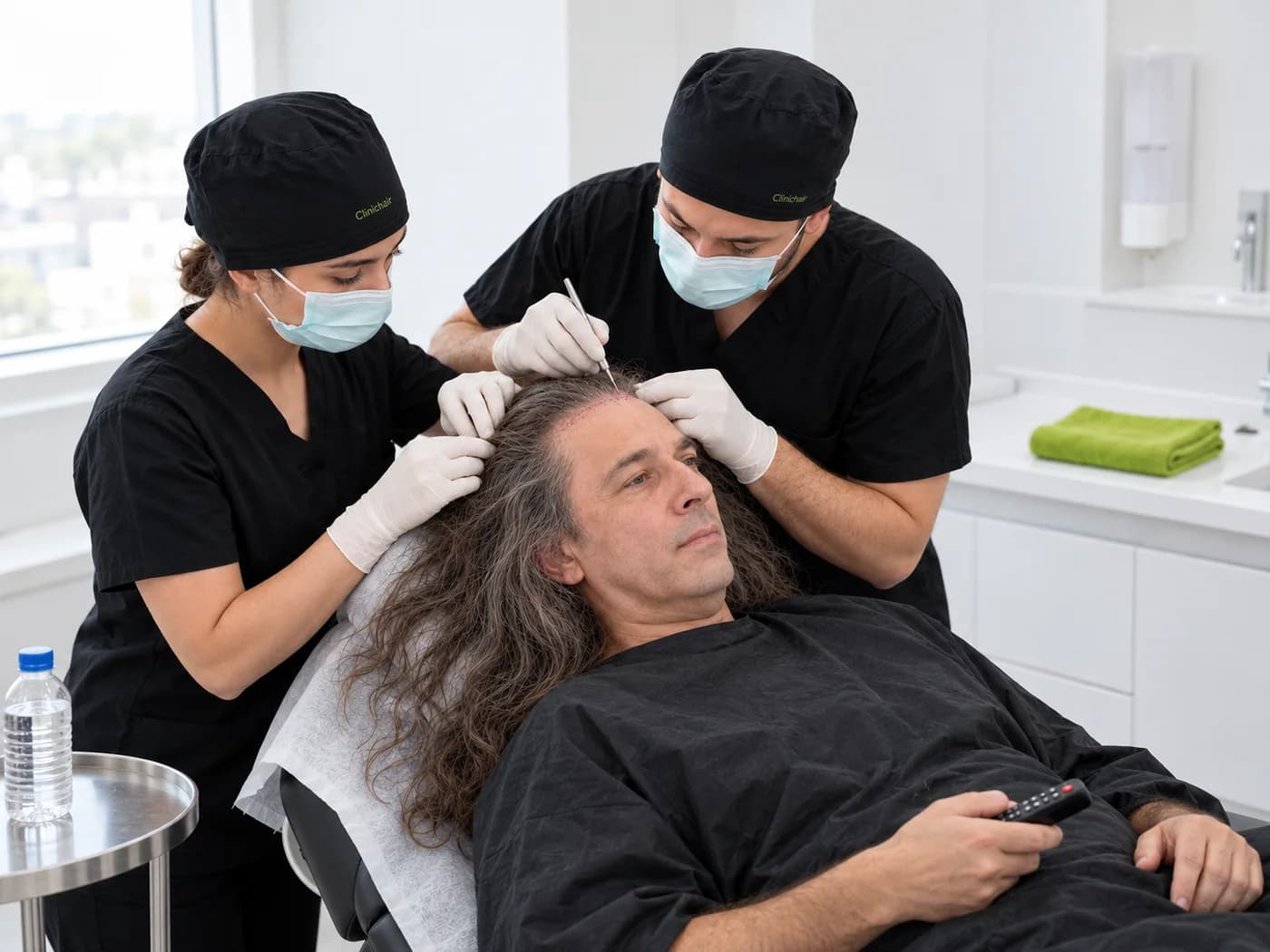
Long Hair FUE
We extract follicles from the scalp donor area with FUE with the hair left long. We set the length of the hair according to the placement method and the recipient area.
See the details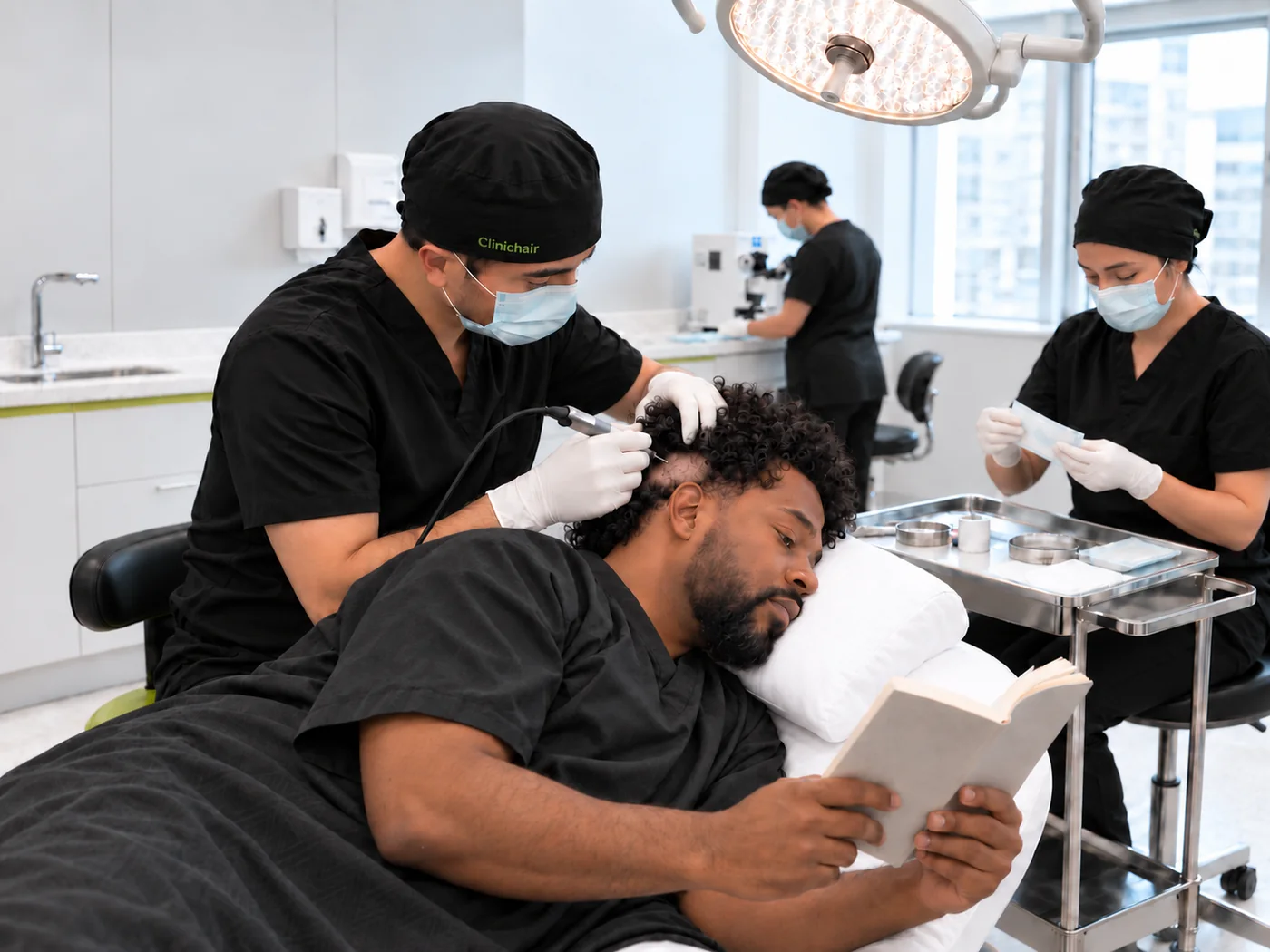
Partial Shave FUE
For extraction, we shorten limited zones or all of the scalp donor area. We set the extent of shaving according to your personal transplant plan.
See the details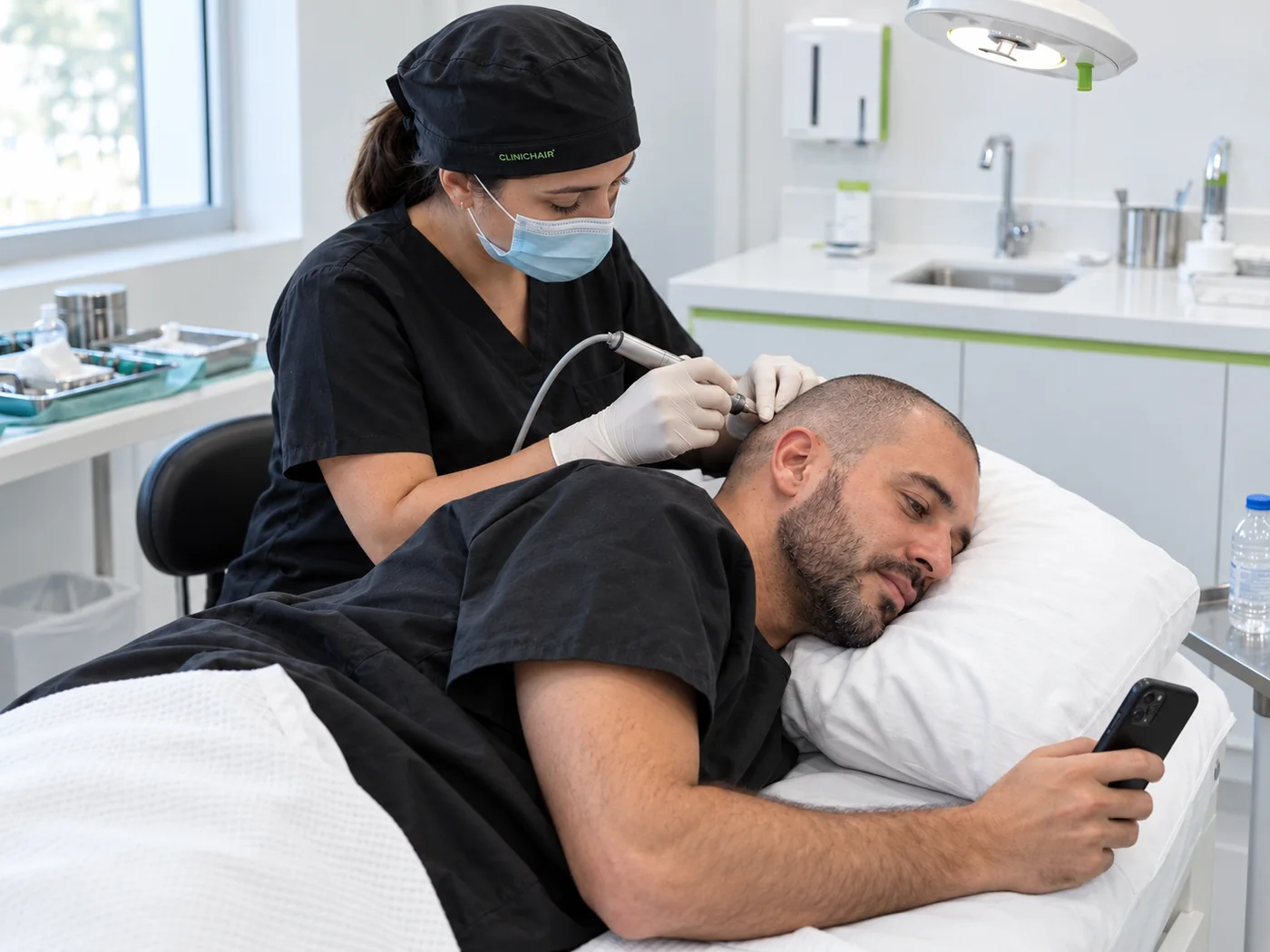
Shaved FUE
We shorten the hair in the scalp donor area and extract the follicles one by one with FUE. We decide the preparation of the beard area separately.
See the detailsThese options describe the preparation of the scalp donor area. We decide separately whether to keep or shorten the hair in the beard area.
BChannel opening and graft placement
This stage comes after extraction. We can use either placement option with different FUE preparations.
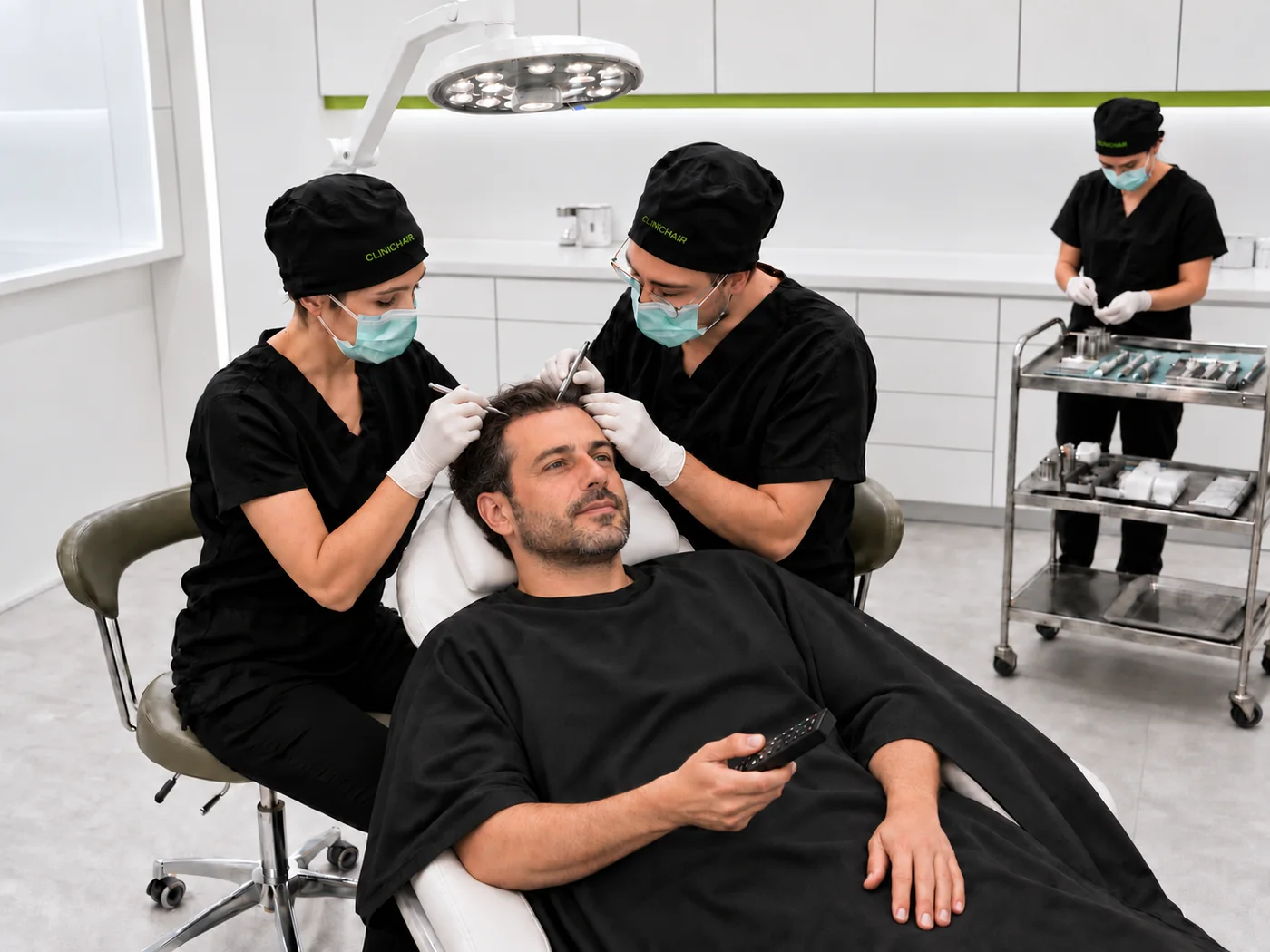
CHANNEL OPENING AND PLACEMENT WITH FORCEPS
Titanium / Sapphire + Forceps
We open the channels with titanium or sapphire blades and place the grafts one by one with implantation forceps.
See the details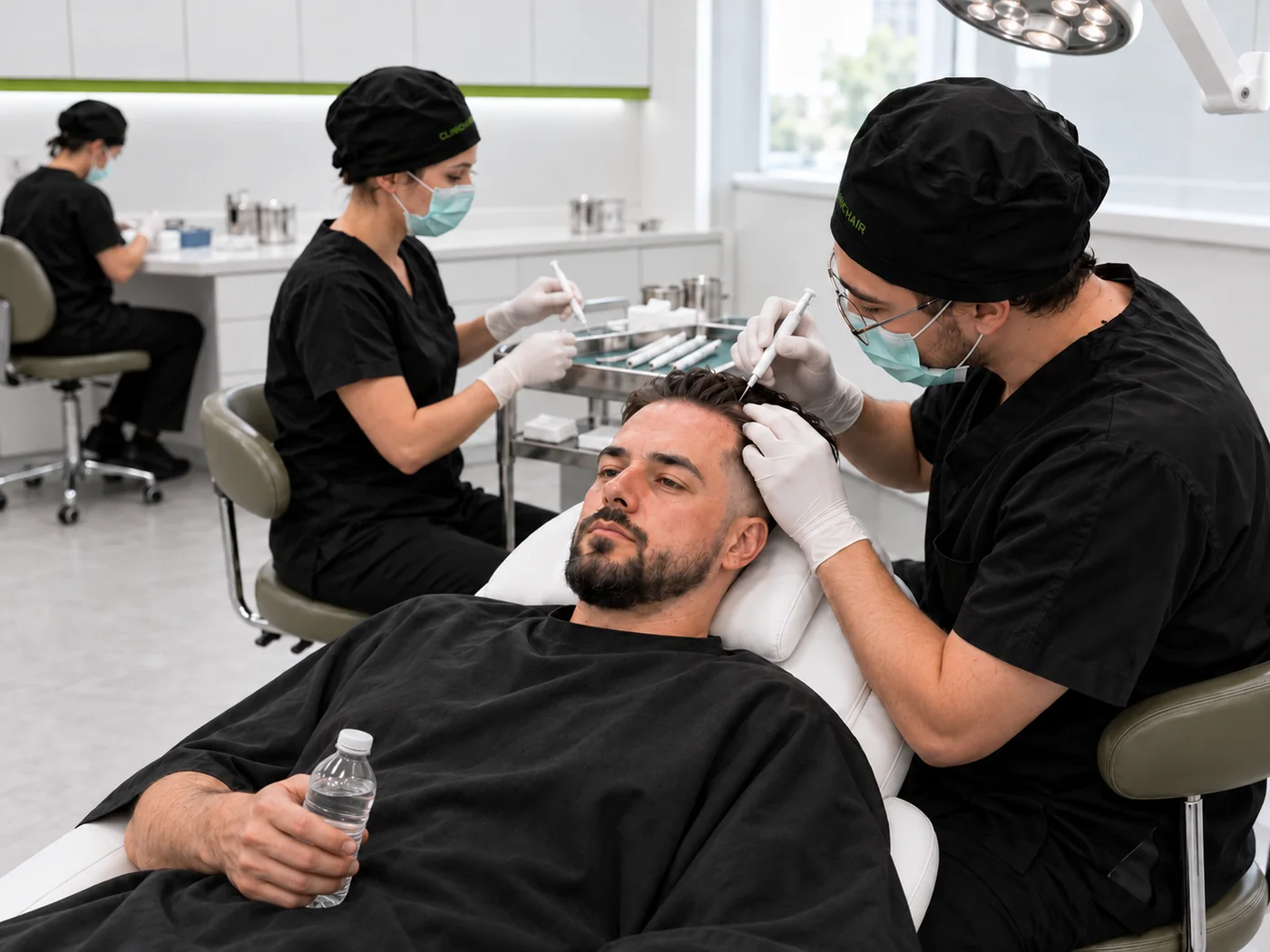
CHANNEL CREATION AND PLACEMENT WITH AN IMPLANTER
DHI
We open the channel and place the graft with the same sharp-tipped implanter pen.
See the detailsWhere needed, we can use Titanium / Sapphire + Forceps and DHI together in different areas in the same session (hybrid approach). We do not need to use both options for every patient.
03HOW IS THE PROCEDURE DONE?
How is a beard transplant performed?
The procedure starts with marking the beard line and continues with extraction, preparing the grafts and placing them in the recipient area.
01
Marking the beard line and the recipient area
We mark your beard line and the recipient area according to your facial proportions. We check that both sides match and follow the direction of the existing hair and the angle at which it lies on the skin.
02
Graft extraction
After local anaesthesia, we extract the grafts one by one with FUE from the chosen donor area. We keep the amount taken within limits suited to your donor capacity.
03
Preparing the grafts
We sort the grafts by the number of hairs and their structure. We choose suitable single-hair grafts for a natural transition at the beard borders. Until placement, we keep them in a special cooler in a suitable storage solution.
04
Channel opening and placement
We place the grafts with Titanium / Sapphire + Forceps or DHI, depending on the chosen method. We follow the natural angles and directions of the beard hair.
04AFTER THE PROCEDURE
Care after a beard transplant
The first two days
Rest in the position your physician recommends. Protect the donor and recipient areas from pressure and friction, and follow the care advice and check-up schedule.
Day 3 / First wash
If our physician agrees, we do your first wash on day three. We show you in person how to clean the recipient and donor areas. Follow the products, cleaning method and frequency we recommend.
Day 7 review
We discuss your return to light daily activities according to your healing and the nature of your work. We set suitable times for sport, heavy exertion, haircuts and beard shaving separately.
Beard growth and the follow-up process
From days 10–15
Temporary shedding
The transplanted hairs may begin to shed temporarily.
From around month 3
New hair appears
New hairs may begin to grow; growth increases over time.
Between months 6 and 9
A clearer appearance
The look and fullness of the beard may become clearer. Growth continues in the following months.
Month 12 check-up
Reviewing the growth
At the month 12 check-up, we review the look and growth of the beard together.
The timing of shedding, new growth and visible change can vary from person to person.
05FREQUENTLY ASKED QUESTIONS
Questions about beard transplants
Who is a beard transplant suitable for?
A beard transplant can be an option for people whose beard has naturally sparse or hairless areas, who want to shape their beard line, or who want to reduce gaps in healed scars. Suitability depends on the cause of the sparseness, skin health, donor capacity and expectations.
If there is an active skin condition, infection or ongoing hair loss, its cause is investigated first. The personal decision is made at the physician’s examination.
Can a transplant be done only in the sparse or hairless areas?
Yes. There is no need to treat the whole beard area; only the areas that need it on the cheeks, chin, beard connections or along the line can be transplanted.
Taking the direction and density of the existing hair into account, the aim is a transition that matches the surrounding beard. The size of the area and donor capacity determine the scope of the transplant that can be done.
How are the beard line, angle and direction decided?
We create the beard line together according to your facial proportions, jawline and preferences. In different areas such as the cheeks and chin, the exit direction of the existing hair and the angle at which it lies on the skin guide us.
The balance between both sides and the natural look of the borders are taken into account. Before the procedure, the line and recipient area are marked and shown to you; the same beard shape is not applied to everyone.
Will the transplanted hair look consistent with my existing beard?
Donor selection and placement aim to blend with your existing beard. The thickness, colour, curl and growth of the hair matter.
There may still be a difference in structure between hair taken from the scalp and your existing beard; an identical look cannot be guaranteed. So at the examination we discuss together which donor area is suitable, the expected look and the need for regular trimming.
How are the number of grafts, procedure time and number of sessions decided?
There is no single number of grafts that applies to everyone. A graft is a small unit of tissue containing hair follicles together with the tissue around them; the number of grafts is not the same as the number of hairs.
The need is calculated from the size of the recipient area, the existing beard, the hair structure, the target density and donor capacity. If the donor area is sufficient, the physician may recommend procedures on two consecutive days for suitable people. An additional session may also be needed later on.
Procedure time depends on the number of grafts, donor preparation, the areas to be worked on and the placement plan. We agree with you before the procedure how long you can expect to spend at the clinic, including preparation and breaks.
Does hair grow back where grafts were taken from the donor area?
Hair is not expected to grow back where follicles have been fully extracted. The surrounding hair keeps growing; this does not mean the extracted follicles have been renewed.
Because donor capacity is limited, extraction should be spread evenly and over-harvesting avoided. A beard transplant plan also keeps a donor reserve for any hair transplant you may need in the future.
If the scalp donor area is insufficient, can other donor areas be used?
In suitable people, beard hair under the chin can be an alternative donor. The capacity of this area, the hair structure and any marks that may form after extraction are examined at the consultation.
Hair from other parts of the body is not always suitable for a beard transplant because of how it grows and its structure. If there is not enough donor hair, the recipient area or the target density may need to be limited.
Can hair be transplanted into beard areas with scars?
A beard transplant can be done into some healed, stable scars. The cause of the scar and the thickness and blood supply of the tissue affect suitability and the growth that can be expected.
Graft growth in scar tissue can be more variable than in normal skin; an additional session may be needed. The aim is to reduce the visibility of the scar by creating hair cover in suitable areas. A transplant does not remove scar tissue.
What is the difference between Long Hair FUE, Partial Shave FUE and Shaved FUE?
These names describe how the scalp donor area is prepared before FUE extraction.
Long Hair FUE: Grafts are extracted while the length of the hair is preserved. During placement, the hair can be left long or trimmed.
Partial Shave FUE: Limited parts of the donor area can be shortened, or only the donor area shaved. With suitable hair length, the surrounding hair can cover the extraction zones.
Shaved FUE: The scalp hair is shaved short to prepare for extraction.
Whether the hair in the beard area is kept or shortened is decided separately. The choice depends on your preference for hair length and your personal transplant plan.
Are the donor and recipient areas shaved in a beard transplant?
Preparing the donor area and the beard area are separate decisions. Long Hair FUE, Partial Shave FUE or Shaved FUE can be used for the donor area.
In the beard area, the existing hair can be kept or shortened so that the gaps to be transplanted and the hair directions can be seen better. Which areas will be shortened, and by how much, is explained to you before the procedure.
What is the difference between Titanium / Sapphire + Forceps and DHI?
With Titanium / Sapphire + Forceps, channels are opened with titanium or sapphire blades and the grafts are placed into them one by one with implantation forceps. With DHI, the grafts are loaded into sharp-tipped implanter pens, and the channel is created and the graft placed in the same pen step.
These are graft placement options; DHI is not a separate extraction method. Both options can be used with different FUE preparations. The right choice depends on the recipient area, the skin and graft structure and the physician’s treatment plan.
Can placement options be combined in the same session?
Yes. When the physician considers it necessary, Titanium / Sapphire + Forceps can be used in one area and DHI in another. This approach is called the hybrid approach.
Which option is used in which area depends on that area’s characteristics and placement needs. Using both options together does not in itself guarantee a better result.
Do the transplanted hairs fall out, and how does growth progress?
Temporary shedding of the transplanted hairs may begin from days 10–15. Hair shedding at this stage does not in itself mean the transplanted follicles have been lost. New hairs may begin to appear from around month 3. The look and fullness of the beard may become clearer between months 6 and 9; growth continues in the following months.
At Clinichair we follow beard growth for 12 months. At the month 12 check-up we review the look and growth together. When shedding starts, how quickly new hair appears and how the look changes can vary from person to person.
When can I return to shaving my beard and to sport?
The timing depends on how the recipient area heals and the activity you plan to do. If your physician agrees, the first wash is done on day three, and the washing and care steps are demonstrated in person. At the day-7 review you can confirm with your physician your return to light daily activities.
Do not neglect cleaning, or limit it to a quick surface rinse, for fear of harming the grafts. Clean off blood, scabs and product residue using the method we show you; do not scratch the scabs or pull them off. If you feel the cleaning is not enough, ask our team for help.
Separate advice is given for beard shaving, trimming with clippers, intense sport and heavy exertion. The first-week check-up does not mean all these activities are allowed. Before starting anything that could put pressure or friction on the recipient area, follow the timeline your physician gives you.
What are the possible risks, scarring and limitations?
Redness, swelling, tenderness and scabbing may appear in the first days. Infection, folliculitis, bleeding, reactions to anaesthesia, changes in colour and visible scarring are possible risks. Small dot-like marks may remain where follicles were extracted with FUE.
Less growth of the transplanted hair than expected, an unwanted angle or direction, irregularities on the skin surface and a difference in structure from your existing beard may also occur. Donor capacity can limit the target density, and an additional session may be needed. A completely scar-free procedure or growth of every graft cannot be guaranteed.
The expected mild swelling in the treated area is usually temporary and eases within a few days.
During the first nights, rest with your head at the height your physician recommends. This position can help the swelling go down. Protect the transplanted areas from the pressure and friction of the pillow or bed. At the end of the procedure we show you in person the sleeping angle that suits you and how to use support.
If you notice unexpected symptoms such as severe pain, bleeding that does not stop, fever, discharge or increasing redness, contact our clinic without delay.
How are the fee and the follow-up scope agreed?
The fee is set individually once the recipient area, the number of grafts and sessions needed, the donor preparation and the scope of treatment are clear. We share with you before the procedure what is included in the fee and the check-up schedule. Our growth follow-up for beard transplants lasts 12 months.
There are no surprise extra charges within the plan you approve. The scope and any fee for an additional treatment requested later or found to be necessary are explained separately beforehand, and your approval is obtained.
Question not answered here?Message our patient adviser
This page is for general information. Personal assessment is made through a physician’s examination.
Updated: 6 October 2026