

GUM HEALTH AND CARE
Periodontal Maintenance
Regular follow-up after gum treatment.
After gum treatment, we regularly assess the tissues that support the teeth. We update the check-up and care plan according to your personal findings and oral care needs.
The care plan and check-up frequency are determined by a dental examination. Clinical images are representative.
01ASSESSMENT AND PLANNING
Let's monitor your gum health together.
- Previous treatments
- The treatments carried out, previous measurements and current complaints are discussed.
- Gum findings
- Pocket depths, bleeding and recession findings are recorded.
- Oral hygiene
- Plaque build-up and the effectiveness of daily cleaning are assessed.
- Personal factors
- Smoking, general health, medication and allergies are assessed.
02MAINTENANCE STEPS
Care tailored to need at every check-up.
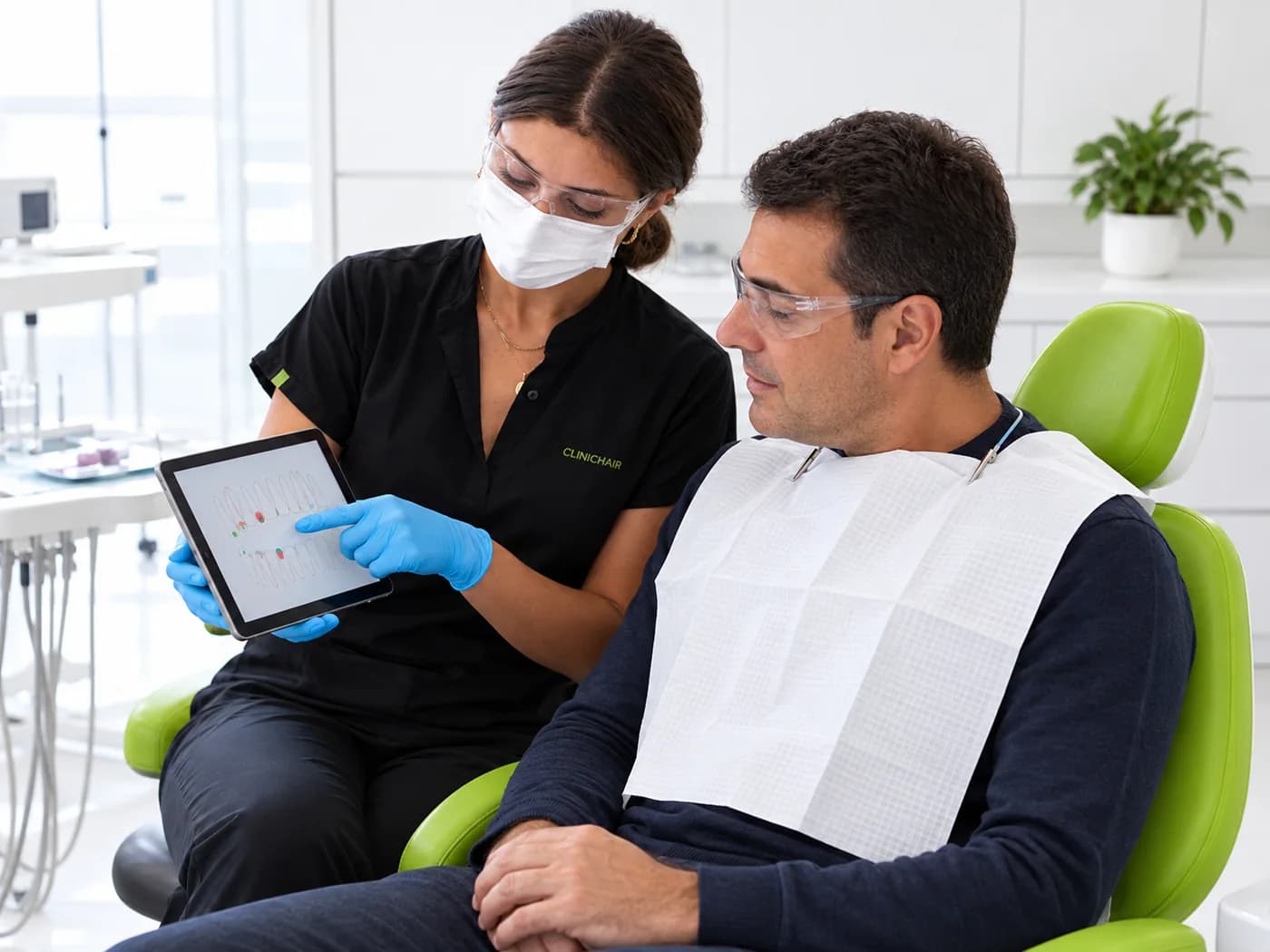
- 1
Comparing measurements
Current findings are compared with previous records; changes are assessed.
- 2
Professional care
Plaque and tartar are removed where needed; personal cleaning recommendations are reviewed.
- 3
Updating the plan
Further treatment and the care interval are decided according to the remaining findings.
Let's choose your care tools together.
Interdental brushes, floss and, if needed, other oral care products are chosen according to your gum findings.
You can ask your dentist about the contents, intended use and, where relevant, the product-type-appropriate registration and label details. The purpose of maintenance appointments is to spot changes early and protect gum health.
03DAILY CARE AND FOLLOW-UP
Let's bring care into daily life.
Brushing
Keep brushing regularly and gently with the technique your dentist recommends.
Cleaning between the teeth
Use an interdental brush or floss in a way that suits your mouth.
Habits and health
Share any changes in your smoking and general health with your dentist.
04FREQUENTLY ASKED QUESTIONS
About periodontal maintenance.
Who needs periodontal maintenance?
It is needed especially for people who have completed periodontitis treatment, to maintain the gum health achieved. The state of the previous disease and current findings are considered together. The maintenance programme combines the necessary cleaning and long-term follow-up with your daily oral care.
What is the difference between periodontal maintenance and tartar removal?
Tartar removal removes deposits. Periodontal maintenance combines follow-up of previous treatments, pocket measurements, bleeding checks, any necessary cleaning and updates to daily care recommendations.
What is done at a maintenance appointment?
Measurements are compared with previous ones, and bleeding and plaque are checked. The areas that need it are cleaned; your care technique and any need for further treatment are reviewed together.
Why are gum pockets measured again?
Pocket depth and bleeding on measurement help monitor the condition of the tissues. New measurements are compared with previous records. This makes healing or ongoing inflammation clearer and shows in which areas care needs to change or further treatment is needed.
Should I continue maintenance if I have no complaints?
Yes. Planned check-ups allow gum measurements and oral care to be assessed. The follow-up frequency is set according to the examination findings.
How often should maintenance appointments be?
The interval is set according to the state of the previous disease, current measurements, oral hygiene and personal risks. It can be reviewed at every check-up.
Can the disease return after successful treatment?
Yes. Renewed plaque build-up after treatment and personal risks can lead to inflammation in the gums again. That is why periodontal maintenance is a long-term process. Home cleaning, stopping smoking and the recommended check-ups together help keep the tissues healthy.
What should I do if I delay my maintenance appointment?
Contact your clinic to make a new appointment and keep up your daily cleaning. If bleeding, swelling, pain or loose teeth have started in the meantime, report them. At the check-up, the current findings are reviewed; the frequency of care and the procedures needed are updated accordingly.
Is there pain or sensitivity during maintenance?
Inflamed areas and exposed root surfaces can be sensitive during cleaning. Tell the team about any sensitivity you have had before. Depending on the extent of the procedure, options such as local anaesthesia or short breaks can be used. Afterwards, report any discomfort that increases or does not go away to your clinic.
What should I do if gum bleeding starts again?
Let your dentist know without waiting for the planned appointment. Tell us where the bleeding is, how long it has lasted and any swelling or pain that comes with it, so the need for an examination becomes clear.
Is good care at home enough on its own?
Daily care is very important, but it does not replace gum pocket measurements and professional check-ups. Home care and clinical follow-up should continue together.
Does the care plan change if I have implants?
The tissues around implants are also monitored. The cleaning tools you use and the scope of check-ups are adapted to the condition of the implant, the prosthesis and the surrounding tissues.
Do smoking and diabetes change the care plan?
Yes. Smoking and blood sugar control can affect the course of gum disease and healing. This information also guides how often you need check-ups. Tell us at every appointment about changes in your smoking, illnesses or medication, so that care recommendations can be updated if needed.
Are antibiotics or mouthwash needed at every maintenance visit?
No. The basis of regular maintenance is suitable cleaning and follow-up. Antibiotics are used only in specific cases where they are considered necessary, on prescription. Mouthwash can also be short-term support when needed; it does not replace brushing. Do not change the product or how long you use it on your own.
If the disease is still present at the check-up, what is the next step?
First, daily cleaning, risks and the response to previous treatment are reviewed. Further root surface cleaning may be needed in problem areas. If there are deep pockets or ongoing inflammation, advanced periodontal treatment options are discussed; whether routine maintenance alone is enough is explained.
How are the fee and the follow-up scope agreed?
We set out the scope of the procedure and the follow-up from the start. Within the plan you approve, there are no surprise extra charges.
Question not answered here?Message our patient adviser
This page is for general information. A personal assessment is made at a dental examination.
Updated: 4 October 2026