
GUM HEALTH AND CARE
Preventive Care After Treatment
Careful care after treatment too.
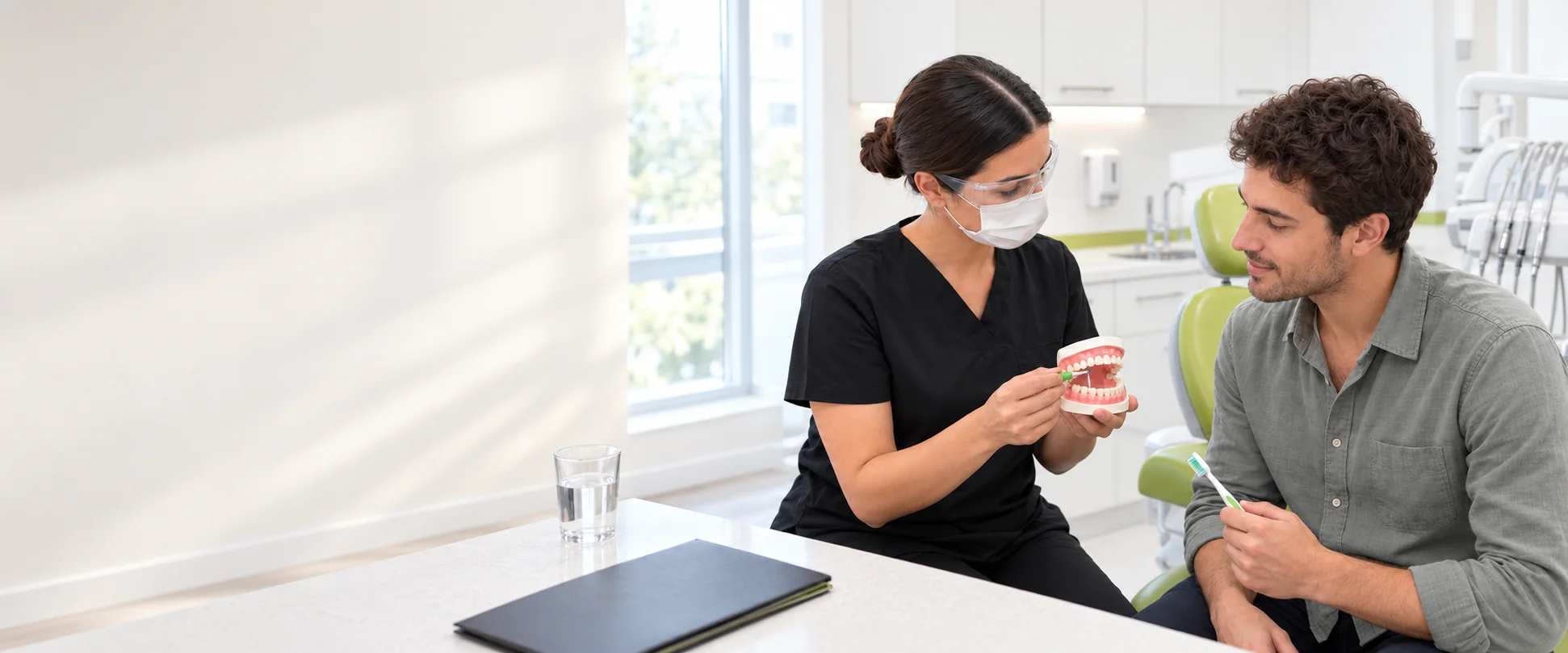
After implant, prosthetic and gum treatments, we plan your daily care together. We show you cleaning methods and arrange your check-ups according to the treatment carried out and your oral health.
Care recommendations and check-up intervals are determined by a dental examination. Clinical images are representative.
01PERSONALISED CARE PLAN
Let's plan care around your treatment.
- Treatment carried out
- The care needs of implant, prosthetic and gum treatments are determined.
- Current findings
- The condition of the teeth, gums and any restorations is assessed.
- Cleaning tools
- Brushes and interdental cleaning tools are chosen to suit your mouth.
- Check-up interval
- It is planned according to the type of treatment, personal risks and examination findings.
- Health history
- Illnesses, medication, allergies and previous dental treatments are assessed.
02DAILY CARE
The right tools, the right technique.
- 1
Teeth and gums
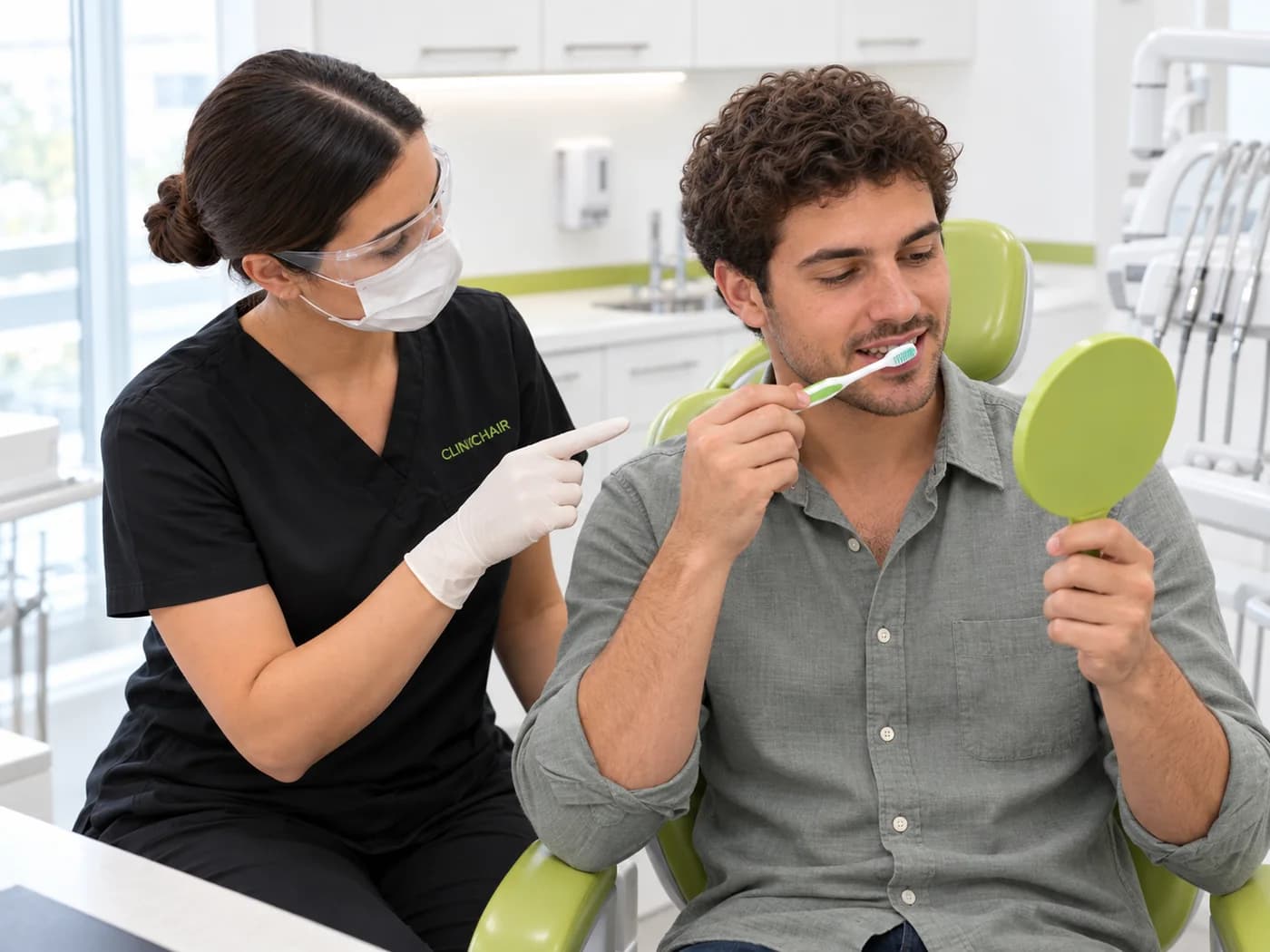
Recommendations for brushing twice a day with fluoride toothpaste and for interdental cleaning that suits you are shared.
- 2
Implants and fixed prostheses
Cleaning around implants and under prostheses is demonstrated in practice with suitable aids.
- 3
Removable dentures
Cleaning the denture and caring for the oral tissues are explained in a way suited to your type of denture.
Let's choose your care products together.
Brushes, interdental cleaning tools and care products are chosen according to the treatment carried out and the structure of your mouth.
You can ask your dentist about the products' contents, intended use, duration of use and, where relevant, registration details.
03CHECK-UPS AND FOLLOW-UP
Regular follow-up, sustainable care.
Planned check-ups
Oral health and the condition of the treatment carried out are assessed; the care plan is updated.
Share changes
If there is new bleeding, pain, swelling or loosening of a prosthesis, contact the clinic without waiting for the check-up date.
Let's improve your care together
Tell us about areas you find hard to clean, so that the choice of tools and technique can be reviewed.
04FREQUENTLY ASKED QUESTIONS
About care after treatment.
My treatment is finished; why should I keep coming for check-ups?
Check-ups allow your oral health and the condition of the treatment carried out to be assessed. Care needs can change over time; the follow-up plan is updated according to your personal findings.
Is care in the first days the same as daily care?
Not always. Especially after surgery, temporary special advice may be given for cleaning the area and for diet. Ask your team when you can return to your normal care. Do not use long-term preventive care recommendations in place of the instructions given for the first days.
What should my daily brushing routine be?
Brush twice a day with fluoride toothpaste for about two minutes; make one of these before bed at night. Clean the inner, outer and chewing surfaces of the teeth. After brushing, spit out excess toothpaste. If you have specific instructions for a newly treated area, follow them.
Do I have to use an electric toothbrush?
No. Effective cleaning can be done with a manual or electric brush; what matters is reaching all surfaces and using the right technique. Choose with your dentist according to your dexterity, gum condition and prostheses. Do not press too hard when brushing.
Which floss or interdental brush should I use?
An aid suited to the gaps between your teeth and to any implant or prosthesis is chosen. Decide the interdental brush size and how to use it with your dentist; do not force it in.
How should I clean my implants and prostheses?
Clean around implants, under bridges and other hard-to-reach areas of prostheses with the recommended aids. Fixed and removable prostheses are cared for differently; follow the technique shown to you.
How should I clean my removable denture?
Take your denture out and clean it with a soft brush and a non-abrasive cleaner suited to the type of denture. Ordinary toothpaste can scratch the surface. Reach all surfaces; follow the cleaner's instructions for use. Continue caring for your own teeth, tongue and gums too.
Can I sleep with a removable denture?
It is generally recommended to take the denture out at night. However, after a new procedure, your dentist may temporarily advise otherwise. Find out how to store the denture at night and which cleaning product suits it. If there is loosening, a sore or pain, ask for a check-up.
Is mouthwash necessary for everyone?
No. Whether you need mouthwash and how long to use it is decided according to your personal care plan. It does not replace brushing and cleaning between the teeth.
Does a dry mouth change my care needs?
A persistently dry mouth can increase the risk of decay and oral infections. It may be linked to medication you take or to a health problem. Tell your dentist about it. Suitable moisturising products and preventive care options can be discussed; do not stop your medication yourself.
What should I pay attention to in my diet?
Frequently consuming sugary foods and drinks increases the risk of decay. Reduce the amount and how often you have them; if possible, keep them to mealtimes. Choose water as your drink between meals. If you have specific dietary instructions after a procedure, follow them for the stated period.
Should I tell the clinic if my health changes?
Yes. Share new illnesses, medicines you have started or stopped and changes such as a dry mouth. These can affect the choice of care products, preparation before treatment or the need for check-ups. If a change in medication is needed, the decision is made together with your relevant physician.
How often should I come for check-ups?
The check-up interval is set according to the treatment carried out, gum findings and your personal needs. If you have a new complaint, contact the clinic without waiting for the planned date.
Which symptoms mean I should contact the clinic?
Contact the clinic if there is new or ongoing bleeding, pain, swelling, a loose tooth or a loose prosthesis. With marked swelling or severe pain, see a dentist without delay.
How are check-ups planned if I live abroad?
Share your check-up needs and travel plans with the treatment team. Where an in-person examination is needed, see a dentist where you are; a remote consultation does not replace an examination.
How are the fee and the follow-up scope agreed?
We set out the scope of the procedure and the follow-up from the start. Within the plan you approve, there are no surprise extra charges.
Question not answered here?Message our patient adviser
This page is for general information. A personal assessment is made at a dental examination.
Updated: 4 October 2026