

GUM HEALTH AND CARE
Gum Recession and Bleeding
A personal assessment aimed at the cause.
We assess the causes of gum bleeding, recession and sensitivity. We plan treatment according to your gums, supporting tissues and daily care habits.
The final treatment plan is determined by a dental examination. Clinical images are representative.
01ASSESSMENT AND PLANNING
First, let's understand the cause.
- Your complaints
- We discuss when the bleeding happens, the recession, sensitivity and your previous treatments.
- Gum examination
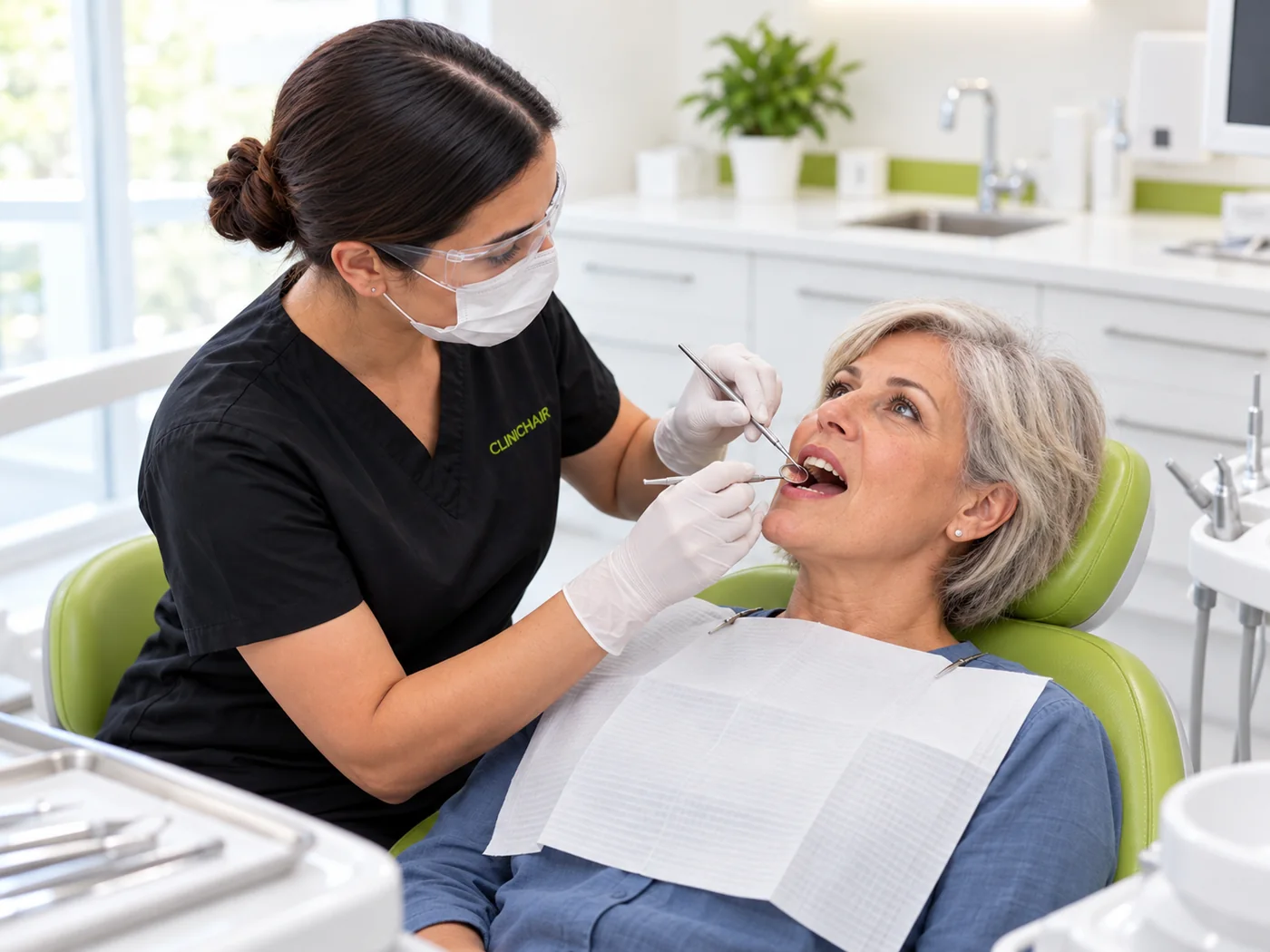
- We check plaque, tartar and recession, and measure the gum pockets.
- Supporting tissues
- We examine the supporting tissues of the teeth and any necessary imaging.
- Habits
- We review your brushing habits and smoking.
- Health history
- We find out about your illnesses, the medication you take, allergies and previous dental treatments.
02TREATMENT OPTIONS
Step-by-step treatment based on the findings.
- 1
Initial treatment
When needed, tartar removal and root surface cleaning are done; oral care is adjusted.
- 2
Reassessment
Bleeding and the tissue response are checked; the need for further treatment is decided.
- 3
Advanced treatment options
In suitable cases, we discuss periodontal surgery or options aimed at covering exposed root surfaces.
Trust and transparency in material and product information.
You can ask your dentist about the purpose, contents and type-appropriate registration details of the products to be used in treatment. We check the registration and label details of products and components under Ministry of Health/TİTCK regulations.
We look at the ÜTS registration details of the relevant products; ÜTS registration does not mean Ministry approval. We explain the licensing details and usage plan of any necessary medicines as part of your personal treatment.
03CARE AND FOLLOW-UP
Daily care, regular follow-up.
Home oral care
Follow your dentist's personal recommendations for gentle brushing and cleaning between the teeth.
Check-up appointments
We monitor gum measurements, bleeding and sensitivity and set the care interval accordingly.
Watch for symptoms
If there is severe pain, marked swelling or a loose tooth, see a dentist without delay.
04FREQUENTLY ASKED QUESTIONS
About gum problems.
Why are my gums bleeding or receding?
Inflammation caused by plaque build-up is one of the common causes of bleeding gums. Recession, on the other hand, can be linked to gum disease or to factors such as brushing too hard. The two signs do not always have the same cause; an examination helps tell them apart.
What checks are done at the examination?
Your dentist examines where the bleeding and recession are, measures the gum pockets and checks the supporting tissues of the teeth. X-rays are requested if needed. Telling us how long the complaint has lasted, your care habits and the medication you take helps in choosing the right treatment.
If I have no pain, do I still need treatment?
Gum disease can progress without pain. If there is bleeding, recession, bad breath or teeth shifting position, do not wait for pain to start. The examination shows whether only your daily care needs adjusting or whether further treatment is needed.
Should I brush my teeth while there is bleeding?
Do not stop oral care because of bleeding. Brush gently without straining the gums and continue cleaning between the teeth in the way that suits you. See your dentist to find out the cause of the bleeding.
Does receded gum grow back by itself?
Lost gum tissue does not regenerate by itself. In suitable cases, treatments aimed at covering the root surface can be considered; the expected result is explained at the examination.
Does gum recession cause sensitivity?
An exposed root surface can be sensitive to cold, heat or touch. Because there can be other causes, an examination is needed; suitable care and treatment options are discussed.
Is tartar removal enough on its own?
Not always. Where gum disease has progressed, root surface cleaning or other periodontal treatments may be needed. The next steps are decided according to the examination and the response to treatment.
Does every case of gum recession need surgery?
No. The cause and daily care are addressed first. The need for surgery is discussed together with the characteristics of the recession, sensitivity, the condition of the tissue and your expectations.
How is pain controlled during treatment?
You can discuss pain control options suited to the procedure and your sensitivity in advance. Local anaesthesia is used where procedures require it. Let the team know when you feel discomfort; your comfort is supported with short breaks and adjustments to the treatment.
How many sessions does treatment take?
There is no single number of sessions. The extent of the disease, the procedures to be done and how the tissues respond to healing affect the duration. The need for check-ups and further treatment is explained in your personal plan.
Do smoking and diabetes affect gum health?
Smoking can increase the risk of gum disease and make healing harder; it can also make bleeding less visible. The risk also increases with diabetes when blood sugar is not well controlled. Tell your dentist about your smoking and diabetes monitoring; care recommendations are shaped by this information.
Is mouthwash enough on its own?
No. Mouthwash does not replace brushing and cleaning between the teeth. If needed, your dentist decides the product and how long to use it.
How does my oral care change after treatment?
Care depends on the procedure carried out. Follow the brushing and interdental cleaning advice given after cleaning. If you have had surgery, find out separately when and how to clean that area. Follow the instructions you are given on mouthwash, diet and check-ups.
Can I stop check-ups once the bleeding eases?
Less bleeding is a positive development, but on its own it does not show the condition of the supporting tissues. Go to the recommended check-up. Especially after periodontitis treatment, regular measurements and professional care alongside daily care help to spot the disease progressing again early.
Which symptoms need emergency help?
If there is severe pain, rapidly increasing swelling, pus or fever, see a dentist without delay. If swelling spreading to the face or neck comes with difficulty breathing or swallowing, get emergency help. In Türkiye you can call 112.
How are the fee and the follow-up scope agreed?
We set out the scope of the procedure and the follow-up from the start. Within the plan you approve, there are no surprise extra charges.
Question not answered here?Message our patient adviser
This page is for general information. A personal assessment is made at a dental examination.
Updated: 4 October 2026