

DENTAL PROSTHETIC TREATMENTS
Removable Dentures.
Full and partial denture options.
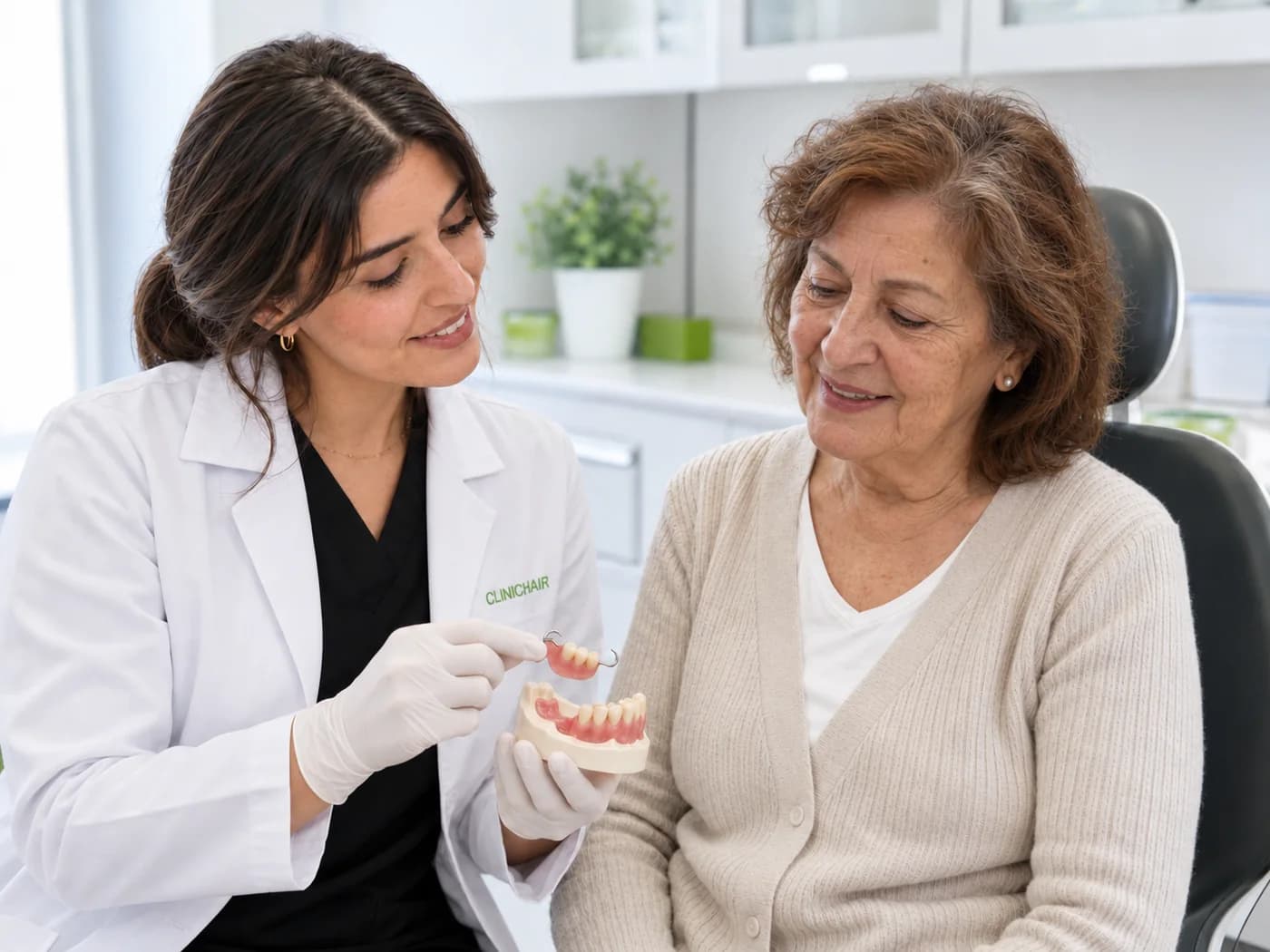
For missing teeth, we assess denture options that can be taken out and put back in. We consider chewing, speech and daily use needs together in your personal treatment plan.
The final treatment plan is determined by a dental examination.
Clinical images are representative.
01ASSESSMENT AND PLANNING
First, let's understand your needs.
- Missing teeth
- The number and distribution of missing teeth and the remaining teeth are examined.
- Supporting tissues
- The gums, oral tissues and jaw structure are assessed.
- Bite and use
- Chewing, speech and daily care needs are discussed.
- General health
- Medication, allergies and previous denture experiences are considered.
- Personal treatment plan
- The type of denture, alternatives and the check-up schedule are explained.
02PRODUCT AND TREATMENT
Step by step from impressions to everyday use.
- 1
Impressions and records
Impressions of the mouth and the jaw relationship are recorded; the denture design is planned.
- 2
Try-in and fit
The arrangement and look of the teeth and the bite are assessed; any necessary adjustments are made.
- 3
Fitting and check-ups
Putting the denture in, taking it out and cleaning it are demonstrated; check-ups during the adjustment period are planned.
03CARE AND FOLLOW-UP
We are with you during the adjustment period.
Moving to daily use
Getting used to speaking and chewing can take time. Initial recommendations are shared individually.
Regular cleaning
Take the denture out and clean it with a suitable product; continue caring for your remaining teeth and oral tissues.
Fit checks
Book a check-up if there is rubbing, loosening or pain; do not adjust the denture yourself.
04FREQUENTLY ASKED QUESTIONS
About removable dentures.
Click a question to read the full answer.
What is the difference between a full and a partial denture?
A full denture replaces all the teeth in a jaw when they are all missing. A partial denture replaces missing teeth while some teeth remain in the mouth. The remaining teeth and supporting tissues affect the design and retention of the denture.
How long does it take to make a removable denture?
Several appointments are needed for impressions, recording the jaw relationship, try-ins and fitting. Appearance and fit are checked at the try-ins; a further try-in is done if needed. If extractions or healing are awaited, the schedule may be longer. We share the approximate timeline and the fit checks after fitting from the start.
Can a denture be fitted immediately after an extraction?
In suitable cases, a denture made before the extraction can be fitted on the day of the extraction. Because the shape of the gums and bone changes during healing, fit adjustments or a new denture may be needed later. Advice on putting it in and taking it out may differ in the first days; follow the post-extraction instructions you are given.
How long does it take to get used to a denture?
It varies from person to person; getting used to speaking, chewing and putting the denture in and taking it out can take time. We share initial recommendations tailored to you. Rather than accepting ongoing discomfort as normal and waiting, mention it at your check-up appointment.
How should I start eating with my new denture?
In the first days, start with soft food in small bites; chew slowly and try to spread the load evenly on both sides. Sticky or very hard foods can be difficult at first. Widen your diet gradually as you feel more comfortable. If there is pain or marked movement, ask for a check-up rather than forcing the denture.
Will the denture affect my speech or saliva?
At first you may notice a difference when making some sounds, and you may notice more saliva. These usually ease as the mouth gets used to the new denture. Reading aloud and short speaking exercises can help. Mention any ongoing difficulty speaking, nausea or movement of the denture at your check-up appointment.
Should I take my denture out at night?
Take it out at night unless your dentist advises otherwise. Clean and store it in a way suited to the denture's material.
How should I clean my removable denture?
Take the denture out and clean it morning and evening with a soft brush and a non-abrasive cleaner suited to its material; rinse it after meals. Ordinary toothpaste and hot water can damage the denture. Place a towel in the sink to guard against drops while cleaning. Clean your remaining teeth and oral tissues too. Let's go over product and storage advice together when the denture is fitted.
How should I store the denture when I take it out?
Store the cleaned denture in a safe container where it cannot fall. Depending on its material, water or a suitable storage solution may be needed; follow the method shown to you and the product instructions. Do not use hot or boiling water. Not every cleaning product is suitable, especially for dentures with metal parts.
Should I use denture adhesive?
It is not necessary for every denture. A suitable product can help retention for some people; talk to your dentist about which product to use and how much. Adhesive does not solve the fit problem of a loose or rubbing denture. Clean it every day; if you need more and more product, ask for a check-up.
What should I do if my denture rubs or loosens?
Book a check-up. Do not file, bend or glue the denture yourself. The dentist checks how the denture fits against the oral tissues and discusses with you the necessary fit adjustment or a different solution.
Can my denture be repaired if it breaks?
Repair or replacement is chosen after checking where it broke, the denture's material and its fit in the mouth. Keep the broken pieces and bring them to the clinic. Do not glue or file it at home; do not use sharp or separated pieces in your mouth.
Might implant support be suitable for me?
For some people, implant support can be an option for a removable denture. Bone structure, gum health, general health and daily care needs are examined together. Implant support does not necessarily mean the prosthesis will be fixed.
Should I come for check-ups even if I have no natural teeth left?
Yes. At check-ups, the oral tissues, the seating of the denture and the chewing relationship are examined. The gums and bone can change over time; the denture can wear or loosen. Keep to your personal check-up schedule. If there is rubbing, a sore or a marked change in fit, let us know without waiting for the planned date.
Can I find out about the materials used?
Yes. You can find out the laboratory, material and framework details of your custom prosthesis. For implant-supported prostheses, the connecting parts and compatibility with the implant system are also explained. Registration, label, lot or serial details are checked according to the product. ÜTS registration does not mean Ministry approval.
How are the fee and the follow-up scope agreed?
The type of prosthesis, material, treatment stages and scope of follow-up are clarified before treatment. You can ask what temporary teeth, additional procedures and later fit checks cover. Within the plan you approve, you will not face surprise extra charges.
Question not answered here?Message our patient adviser
This page is for general information. A personal assessment is made at a dental examination.
Updated: 4 October 2026