
DENTAL PROSTHETIC TREATMENTS
Implant-Supported Prostheses.
Fixed and removable options.
We assess prosthetic options supported by implants to replace missing teeth. We plan the type of prosthesis according to your mouth, chewing relationship and daily care needs.
The final treatment plan is determined by a dental examination.
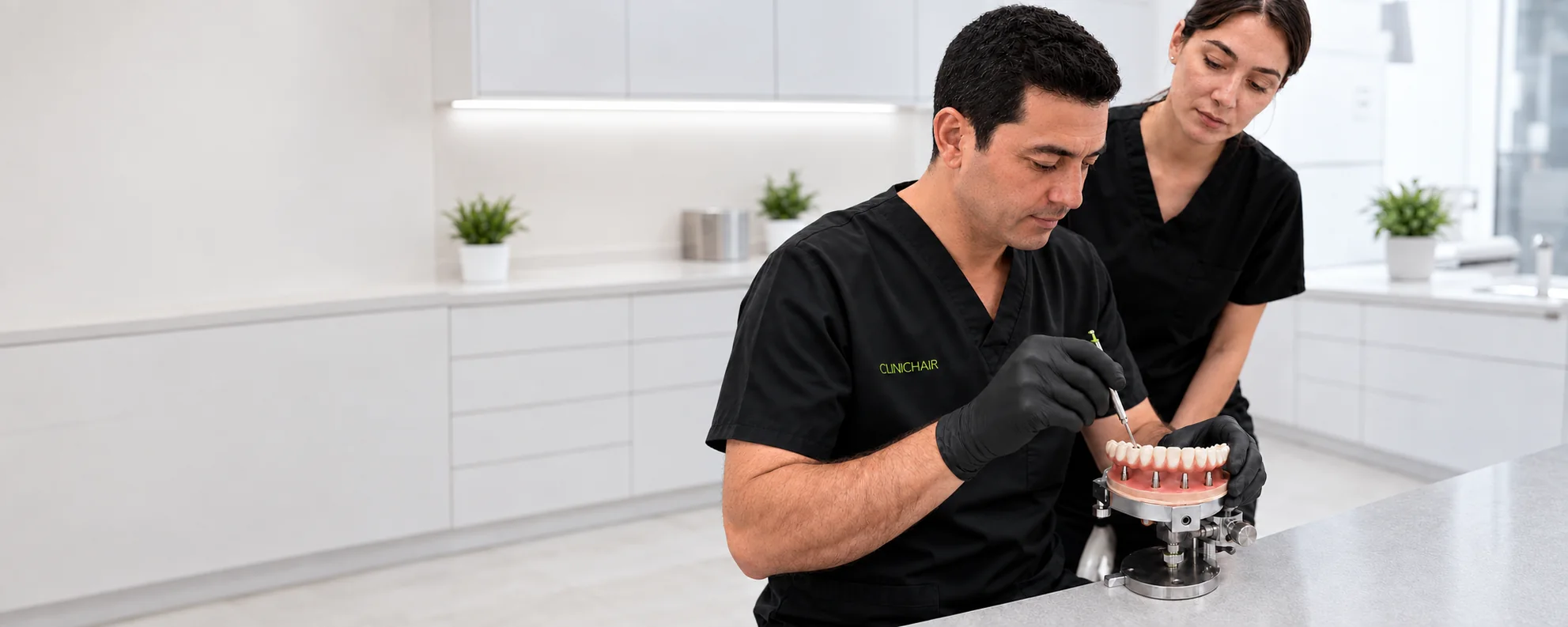
Clinical images are representative.
01ASSESSMENT AND PLANNING
We plan the implant and prosthesis together.
- Bone and gums
- The supporting tissues are assessed with an examination and any necessary imaging.
- Implant support
- The number and position of existing or planned implants are examined.
- Choosing the prosthesis
- Fixed and removable options are considered together with the bite and care needs.
- General health
- Medication, allergies and previous treatments are reviewed.
- Personal treatment plan
- Temporary teeth, material options and the treatment schedule are explained.
02PRODUCT AND TREATMENT
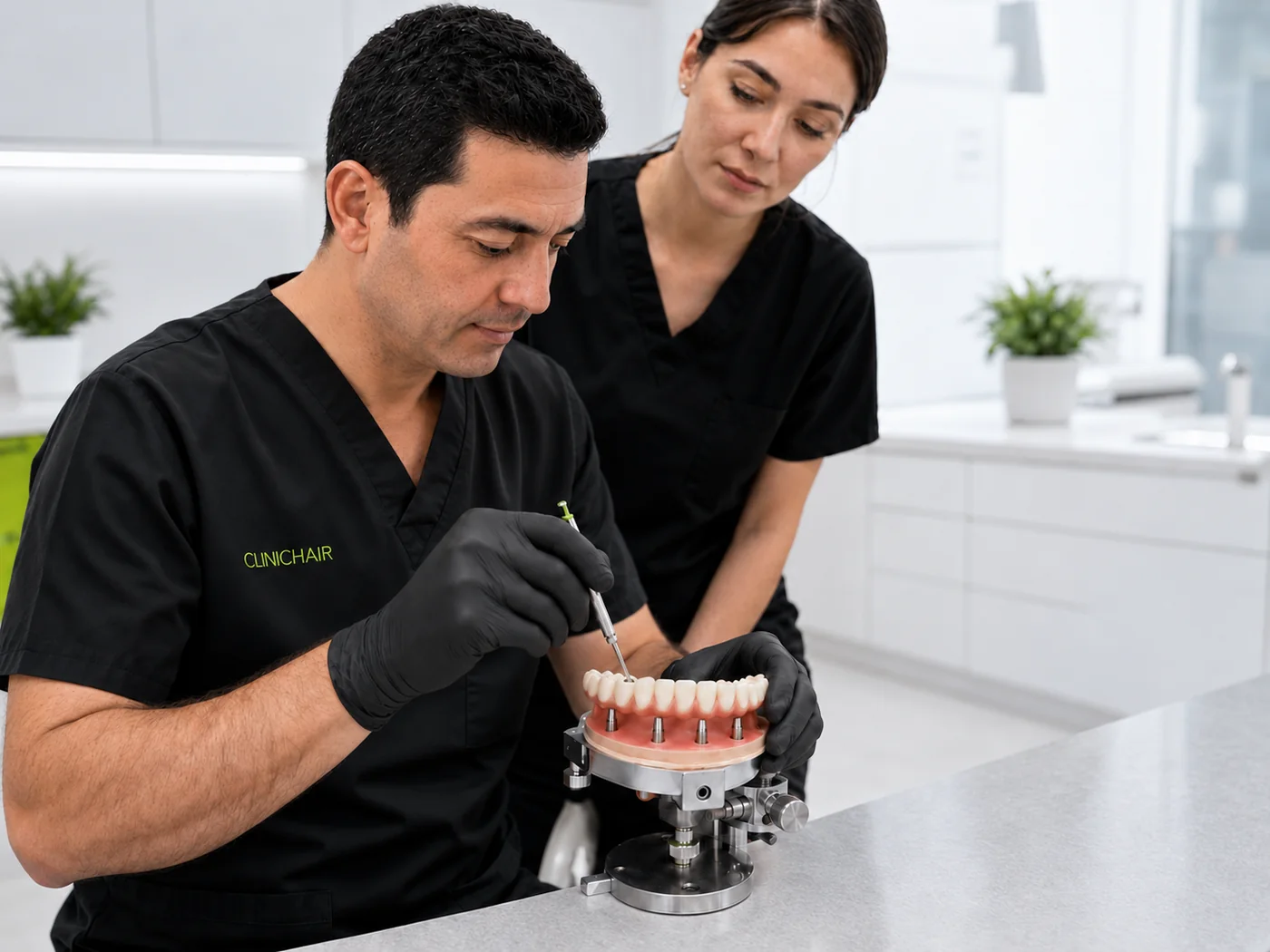
A personal journey from implant to prosthesis.
- 1
Preparation and healing
The condition of the implants is assessed; if needed, the surgical and healing stages are planned.
- 2
Impression and try-in
An impression is taken; the look, fit in the mouth and bite of the prosthesis are checked.
- 3
Fitting and adjustment
The prosthesis is fitted according to the chosen attachment system; use and cleaning are demonstrated.
03CARE AND FOLLOW-UP
Regular care, planned follow-up.
Care by type of prosthesis
The underside of fixed prostheses, and removable prostheses themselves and their attachment areas, are cleaned regularly.
Tissue and connection check
The area around the implants, the bite and the connecting parts are checked according to a personal follow-up plan.
Report any changes
If you notice bleeding, swelling, pain or movement in the prosthesis, contact your clinic.
04FREQUENTLY ASKED QUESTIONS
About implant-supported prostheses.
Click a question to read the full answer.
What is the difference between an implant and an implant-supported prosthesis?
An implant is the support placed in the jawbone in place of a missing tooth root. The prosthesis is the tooth part on top, which you see in the mouth and use for chewing. There may be connecting parts between them. That is why the condition of the implant, the connections and the fit of the prosthesis are checked together.
Is an implant-supported prosthesis always fixed?
No. Fixed prostheses are not removed by the patient. Removable prostheses can be taken out and put back in for cleaning. The suitable option is decided according to the structure of the mouth and your needs.
How is the number of implants needed decided?
The number and distribution of missing teeth, the condition of the bone and gums, the bite and the chosen type of prosthesis are examined together. The position of the implants matters as much as their number. After the examination and any necessary imaging, the personal plan is explained.
Can a new prosthesis be made on my existing implants?
In some cases, yes. First, the clinical condition, number and position of the implants and the surrounding tissues are examined. The brand, model and connection details of the existing implants are checked; whether the new prosthesis and parts are compatible with this system is investigated separately.
When is an implant-supported prosthesis fitted?
If the existing implants are usable, the impression and try-in stages can begin. If new implants are to be placed, time may be needed for them to integrate with the bone and heal; additional bone procedures can extend the schedule. We explain separately when you will move to temporary and permanent prostheses, depending on the situation in your mouth.
Is there pain during impressions and fitting of the prosthesis?
You may feel pressure or brief sensitivity during impressions, try-ins and fitting. If you feel discomfort, tell our team. If new implant surgery is also planned, that is a separate stage; anaesthesia and comfort advice after the procedure are explained in advance. Increasing or persistent pain needs a check-up.
Are temporary teeth used during treatment?
Depending on the stage of treatment and the situation in the mouth, temporary teeth or a temporary prosthesis may be used. Whether it is needed, how to use it and when the switch to the permanent prosthesis will happen are explained in your personal treatment plan; the same option is not used in every treatment.
When can I eat normally with an implant-supported prosthesis?
The return to a normal diet depends on whether new surgery was done and whether you are using a temporary or permanent prosthesis. Softer foods may be recommended at first. We tell you when you can increase the chewing load. If you feel movement or pain in the prosthesis, do not force it; let the clinic know.
How are fixed and removable implant prostheses cleaned?
With a fixed prosthesis, clean the gum line and the reachable areas under the prosthesis every day. With a removable prosthesis, the prosthesis itself, the attachments in the mouth and the area around the implants are cleaned separately. We show you suitable brushes and interdental aids. Initial care instructions after new surgery may differ from your daily care routine.
Should I take my implant-supported prosthesis out at night?
You do not remove a fixed prosthesis; you clean it in the mouth. A removable prosthesis is taken out at night unless your dentist gives other instructions. We practise putting it in, taking it out and storing it together when it is fitted. Do not try to unscrew or adjust the connecting parts with tools.
What should I do if the prosthesis loosens?
Contact your clinic and book a check-up. Do not try to tighten or glue the prosthesis or its connecting parts yourself. Whether the loosening comes from the connection, the prosthesis or the area around the implant is determined at the examination.
Which symptoms mean I should not wait for my check-up appointment?
If you notice recurrent bleeding, swelling, pain or a bad taste around an implant, or movement in the prosthesis, contact your clinic. The source of these symptoms is determined at the examination. Even without symptoms, keep up regular check-ups; the tissues around implants and the connecting parts need care.
Does smoking affect implant-supported prosthetic treatment?
Smoking can negatively affect implant healing and the health of the surrounding tissues, and it increases the risk of problems. Tell us about the tobacco products you use before treatment and discuss support to quit. Regular cleaning and check-ups are important; they do not completely remove the effect of smoking.
Do the implant and the prosthesis last the same length of time?
Not necessarily. The implant is the support in the bone and the prosthesis is the superstructure; the connecting parts are separate components too. The parts may wear or loosen, and the prosthesis may fracture. Care, the clinical situation and check-ups affect how long each component lasts.
Can I find out about the materials used?
Yes. You can find out the laboratory, material and framework details of your custom prosthesis. For implant-supported prostheses, the connecting parts and compatibility with the implant system are also explained. Registration, label, lot or serial details are checked according to the product. ÜTS registration does not mean Ministry approval.
Does the price include the implant, connecting parts and prosthesis?
We clarify the scope of the implant, connecting parts, prosthesis and any temporary teeth separately before treatment. The scope of additional procedures and follow-up appointments is also explained according to your personal plan. Within the plan you approve, you will not face surprise extra charges.
Question not answered here?Message our patient adviser
This page is for general information. A personal assessment is made at a dental examination.
Updated: 4 October 2026