

DENTAL PROSTHETIC TREATMENTS
Fixed Dental Prostheses.
Crown and bridge options.
For tissue loss or missing teeth, we assess crown and bridge options that stay fixed in the mouth. We plan material, appearance and chewing harmony together.
The final treatment plan is determined by a dental examination.
Clinical images are representative.
01ASSESSMENT AND PLANNING
First, let's understand the condition of the tooth.
- Remaining tooth tissue
- We examine tissue loss, existing fillings and whether the tooth can be restored.
- Support and gums
- We check the supporting teeth and gum health.
- Bite and expectations
- Chewing, clenching and expectations for colour and shape are discussed.
- General health
- Medication, allergies and previous treatments are reviewed.
- Material and plan
- Materials, alternatives and the need for temporary teeth are explained.
02PRODUCT AND TREATMENT
How does treatment progress?
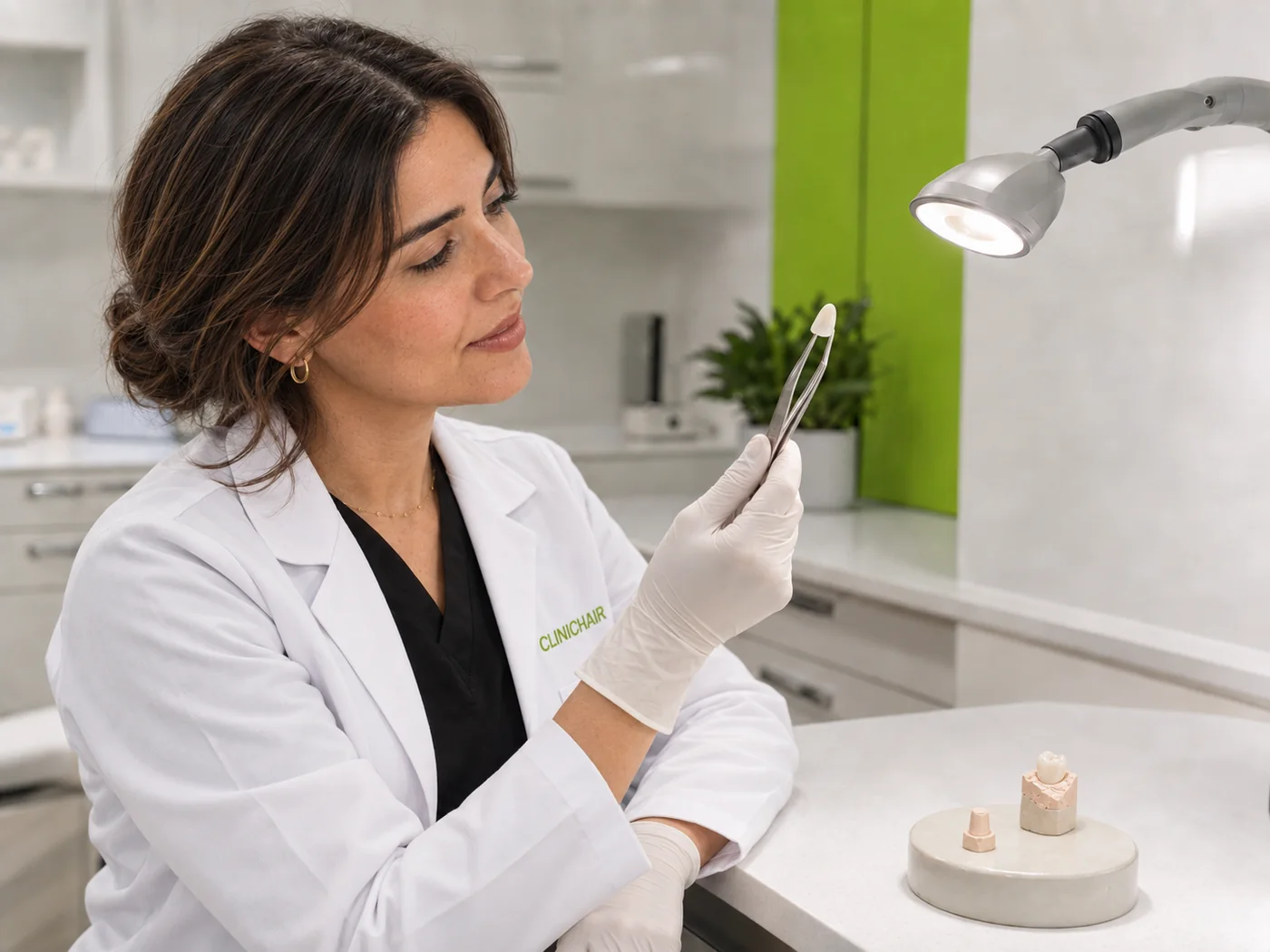
- 1
Preparation and impressions
The tooth is prepared to suit the chosen crown or bridge. An impression is taken; the need for temporary teeth is discussed with you.
- 2
Try-in and fit
We check colour, shape, marginal fit and bite, and make any necessary adjustments.
- 3
Cementation
Once its fit has been checked, the crown or bridge is fixed in the mouth; care information is shared.
03CARE AND FOLLOW-UP
Daily care, regular check-ups.
Fit in the first days
Contact your clinic if your bite feels uncomfortable or sensitivity persists.
Daily cleaning
Continue brushing and cleaning between the teeth and under the bridge as your dentist advises.
Check-up appointments
The gums, prosthesis margins and bite are checked according to a personal follow-up plan.
04FREQUENTLY ASKED QUESTIONS
About fixed prostheses.
Click a question to read the full answer.
What is the difference between a crown and a bridge?
A crown is a fixed restoration placed over an existing tooth that has lost tissue. A bridge replaces a missing tooth, supported by neighbouring teeth or implants. Which option is suitable is decided together with the remaining tooth tissue and the condition of the supports.
How is the crown material chosen?
In choosing the material, the position of the tooth, its remaining tissue, chewing forces and your expectations for appearance all matter. We explain suitable material and framework options in your personal treatment plan.
How much do the teeth need to be reduced?
The amount of reduction depends on the remaining tooth tissue and the design and material of the chosen restoration. The tooth is prepared to suit the planned restoration; preserving as much tooth tissue as possible is important. Any necessary tooth reduction is irreversible.
Is root canal treatment needed before every crown?
No. Having a crown does not on its own mean root canal treatment is needed. The vitality of the tooth, complaints, the examination and any necessary imaging are assessed. Root canal treatment is added to the plan only if the condition of the tooth requires it.
How long does fixed prosthetic treatment take?
Separate appointments may be needed for tooth preparation and impressions, a try-in when needed, and then cementation. The duration depends on the number of teeth, the laboratory stages and any treatment needed beforehand. At the start, we share the order of appointments and an approximate schedule that suit you.
Is there pain while a crown or bridge is made?
If needed, local anaesthesia is given during tooth preparation and the area is numbed. You may feel pressure or vibration. If you feel pain or discomfort, tell our team straight away. Recommendations for sensitivity after the procedure are given according to the condition of your tooth.
Are temporary teeth used during treatment?
Depending on the stage of treatment and the situation in the mouth, temporary teeth or a temporary prosthesis may be used. Whether it is needed, how to use it and when the switch to the permanent prosthesis will happen are explained in your personal treatment plan; the same option is not used in every treatment.
Can we choose the colour and look together?
Yes. We discuss colour and tooth shape together with your neighbouring teeth and your smile. At the try-in, we check the look, speech and bite. It is important to mention anything you would like changed before the prosthesis is permanently cemented.
What should I watch out for when eating with a crown or bridge?
Do not chew until the numbness has worn off; follow the timing given for your first meal after cementation. If you have temporary teeth, be careful with hard and sticky foods that could dislodge them. Do not use your permanent prosthesis to crack hard objects; if you feel pain or a high spot when chewing, ask for a check-up.
How should I clean my fixed prosthesis and under the bridge?
Brush your teeth twice a day with fluoride toothpaste; clean between the teeth and under the bridge every day too. We can show you how to use a suitable interdental brush or special floss. Do not try to remove a fixed prosthesis. The natural tooth under a crown also needs protecting from decay.
When does sensitivity after a crown need a check-up?
There may be sensitivity after a new crown. If pain is not easing or is increasing, a complaint wakes you at night, there is swelling or you feel marked discomfort when biting, tell the clinic without waiting for your appointment. The bite, the fit of the crown and the condition of the tooth are checked to find the cause.
What should I do if a crown or bridge loosens or comes off?
Contact your clinic; keep the piece that came off and bring it to the appointment. Do not refit the prosthesis with home adhesive and do not keep chewing with the loose part. Whether it can be re-cemented is decided after the supporting tooth and the prosthesis have been checked.
How long does a fixed prosthesis last; why are check-ups needed?
How long it lasts depends on the supporting teeth, the fit of the prosthesis, oral care and chewing habits. At check-ups, the crown margins, gums and bite are examined. If you clench your teeth, let us know; we can discuss protective measures. Keep to your personal check-up schedule even if you have no problems.
Is a fixed implant-supported prosthesis suitable for me?
The fixed implant-supported option is considered according to bone and gum health, the position of existing or planned implants, the bite and your daily care. Suitability can be confirmed at a dental examination; we can discuss fixed and removable alternatives together.
Can I find out about the materials used?
Yes. You can find out the laboratory, material and framework details of your custom prosthesis. For implant-supported prostheses, the connecting parts and compatibility with the implant system are also explained. Registration, label, lot or serial details are checked according to the product. ÜTS registration does not mean Ministry approval.
How are the fee and the follow-up scope agreed?
The type of prosthesis, material, treatment stages and scope of follow-up are clarified before treatment. You can ask what temporary teeth, additional procedures and later fit checks cover. Within the plan you approve, you will not face surprise extra charges.
Question not answered here?Message our patient adviser
This page is for general information. A personal assessment is made at a dental examination.
Updated: 4 October 2026