
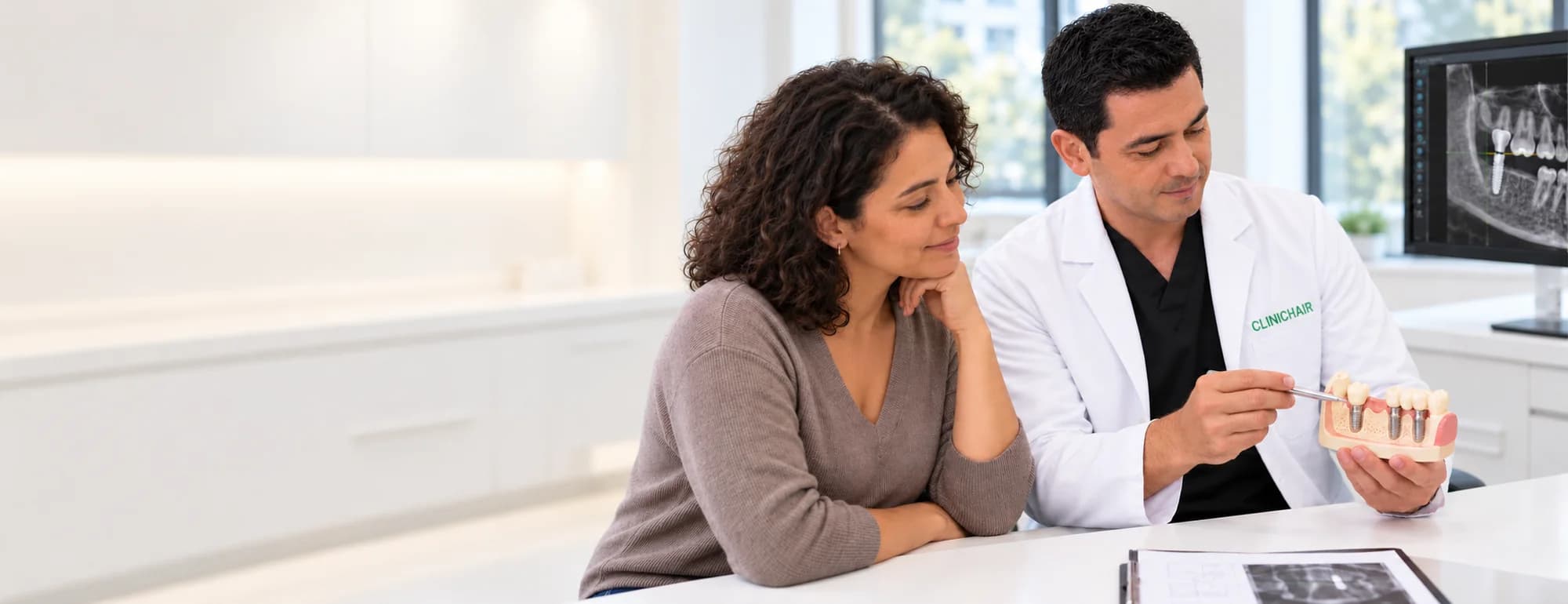
IMPLANT AND FULL-ARCH TREATMENTS
Single and Multiple Dental Implants.
For one or more missing teeth.
A dental implant is an artificial root placed in the jawbone that supports the tooth or bridge made on top of it. Treatment is planned according to your oral health and bone structure.
The final treatment plan is determined by a dental examination and any necessary imaging. Clinical images are representative.
01ASSESSMENT AND PLANNING
Your oral health and needs come first.
- Position of the missing teeth
- We examine where the missing teeth are, the neighbouring teeth and how the teeth meet.
- Bone and gums
- With the examination and any necessary imaging, we examine bone volume and your gums.
- General health
- We review your medical history, medication, allergies and smoking together.
- Prosthesis plan
- We consider the number of implants together with the tooth or bridge to be placed on them.
- Expectations and options
- We explain the possible benefits, risks and the alternatives that suit you.
02PRODUCT AND TREATMENT
How does implant treatment progress?
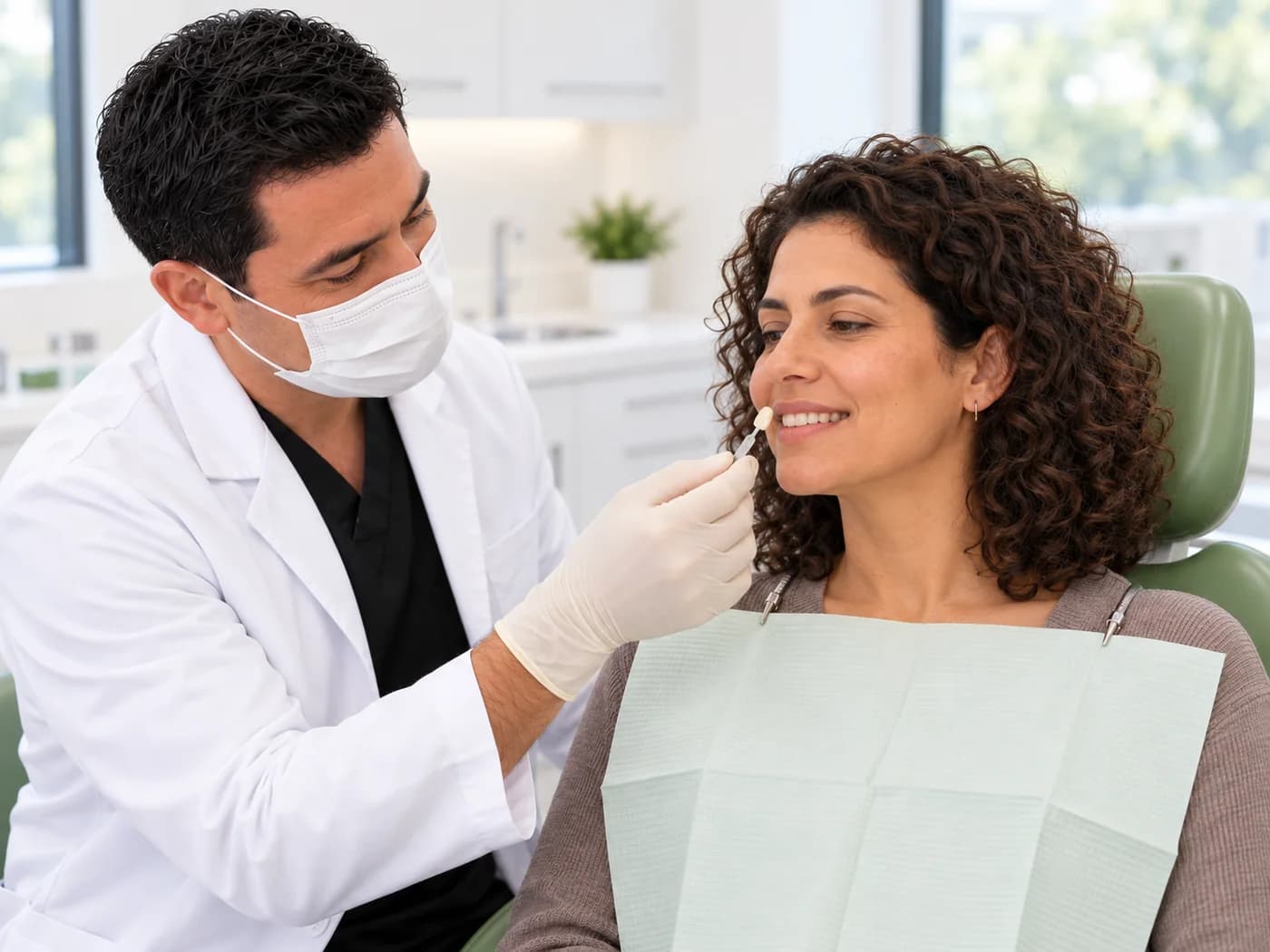
- 1
Placing the implant
After the necessary preparation, the implant is placed in the planned area under suitable anaesthesia.
- 2
Monitoring healing
Integration with the bone is monitored. The need for a temporary tooth and its timing are decided individually.
- 3
Completing the tooth
At the appropriate stage, an impression is taken. The tooth or bridge is prepared; fit and how the teeth meet are checked.
The implant and the tooth placed on it are separate parts; they are assessed together in the treatment plan. Not every missing tooth may need its own implant.
Implant and material information.
Before treatment, you can find out the brand/model of the implant, the connecting parts and the tooth/prosthesis material. Sterile packaging and expiry dates are checked. Keep the product records you are given for later maintenance and check-ups.
03CARE AND FOLLOW-UP
Close follow-up after treatment.
The first days
Personal recommendations on diet, oral care and prescribed medication are shared.
Daily care
Suitable methods for cleaning around the implant and between the teeth are explained.
Regular check-ups
Healing, gum health and the fit of the prosthesis are monitored at planned check-ups.
Swelling and tenderness may occur. Infection, failure of the implant to integrate with the bone, nerve/sinus involvement or prosthesis problems may develop. Contact your dentist if pain or swelling increases or anything loosens. Treatment time and check-up intervals vary from person to person. Visits are planned according to the healing and prosthesis stages.
Explore full-arch treatments04FREQUENTLY ASKED QUESTIONS
Common questions about dental implants.
Who are single and multiple dental implants suitable for?
Where one or several teeth are missing, a single tooth or a bridge can be placed on implants. The bone in the gap, the gums, neighbouring teeth, how the teeth meet and general health are examined. Suitability for treatment becomes clear with the examination and imaging; if needed, a gum problem or another oral health issue is treated first.
Should I choose an implant or a tooth-supported bridge?
An implant allows a missing tooth to be replaced without support from the neighbouring teeth. With a tooth-supported bridge, the condition of the neighbouring teeth and the need to prepare them matter. Bone structure, suitability for surgery, neighbouring teeth, time and care needs are considered together. There is no single right option for every gap.
Does each missing tooth need its own implant?
Not always. For a single missing tooth, a tooth can be placed on one implant; where several adjacent teeth are missing, a bridge supported by fewer implants may be suitable. The length of the gap, the position of the implants, the bone and the chewing load determine the number. In your plan, we explain how many implants will support which teeth.
Can an implant be placed in the same session as an extraction?
In some cases, yes. The bone and soft tissues at the extraction site, any infection and how stable the implant is in the bone when it is placed all matter. If it is not suitable, a schedule is created that waits for the tissues to heal. Placing an implant on the same day does not mean a permanent tooth will be fitted on it the same day.
What options are there if there is not enough bone or the sinus is close?
Bone volume and the position of the nerves and sinuses are examined with imaging. In suitable patients, bone augmentation or additional sinus-related procedures in the back of the upper jaw may be needed. These can be done in the same session as the implant or at a separate stage. We discuss in advance which option is suitable and how it affects the timeline.
Do diabetes or the medication I take affect treatment?
Share diabetes, heart disease, previous treatments and all the medication you take at the consultation. Blood thinners and some medicines used for bone conditions in particular can affect the surgical plan. If needed, we consult your relevant physician. Do not stop your medication or change the dose on your own.
Is implant placement painful?
Implants are usually placed under local anaesthesia. Once the area is numb, sharp pain is not expected; you may feel pressure or vibration. Tell the team if you feel discomfort. After the procedure there may be tenderness and swelling; personal care advice and any necessary medication are shared. If sedation is needed, it is discussed separately.
When is the tooth placed on the implant; will I have a temporary tooth?
Integration of the implants with the bone usually takes about 2-6 months; additional procedures can extend this. After healing, impression and try-in appointments are needed for the permanent tooth. Especially in visible areas, we discuss the temporary tooth option from the start. The timing of the temporary tooth depends on how stable the implant is in the bone and on other clinical conditions.
How is a natural look achieved with a front tooth implant?
As well as the correct position of the implant, the gum level, bone support and the colour and shape of the neighbouring teeth matter. In suitable cases, a temporary tooth can help shape the gum. We discuss the shape and colour of the final tooth at the try-in stage. Any additional tissue procedures that may be needed are explained at the start of the plan.
When can I return to work, sport and daily life?
The extent of surgery, the number of implants, additional procedures and the type of anaesthesia affect the timing. Resting on the day of the procedure may be advisable; returning to a desk job is not the same as heavy work or sport. If sedation is used, separate instructions are given about being accompanied and driving. We share a return plan that suits you after the procedure.
When can I chew with the implant area?
Do not chew until the numbness has worn off; in the early period, choose foods that do not strain the area. Having a visible temporary tooth does not mean you can chew normally with that area straight away. When you can start chewing with this tooth depends on how stable the implant is in the bone and on the structure of the prosthesis. Return to hard and sticky foods as your dentist advises.
How should I clean the implant, and when should I come for check-ups?
In the first days, follow the care instructions given for the surgical area. After healing, clean around the implant and between the teeth daily; we show you brushes and aids suited to the tooth or bridge. Regular check-ups continue after the first healing check. Be sure to mention any bleeding or difficulty cleaning at your appointment.
How long does an implant last; do smoking and clenching affect it?
How long an implant lasts is closely linked to gum health, cleaning, smoking, clenching and regular check-ups. Smoking can affect healing negatively; clenching can put excess load on the implant and prosthesis. The tooth on top or the connecting parts may need maintenance or replacement over time. We discuss suitable protective measures with you.
Which symptoms mean I should contact the clinic or go to an emergency department?
In the first days there may be tenderness, slight bleeding and swelling. Contact the clinic if you have increasing or persistent pain/swelling, fever, discharge, lasting numbness or a feeling of movement in the implant/prosthesis. For heavy bleeding that will not stop, rapidly spreading swelling or difficulty breathing/swallowing, get emergency help; call 112 if needed.
Can I find out the brand/model of the implant and the tooth material?
You can find out the brand/model of the implant, the connecting parts and the tooth material. In the choice, suitability for your needs and the future availability of parts for maintenance matter. Products are checked for compliance with the relevant TİTCK regulations and for their ÜTS registration details. ÜTS registration does not mean Ministry approval. Keep the implant card and lot/serial details.
Does the price include the implant and the tooth placed on it?
The implant, the connecting part and the tooth or bridge placed on it are separate items. We explain in the quote whether a temporary tooth, extraction, bone augmentation and other additional procedures are included. The material to be used and the scope of check-ups and follow-up are also made clear before you approve the plan.
Question not answered here?Message our patient adviser
This page is for general information. A personal assessment is made at a dental examination.
Updated: 4 October 2026