

IMPLANT AND FULL-ARCH TREATMENTS
All-on-4.
A fixed full-arch prosthesis on four implants.
A treatment option in which a fixed prosthesis is supported by four implants in a fully toothless jaw. Suitability is determined by assessing bone structure, oral health and prosthesis needs together.
The final treatment plan is determined by a dental examination and any necessary imaging. Clinical images are representative.
01ASSESSMENT AND PLANNING
A personal assessment for All-on-4.
We consider the treatment options together with your teeth, bone structure, general health and prosthesis needs.
- Existing teeth
- Our priority is to examine the teeth that can be preserved and your oral health together.
- Bone structure
- With the necessary imaging, we examine bone volume and anatomical limits.
- General health
- We review your medical history, medication, allergies and smoking together.
- Prosthesis design
- We consider implant distribution, how the teeth meet and how easy they are to clean together.
- Expectations and options
- We explain the possible benefits, risks and the alternatives that suit you.
02PRODUCT AND TREATMENT
How does treatment progress?
Four steps from preparation to the final prosthesis.
- 1
Preparation and personal plan
Any necessary preliminary treatments are completed. The implant placement and the prosthesis to be made are finalised together.
- 2
Placing the implants
Four implants are placed in the jaw being treated under suitable anaesthesia.
- 3
Healing and temporary teeth
If the implants are stable enough in the bone and other conditions are suitable, fixed temporary teeth can be fitted early.
- 4
Final prosthesis and check-up
After healing, the prosthesis is prepared; colour, fit, how the teeth meet and ease of cleaning are checked.
The timing of temporary teeth depends on the stability of the implants in the bone and on healing. Temporary teeth and the final prosthesis are different stages.
Implant and material information.
Before treatment, you can find out the brand/model of the implant, the connecting parts and the tooth/prosthesis material. Sterile packaging and expiry dates are checked. Keep the product records you are given for later maintenance and check-ups.
03CARE AND FOLLOW-UP
Regular care with a fixed prosthesis.
For long-term success, oral hygiene, cleaning under the prosthesis and regular check-ups are important.
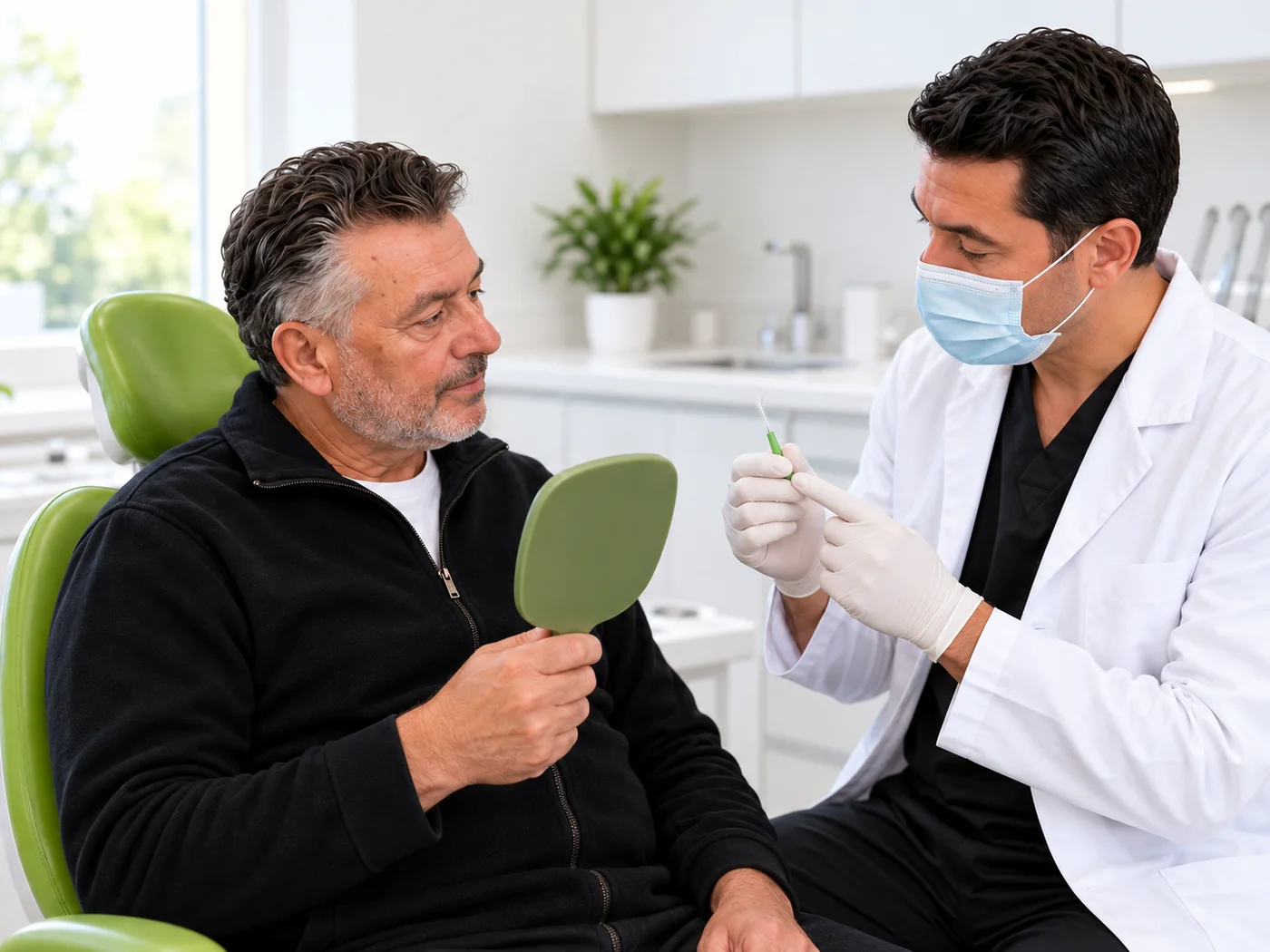
The first period
Diet and oral care recommendations are shared according to your healing.
Cleaning under the prosthesis
Suitable care methods for cleaning under the prosthesis and around the implants are explained.
Check-ups and fit
Gum health, the fit of the prosthesis and how the teeth meet are assessed at planned check-ups.
Swelling and tenderness may occur. Infection, failure of the implant to integrate with the bone, nerve/sinus involvement or prosthesis problems may develop. Contact your dentist if pain or swelling increases or anything loosens. Treatment time and check-up intervals vary from person to person. Visits are planned according to the healing and prosthesis stages.
Explore the All-on-6 option04FREQUENTLY ASKED QUESTIONS
Common questions about All-on-4.
What is All-on-4; are the four implants for one jaw?
All-on-4 is a treatment option in which a full fixed prosthesis for one jaw is supported by four implants. This number is not the total for the upper and lower jaws; each jaw is planned separately. The number of teeth in the prosthesis is not the same as the number of implants. If both jaws need treatment, the needs of each are examined separately.
Who may All-on-4 be suitable for?
It can be considered for people with no teeth in one jaw, or whose remaining teeth have limited prospects of being saved. Bone structure, general health, how the teeth meet, the space available for the prosthesis and your ability to clean it every day are important. At the examination, we also discuss other suitable options alongside a fixed prosthesis.
When is All-on-6 considered instead of All-on-4?
If there is a need to increase prosthesis support and implant distribution, and the bone structure allows it, six implants may be considered. The choice between four and six implants is not made on number or price alone. Your dentist explains the reasoning behind the recommended option for your jaw and prosthesis.
Do all my existing teeth need to be extracted?
No. Natural teeth that can be preserved are examined first. Saving the teeth with treatment, a different bridge or another prosthesis option may be possible. If extraction is recommended for a full-arch prosthesis, we discuss with you which teeth cannot be saved and why, and the alternatives, before you decide.
Can All-on-4 always be done without bone augmentation?
No. In some patients All-on-4 can make use of the existing bone; but it cannot be done without grafting in every case of bone loss. The amount of bone, the position of the nerves and sinuses and the needs of the prosthesis are examined. If needed, bone augmentation or a different implant/prosthesis plan is discussed.
Do my illnesses or medication rule out treatment?
Share diabetes, heart disease, previous treatments and all the medication you take at the consultation. Blood thinners and some medicines used for bone conditions in particular can affect the surgical plan. If needed, we consult your relevant physician. Do not stop your medication or change the dose on your own.
Is there pain during and after the procedure?
Implants are usually placed under local anaesthesia. Once the area is numb, sharp pain is not expected; you may feel pressure or vibration. Tell the team if you feel discomfort. After the procedure there may be tenderness and swelling; personal care advice and any necessary medication are shared. If sedation is needed, it is discussed separately.
Can fixed teeth be fitted on the same day?
If the implants are stable enough in the bone and other clinical conditions are suitable, a fixed temporary prosthesis can be fitted early. Its suitability is also checked during surgery. The temporary prosthesis is not the same stage as the final prosthesis. If early fixed teeth are not suitable, we decide together on the temporary option during healing and how to use it.
When is the final prosthesis made, and how many visits are needed?
Integration with the bone usually takes about 2-6 months. When healing allows, appointments begin for impressions, try-ins and checking how the teeth meet for the final prosthesis. Extractions or bone augmentation can extend the overall schedule. Separate visits may be needed for the surgical and prosthetic stages; we set out your travel and length of stay according to your personal schedule.
Can I remove my fixed prosthesis myself?
No. You do not put in or take out the fixed prosthesis in an All-on treatment; daily care is done while it is in the mouth. The dentist can remove it for necessary maintenance or repair. Removable dentures that clip onto implants and that the patient can take out are a different option. If you feel any loosening, contact the clinic without trying to tighten it yourself.
When can I eat normally with a fixed temporary prosthesis?
Temporary teeth being fixed does not mean you can comfortably chew almost any food straight away. In the early period, a soft diet that does not strain the prosthesis and the healing implants is recommended. We explain in your personal plan when you can move on to hard and sticky foods. If you feel pain or movement when chewing, do not force it and let the clinic know.
How is the area under the prosthesis cleaned, and how often are check-ups?
After healing, the area under the prosthesis and around the implants should be cleaned daily. We show you how to use a brush, interdental aid or special floss suited to your prosthesis; a water flosser can help if needed. Initial surgical care is separate. At check-ups, the gums, cleaning, how the teeth meet and the prosthesis connections are examined; intervals are set individually.
How long does the prosthesis last; do smoking and clenching affect it?
How long an implant lasts is closely linked to gum health, cleaning, smoking, clenching and regular check-ups. Smoking can affect healing negatively; clenching can put excess load on the implant and prosthesis. The tooth on top or the connecting parts may need maintenance or replacement over time. We discuss suitable protective measures with you.
Which symptoms mean I should get help without waiting?
In the first days there may be tenderness, slight bleeding and swelling. Contact the clinic if you have increasing or persistent pain/swelling, fever, discharge, lasting numbness or a feeling of movement in the implant/prosthesis. For heavy bleeding that will not stop, rapidly spreading swelling or difficulty breathing/swallowing, get emergency help; call 112 if needed.
How are the look of the teeth and the materials chosen?
The colour and shape of the teeth, how they look when you smile, lip support, speech and how the teeth meet are considered together at the prosthesis stage. The temporary and final prostheses may be made of different materials. You can find out the brand/model of the implant and the prosthesis material before treatment; keeping your implant records is useful for later maintenance.
Does the price include the temporary and final prostheses?
Whether the implants, connecting parts, temporary and final prostheses and any necessary extractions or bone procedures are included in the quote is stated clearly. We also discuss the scope of check-ups and any maintenance/repair that may be needed later. You can approve the plan seeing every item; if the scope needs to change, this is shared in advance.
Question not answered here?Message our patient adviser
This page is for general information. A personal assessment is made at a dental examination.
Updated: 4 October 2026