

RESTORATIVE DENTAL TREATMENTS
Root Canal Treatment.
A personal plan to protect your tooth.
The inflamed or infected pulp is removed; the root canals are cleaned and filled. The treatment aims to keep the natural tooth in the mouth.
The final treatment plan is determined by a dental examination.
Clinical images are representative.
01ASSESSMENT AND PLANNING
First, let's understand the condition of the tooth.
- Your complaints
- We listen to your pain, sensitivity and previous treatment experiences.
- Health history
- We discuss your illnesses, the medication you take, allergies and previous dental treatments.
- Pulp and roots
- We examine the condition of the tooth with an examination, the necessary tests and imaging.
- Remaining tooth tissue
- We look at whether the tooth can be restored and the need for a final restoration.
- Treatment plan
- We discuss the alternatives, sessions and check-up schedule together.
02TREATMENT STEPS
How does treatment progress, step by step?
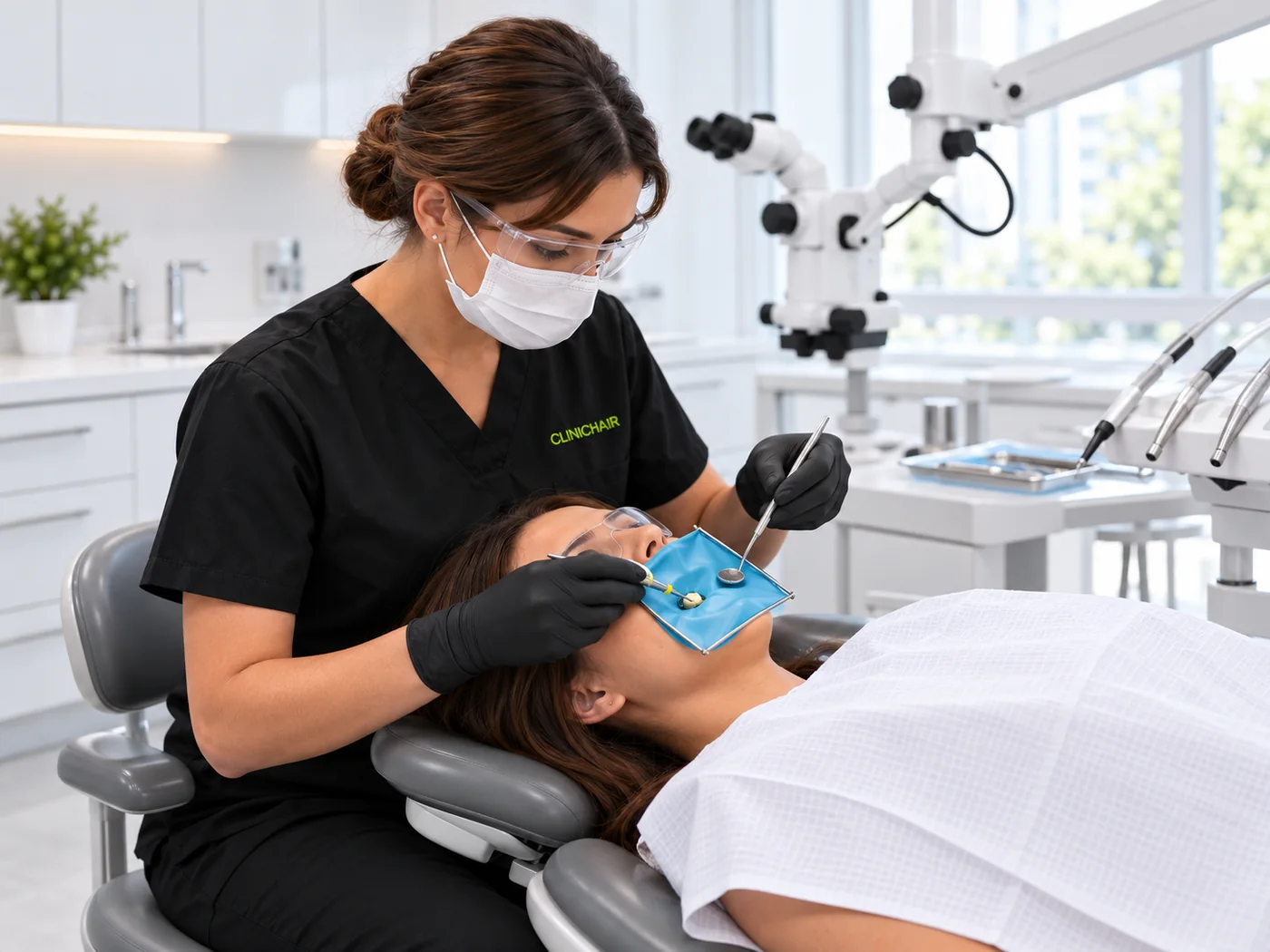
- 1
Preparation and isolation
Suitable anaesthesia is given; the tooth to be treated is isolated.
- 2
Canal cleaning and filling
The root canals are cleaned, shaped and filled with a suitable filling material.
- 3
Final restoration
Depending on the remaining tooth tissue, the tooth is completed with a filling or crown.
03HEALING AND CARE
Regular follow-up after treatment.
The first days
There may be temporary sensitivity; contact your clinic if pain or swelling increases.
Daily care
Brushing and cleaning between the teeth continue as your dentist advises.
Check-up appointments
Complaints, healing and how well the tooth fits with its restoration are monitored.
04FREQUENTLY ASKED QUESTIONS
About root canal treatment.
Click a question to read the full answer.
When is root canal treatment needed?
Root canal treatment may be needed when the pulp inside the tooth is too inflamed to heal or has become infected. Deep decay, a crack or a blow can cause this. Prolonged sensitivity to hot and cold, pain when chewing or swelling needs an examination; the decision is made together with the necessary tests.
What information should I share before my appointment?
Share your prescription and over-the-counter medicines, allergies, illnesses and previous dental treatments. If you have older images, you can bring them too. Tell us about any anxiety about treatment and problems you have had with anaesthesia before. Do not stop your medication on your own; ask before the appointment whether any special preparation is needed.
Will I feel pain during the procedure?
The tooth and surrounding area are numbed with local anaesthesia. If you feel pain during the procedure, say so straight away; your dentist will check the numbness. There may be temporary sensitivity in the first days after treatment.
How many sessions does root canal treatment take?
For some teeth it can be completed in one session; others need more than one appointment. The state of the infection, the canal anatomy and whether the tooth has been treated before affect the schedule. A separate appointment may be needed for the final restoration.
Are antibiotics required for root canal treatment?
No. Antibiotics are not needed for every root canal treatment and do not replace cleaning the canal. They may be needed if the infection spreads, with general symptoms such as fever, or in some specific health conditions. Your dentist decides whether to use them; do not start antibiotics on your own.
Can I stop treatment if the pain goes away?
No. Less pain does not mean the cleaning and filling of the canals is complete. Continue with the planned sessions; agree with your dentist when the permanent final restoration and check-ups will be done.
Is a temporary filling used between sessions?
When needed, the tooth is sealed with a temporary filling between sessions. If the temporary filling falls out or breaks, let the clinic know. Avoid chewing hard food with that tooth until the permanent restoration is complete.
Is a crown needed after root canal treatment?
Not for every tooth. A suitable filling or crown option is assessed according to the remaining sound tissue and the position of the tooth.
When and how can I eat after treatment?
Wait until the numbness has completely worn off before chewing. Avoid chewing with the treated tooth until the permanent final restoration is complete; choose soft foods. Hard and sticky foods can strain the temporary filling or the tooth that is not yet completed. Follow the care advice you are given.
Which complaints after treatment mean I should contact the clinic?
There may be mild sensitivity in the first days, which is expected to ease gradually. Contact the clinic if you have severe or increasing pain, pain that does not ease within a few days, swelling, fever or a feeling that your bite is high. If you have difficulty breathing or swallowing, or rapidly growing swelling, get emergency help.
How should cleaning and check-ups continue?
Brush your teeth twice a day and clean between them every day; be gentle around the treated area. Follow any specific advice for the temporary restoration. Do not miss the permanent restoration appointment and healing check-ups; you will be told the check-up interval according to the condition of the tooth.
How long can a root-canal-treated tooth be used?
With a suitable final restoration and regular care, the tooth can be used for many years. The remaining sound tissue, the initial infection, completing the restoration on time and daily care affect how long it lasts. At check-ups, both the healing around the root and the condition of the restoration are monitored.
Can a root-canal-treated tooth decay again?
Yes. Root canal treatment does not protect the tooth from new decay. New decay, a crack or a loose filling can lead to the tooth becoming infected again. If you notice a fracture or loosening in the restoration, let the clinic know without waiting for pain to start.
Can a tooth that has had root canal treatment be treated again?
In suitable teeth, root canal treatment can be redone. The existing root filling, the cause of the infection, the root anatomy and whether the tooth can be restored again are examined. If needed, an endodontist's opinion is sought; other options are also explained.
Does root canal treatment save every tooth?
Not every tooth can be saved. A root crack, insufficient bone support or a tooth that has lost too much tissue to be restored can limit the options. After the examination and imaging, the likelihood of saving the tooth and the alternatives are discussed with you.
Does the price include root canal treatment, the final restoration and check-ups?
Root canal treatment and the final restoration are separate stages. The need for a filling, onlay or crown and the scope of check-ups are explained before treatment begins. We clarify together which items are included in the quote; if an additional procedure is needed, we tell you in advance.
Question not answered here?Message our patient adviser
This page is for general information. A personal assessment is made at a dental examination.
Updated: 4 October 2026