

RESTORATIVE DENTAL TREATMENTS
Fillings, Inlays and Onlays.
A repair suited to your tooth.
We repair tissue loss caused by decay or fracture with the aim of preserving the remaining healthy tooth. We plan the choice of filling, inlay or onlay according to the structure of the tooth.
The final treatment plan is determined by a dental examination.
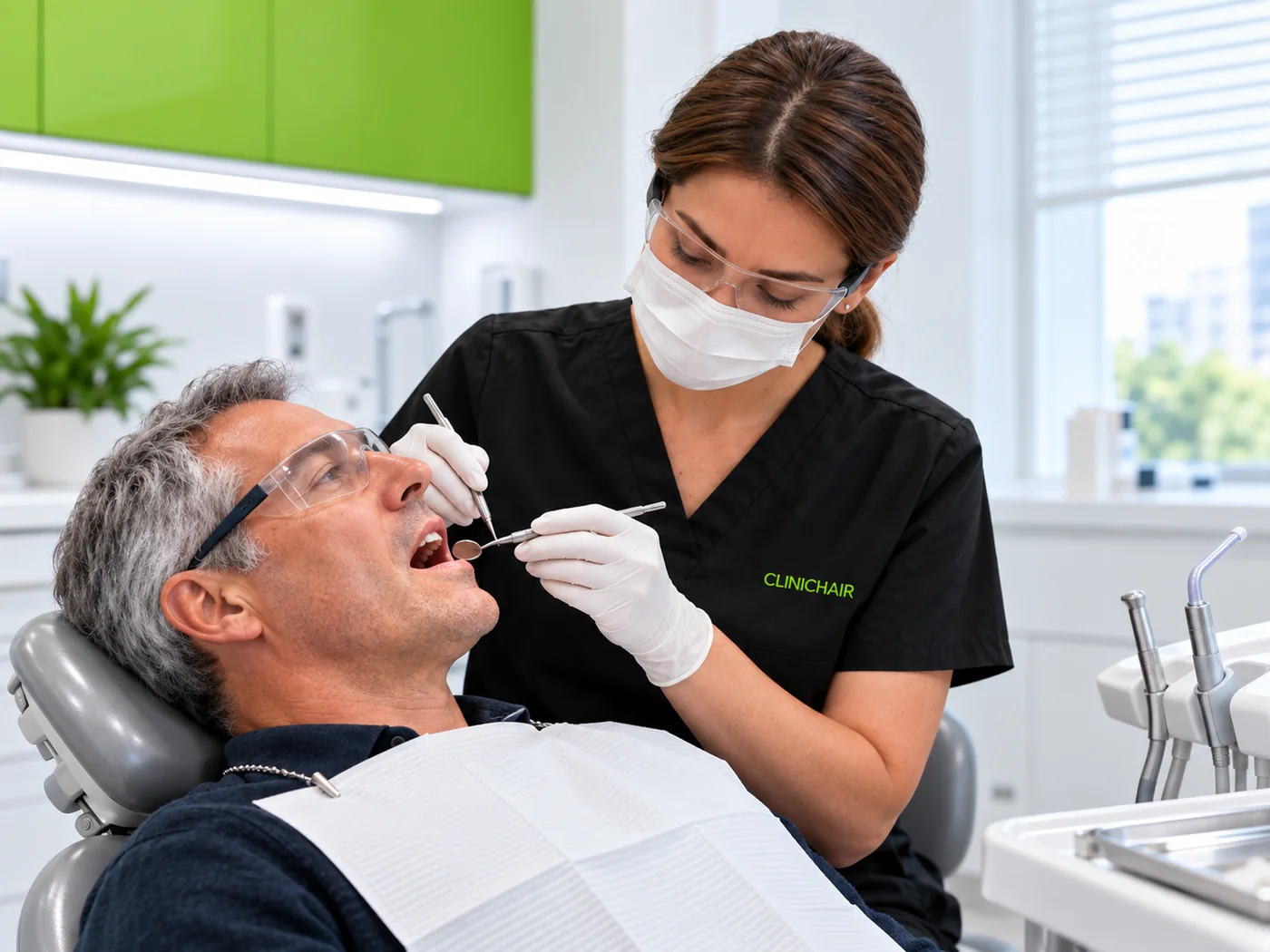
Clinical images are representative.
01ASSESSMENT AND PLANNING
A personal plan based on tissue loss.
- Tissue loss
- We examine the location and size of the decay or fracture.
- Tooth walls
- We look at the strength of the remaining tissue and the need for support.
- Pulp
- We check the vitality of the tooth and investigate the need for root canal treatment.
- Bite
- We check chewing forces and discuss any clenching habit.
- Health history
- We discuss your illnesses, the medication you take, allergies and previous dental treatments.
02TREATMENT OPTIONS
What do fillings, inlays and onlays restore?
Filling
The lost area of the tooth is restored with composite material shaped directly in the mouth.
Inlay
A restoration made from an impression that fills the area between the cusps on the chewing surface.
Onlay
It also covers one or more chewing cusps; it is planned according to the extent of tissue loss.
03TREATMENT AND FOLLOW-UP
From preparation to regular check-ups.
- 1
Preparing the tooth
Decayed and weak tissue is assessed; the tooth is prepared while healthy tooth tissue is preserved.
- 2
Restoring the tooth
A filling is applied directly. For an inlay or onlay, an impression is taken; the restoration is bonded after a try-in.
- 3
Check-ups and care
The bite, marginal fit and contacts between the teeth are checked; a care plan is shared.
04FREQUENTLY ASKED QUESTIONS
About fillings and restorations.
Click a question to read the full answer.
When is an inlay or onlay considered instead of a filling?
It can be considered when a direct filling would not provide enough support. The remaining tooth tissue and chewing forces determine the choice.
What is the difference between an inlay and an onlay?
An inlay restores the part between the cusps on the tooth's chewing surface. An onlay covers this area and also one or more chewing cusps. Which is suitable depends on the extent of the lost tissue.
What materials are these restorations made from?
Composite can be used for direct fillings. Inlays and onlays can be made from ceramic, composite or suitable metal alloys. The properties of the material recommended to you are explained according to the tooth's position, the remaining tissue and the chewing load.
Is root canal treatment always necessary?
No. Having a filling, inlay or onlay does not on its own mean root canal treatment is needed. The condition of the pulp is examined with an examination and the necessary tests; the need for root canal treatment is determined accordingly.
Will I feel pain while a filling, inlay or onlay is done?
When needed, the tooth and surrounding area are numbed with local anaesthesia. You may feel pressure or vibration during the procedure. If you feel pain or discomfort, say so straight away; the numbness is checked and a break can be taken if you need one.
In how many sessions is the procedure completed?
A direct filling can usually be done in one session. An inlay or onlay may require preparing the tooth, taking an impression and fitting the finished restoration. The session schedule varies with the production method and the condition of the tooth.
Is a temporary filling used?
A temporary filling or restoration may be used to protect the tooth until the permanent restoration is ready. If the temporary part loosens or falls out, let the clinic know; you will be told how to protect the tooth until your next appointment.
When can I eat after treatment?
Wait until the numbness has completely worn off before chewing; you could bite your cheek or tongue without noticing. Recommendations may differ for a filling, a temporary restoration and a bonded inlay or onlay. Follow the timing and food advice given for your specific material.
Can there be sensitivity after treatment?
There may be short-term sensitivity to hot and cold or when chewing. If sensitivity is not easing, is increasing or the filling feels high when you bite, talk to your dentist. If there is severe pain or swelling, do not postpone the check-up.
Does my old filling definitely need replacing?
No. A sound filling with good marginal fit and no decay around it is not replaced just because it is old. Wear, a fracture or new decay may require treatment. Unnecessary replacement can lead to loss of healthy tooth tissue.
Can a tooth with a filling or restoration decay again?
Yes. A restoration repairs existing tissue loss; it does not make the tooth immune to new decay. Plaque build-up and loss of fit, especially at the edges where the restoration meets the tooth, can pave the way for decay. That is why regular care and check-ups are important.
How long do fillings, inlays and onlays last?
There is no single lifespan. The size and material of the restoration, the position of the tooth, the remaining tissue, the chewing load and daily care affect it. Marginal fit and wear are examined at check-ups; the need for replacement is decided by the current condition, not by age.
Can clenching damage my restoration?
Clenching and grinding put extra load on teeth and restorations and can lead to wear or fractures. Mention this habit at your appointment. Depending on your needs, a night guard and advice on reducing the habit can be discussed; a guard helps protect the teeth.
What should I do if a filling, inlay or onlay breaks or falls out?
Let the clinic know and do not chew hard food with that tooth until it has been checked. Even without pain, a broken or lost restoration needs to be checked. If there is severe pain, swelling in the face or jaw, or fever, see a dentist without delay.
How should home care and check-ups be?
Brush twice a day with fluoride toothpaste; clean between the teeth every day with floss or a suitable interdental brush. Cut down on frequent sugary snacks. The check-up interval is set for you according to your decay risk and the condition of the restoration; do not wait for your appointment if you have a new complaint.
How are the fee and the follow-up scope agreed?
Before the procedure, the type of filling or restoration, the choice of material, the need for a temporary restoration and the scope of check-ups are explained. If an additional procedure is needed, its scope and cost are shared with you before it is carried out.
Question not answered here?Message our patient adviser
This page is for general information. A personal assessment is made at a dental examination.
Updated: 4 October 2026