
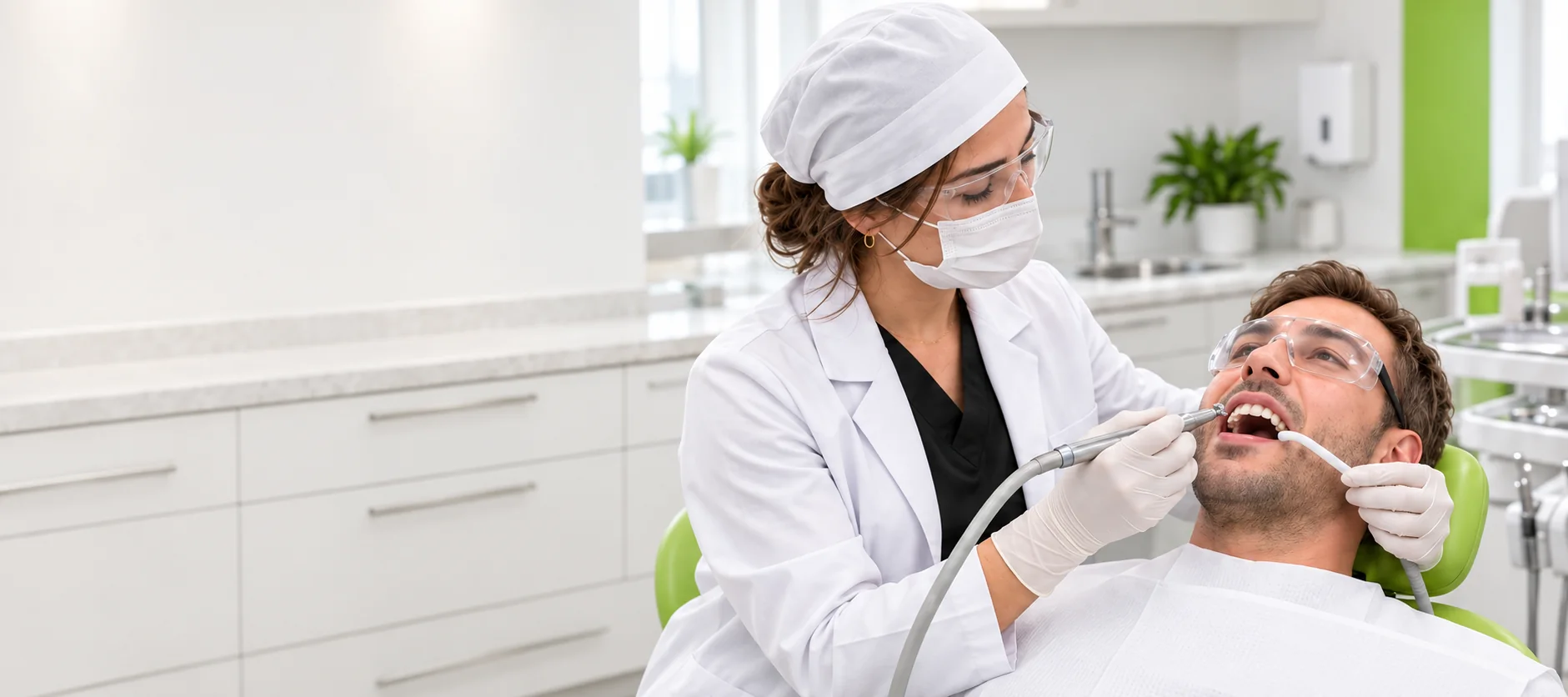
GUM HEALTH AND CARE
Professional Teeth Cleaning and Polishing.
Personal care for your oral health.
We assess plaque, tartar and surface stains. We plan cleaning and polishing according to the needs of your teeth, gums and existing restorations.
The final treatment plan is determined by a dental examination.
Clinical images are representative.
01ASSESSMENT AND PLANNING
Teeth and gum health come first.
- Build-up and stains
- The location of plaque, tartar and surface stains is examined.
- Gum health
- We examine bleeding, recession and the need for further treatment.
- Existing restorations
- Fillings, crowns, prostheses and implants are reviewed.
- Health history
- We discuss your illnesses, medication and allergies.
- Personal needs
- Sensitivity, care habits and expectations are discussed.
02PRODUCT AND TREATMENT
Cleaning and polishing, step by step.
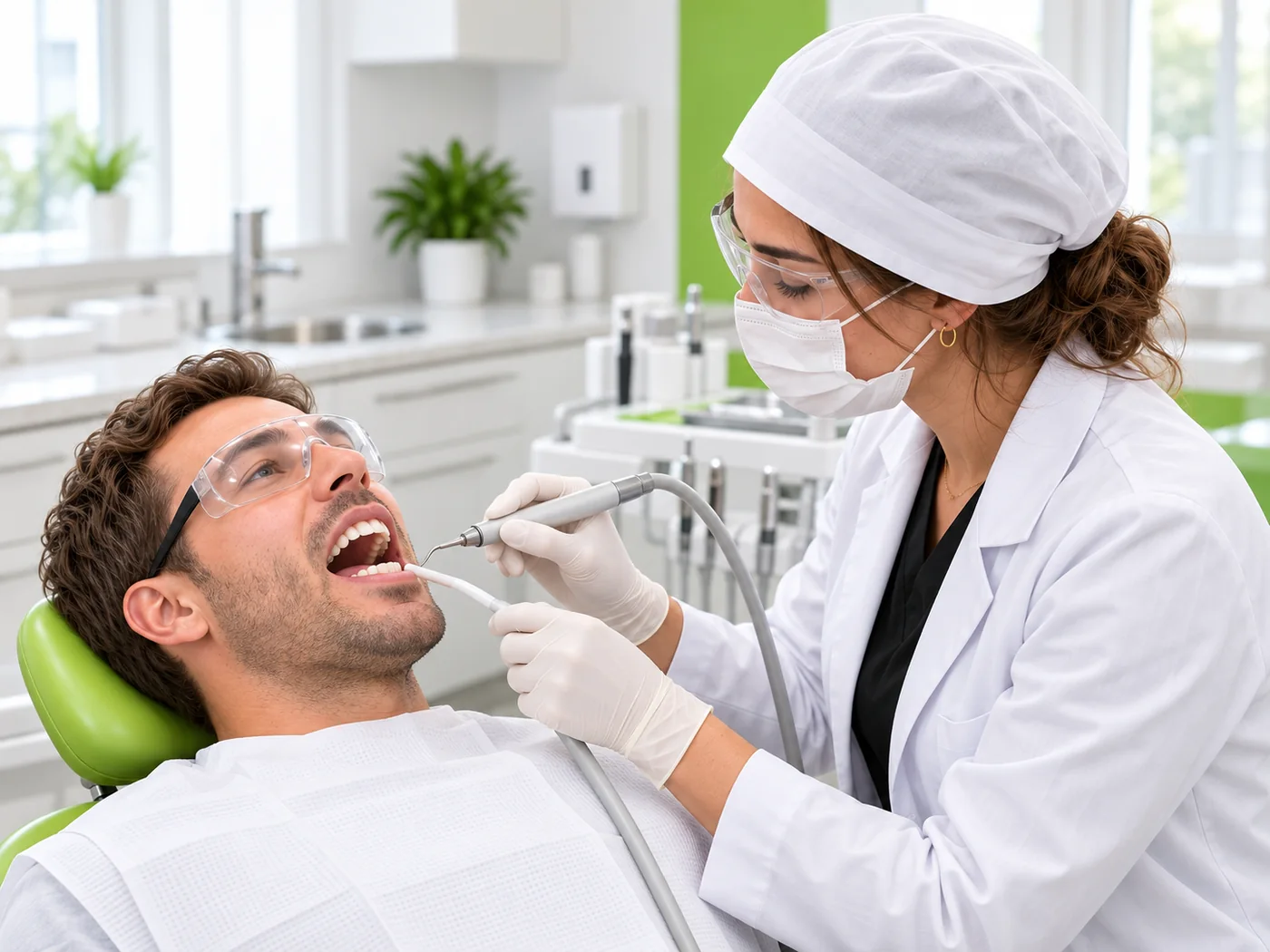
- 1
Professional cleaning
Plaque and tartar are removed with instruments suited to the build-up.
- 2
Surface polishing
Where needed, polishing is applied to help reduce surface stains.
- 3
Final check
The cleaned surfaces and gums are checked; care recommendations are shared.
03CARE AND FOLLOW-UP
A process that continues with daily care.
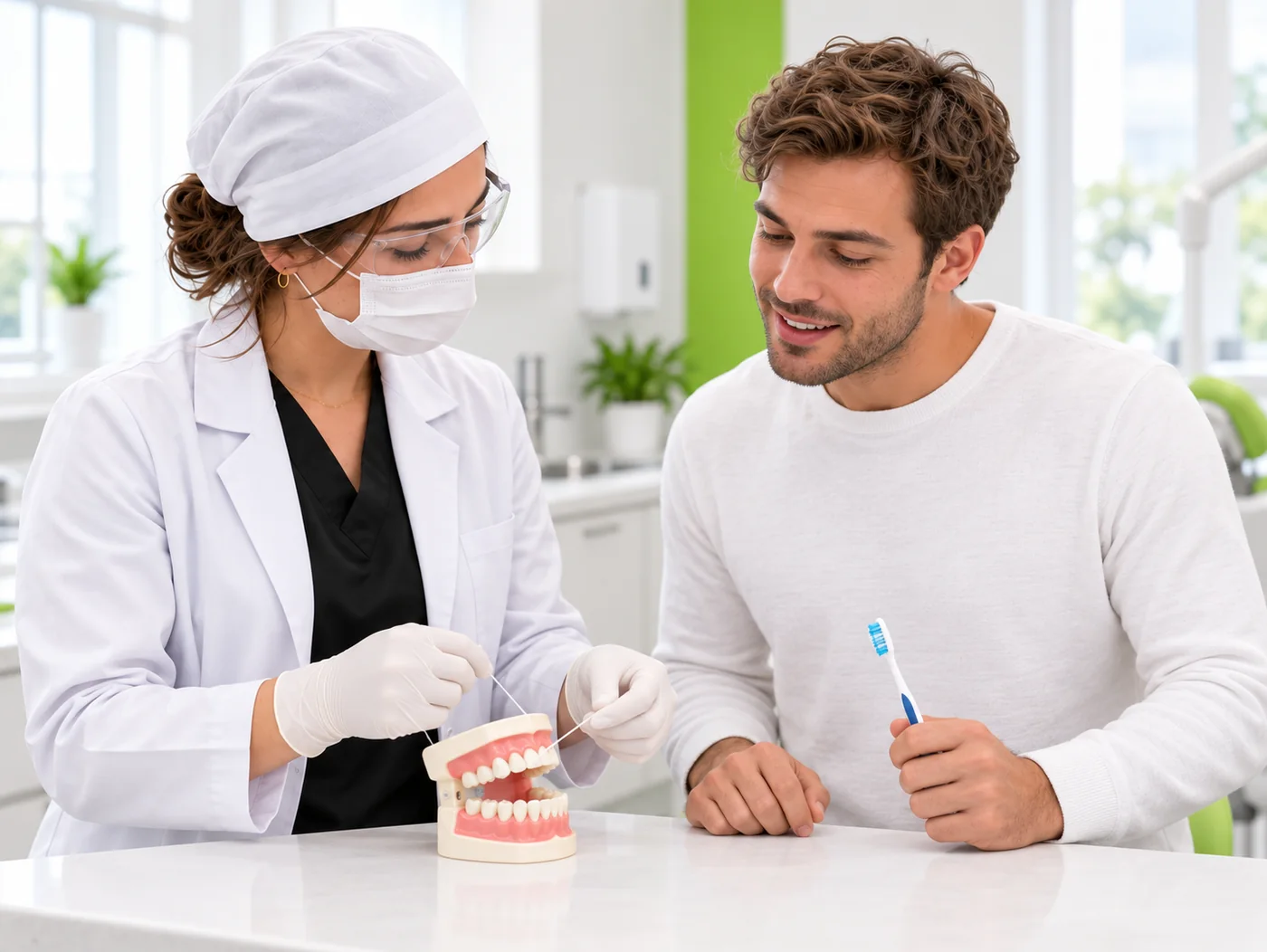
- 1
Home oral care
Brushing and cleaning between the teeth continue as your dentist recommends.
- 2
Daily habits
Personal recommendations are shared for staining from tea, coffee and tobacco.
- 3
Check-up plan
The check-up interval is set according to build-up, staining and gum findings.
A shared treatment in cosmetic smile and gum care.
Explore cosmetic dental treatmentsExplore gum health and care04FREQUENTLY ASKED QUESTIONS
About cleaning and polishing.
Click a question to read the full answer.
How do I know I need a professional clean?
Tartar, surface stains, bleeding gums or areas you find hard to clean can be reasons for an appointment. But build-up is not always visible. At the examination, the teeth and gums are checked to see which areas need professional care.
How does it differ from tartar removal?
Tartar removal is aimed at removing hardened build-up. Polishing can be added on the surfaces that need it to reduce stains; the same procedure is not applied everywhere.
Will this procedure whiten my teeth?
With surface stains removed, teeth can look cleaner and brighter. Whitening is assessed separately for lightening natural tooth colour.
Teeth Whitening · ExploreCan every surface stain be removed?
Not every stain can be removed in the same way. Surface stains are distinguished from changes in the tooth's own colour, and the suitable procedure is discussed accordingly.
If I brush well, do I still need a clean?
Daily brushing and cleaning between the teeth reduce plaque; hardened tartar, however, cannot be removed with a brush at home. If there is tartar, a professional clean is needed. The need to repeat is not the same for everyone; how effective your daily care is and the examination findings both matter.
Can I have a clean if my gums bleed?
Bleeding can be a sign of gum inflammation and needs an examination. Removing build-up can be part of the care; polishing alone does not treat the cause of bleeding. If bleeding or swelling persists, the need for further gum treatment is investigated.
Is a routine clean the same as a deep gum clean?
No. If there is disease in the gum pockets and on root surfaces, a different treatment aimed at build-up below the gum may be needed. Routine cleaning and polishing do not replace it. The examination findings determine the scope of treatment, the sessions and the need for check-ups.
Can it be done if I have crowns, fillings or implants?
Existing restorations are examined first. Cleaning tips and polishing materials are chosen to suit natural teeth, fillings, crowns and implant surfaces.
Do cleaning and polishing damage the tooth surface?
With suitable instruments and technique, the aim is to remove build-up without unnecessarily wearing the tooth surface. Exposed roots and existing restorations are taken into account; the same tip or polish is not used on every surface. Do not scrape tartar yourself with metal tools.
Is the procedure painful?
If there is gum inflammation or exposed root surfaces, sensitivity may be more noticeable. Tell us about any discomfort you have had before; you can ask for breaks during the procedure. If needed, methods that support comfort and local anaesthesia options are discussed with your dentist.
How many sessions do cleaning and polishing take?
The duration depends on how widespread the build-up is, the gum findings and sensitivity. A limited clean and comprehensive gum treatment do not have the same appointment plan. The sessions needed and the areas to be polished are explained after the examination.
Can there be sensitivity after the procedure?
Temporary tooth or gum sensitivity may occur. If complaints persist, see your dentist; care recommendations are shared according to your personal needs.
How should eating and daily care be after a clean?
Follow the instructions for any additional treatments done with the clean; if numbing was used, wait until it wears off before chewing. If you have sensitivity, cut down on very hot or cold food. Continue brushing and cleaning between the teeth as advised, without straining your gums.
How often should I have a professional clean?
There is no single cleaning interval that applies to everyone. Tartar formation, gum health, tobacco use, existing restorations and home care habits affect the need to repeat. A check-up appointment does not necessarily mean the same procedure is done every time.
Can I find out about the materials used?
Yes. You can ask for information about the cleaning and polishing materials used. Products are chosen according to the existing surfaces and the manufacturer's instructions for use.
How are the fee and the follow-up scope agreed?
The scope of cleaning, any polishing needed and check-ups is discussed after the examination. The need to repeat and the check-up interval are set according to your personal findings.
Question not answered here?Message our patient adviser
This page is for general information. A personal assessment is made at a dental examination.